


Insurance compliance teams aren’t losing sleep because they don’t care enough. They’re losing sleep because too much happens on calls that they never hear. From policy disclosures to exclusions and eligibility clauses, what agents say and don’t say, carries real regulatory and financial risk. Call monitoring software has quietly become the difference between assumed compliance and proven compliance in insurance contact centers.
What follows is how call monitoring software reshaped how insurance compliance, QA, and risk teams actually see what’s happening on calls and why going back is no longer an option.
Call monitoring software is a system that analyzes customer calls to ensure compliance, detect risks, improve quality assurance, and give contact centers complete visibility into agent-customer conversations at scale.
Monitor compliance without slowing teams.
Why is Call Monitoring Software Critical for Insurance Compliance
Insurance contact centers operate in a uniquely high-stakes environment. Every sales or service call can influence customer trust, regulatory outcomes, and long-term brand risk. Call monitoring software emerged not as a “nice to have,” but as a necessity when legacy compliance methods stopped scaling.
As call volumes rise and products grow more complex, compliance teams can’t rely on assumptions. They need visibility. That shift made call monitoring software foundational to modern insurance operations.
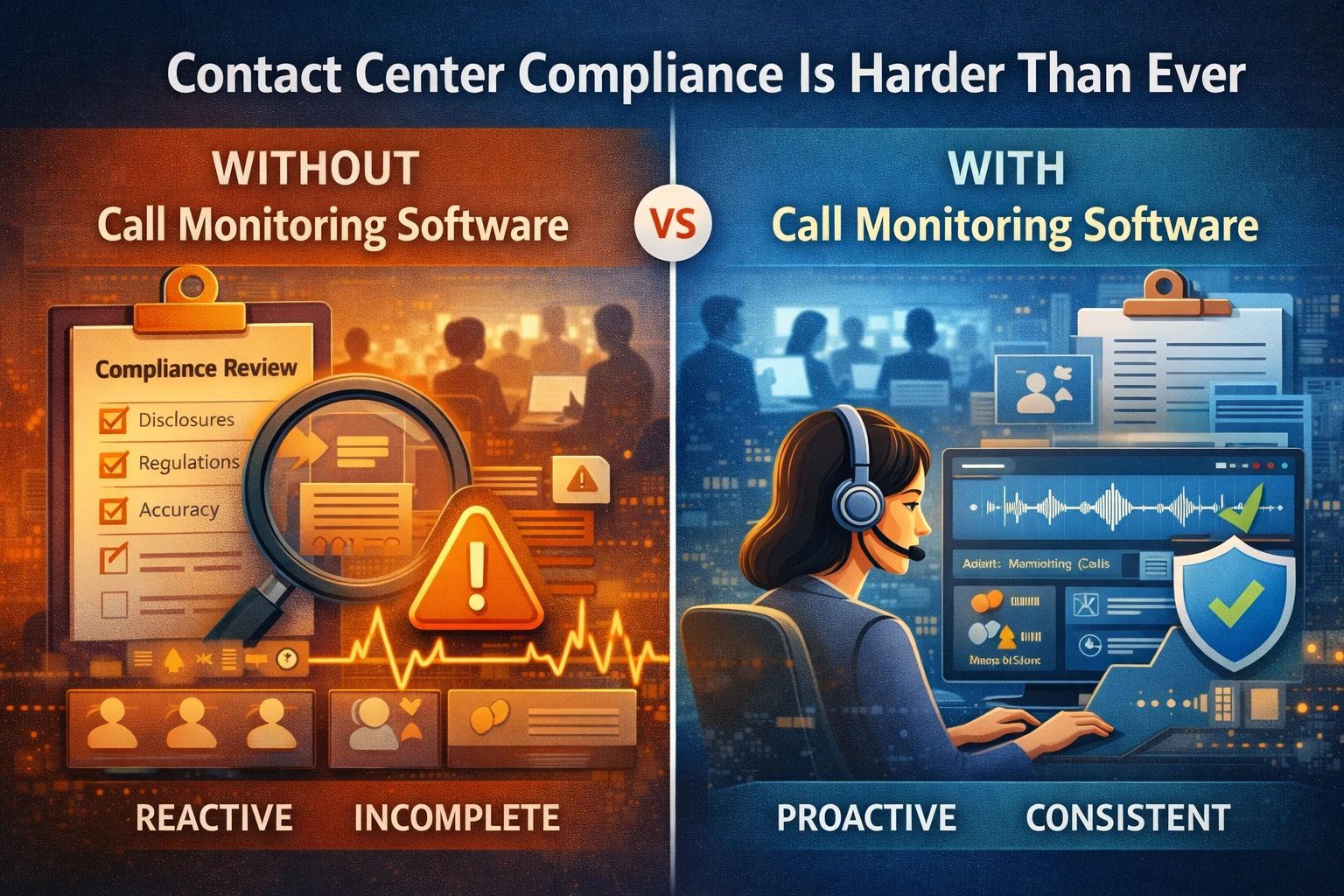
Contact Center Compliance Is Harder Than Ever
Insurance regulations haven’t slowed down, but call volumes and agent churn have increased. Contact center compliance now depends on thousands of daily interactions where disclosures, disclaimers, and confirmations must be delivered accurately. Sampling a handful of calls gives compliance teams a false sense of control.
Call monitoring software replaces guesswork with coverage. It allows compliance teams to hear patterns, not anecdotes, across every insurance call. When contact center compliance is measured consistently, risks surface earlier and remediation becomes proactive.
Without call monitoring software, contact center compliance in insurance remains reactive and incomplete.
Regulatory Compliance on Calls Is No Longer Optional
Regulators increasingly evaluate what was actually communicated to customers, not what was intended. Regulatory compliance on calls now requires proof, clear evidence that agents followed scripts, delivered disclosures, and avoided misleading statements. Manual reviews simply can’t keep up.
Call monitoring software enables continuous oversight of regulatory compliance on calls at scale. Instead of scrambling after complaints, insurance teams gain defensible audit trails and early warnings.
In insurance, regulatory compliance on calls is enforceable only when backed by call monitoring software.
As insurance leaders accepted the need for better oversight, a new question emerged: what would they actually uncover if every call was monitored?
See how modern call monitoring works.
What Call Monitoring Software Reveals About Daily Insurance Calls
When insurance teams deploy call monitoring software, the first realization is often uncomfortable. The gap between expected behavior and real conversations is wider than assumed. What sounded compliant on paper often breaks down in execution.
This visibility is where meaningful change begins.
Mis-Selling Detection Gaps Hide in Plain Sight
Mis-selling rarely comes from malicious intent. It often stems from rushed explanations, skipped exclusions, or unclear benefit framing. Without mis-selling detection, these moments pass unnoticed until complaints or regulatory action arise.
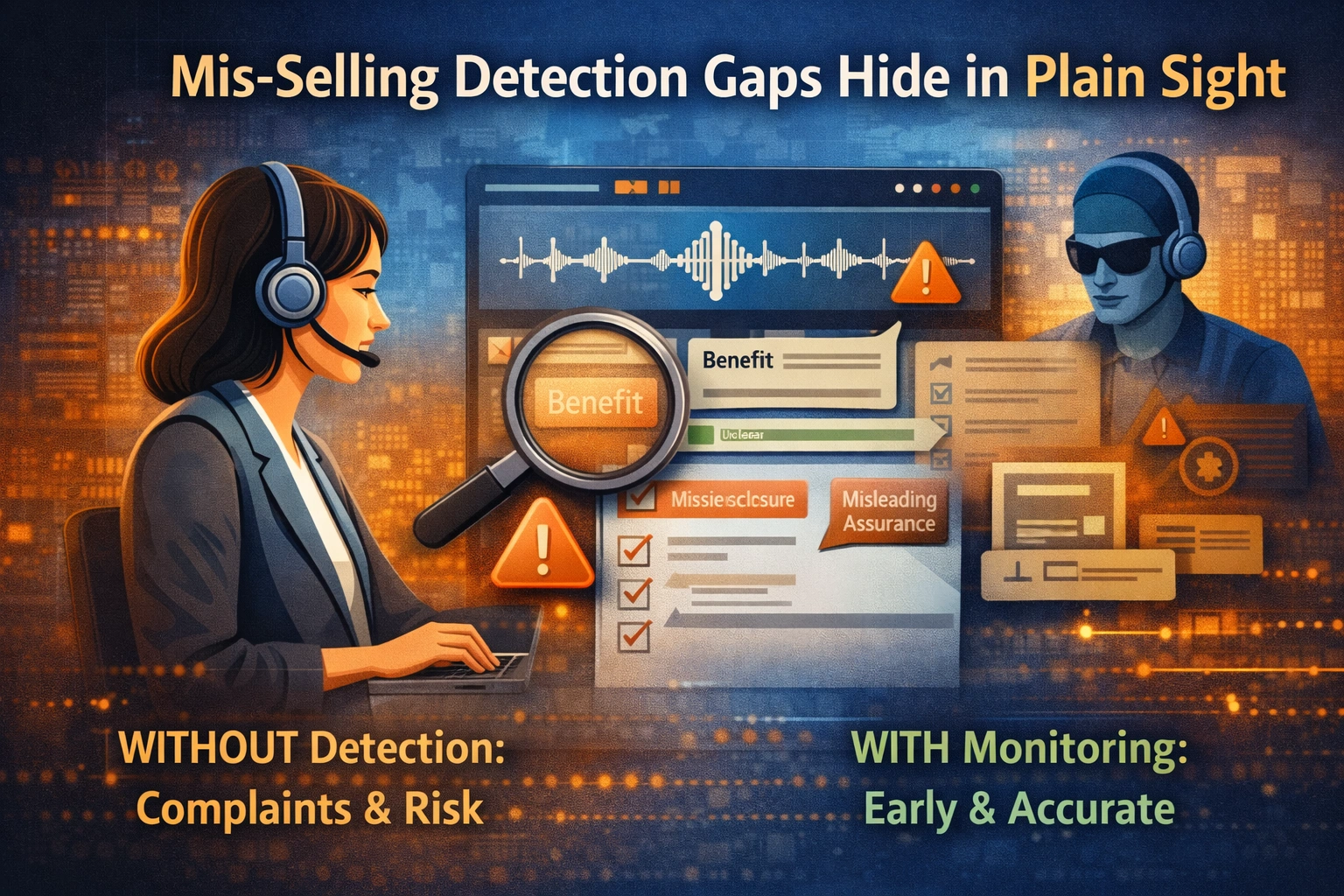
Call monitoring software makes mis-selling detection systematic rather than accidental. It flags risky phrases, missing disclosures, and misleading assurances across all calls, not just reviewed samples.
Effective mis-selling detection in insurance only works when call monitoring software listens to every conversation.
Sales Compliance Monitoring Breaks Down at Scale
Sales scripts exist to protect both customers and insurers, but adherence drops under pressure. Sales compliance monitoring through manual audits misses nuance and frequency. A few compliant calls can mask widespread issues.
With call monitoring software, sales compliance monitoring becomes continuous and consistent. Teams can see where scripts break, why agents improvise, and which moments create the highest risk.
Sales compliance monitoring scales in insurance only when powered by call monitoring software.
Visibility alone isn’t enough. What matters is how quickly risks are detected and whether teams can act before issues escalate.
Improve QA outcomes with call monitoring software.
This blog is just the start.
Unlock the power of Convin’s AI with a live demo.

How Call Monitoring Software Exposes Risk in Real Time
Insurance risk doesn’t wait for quarterly audits. It builds call by call. Call monitoring software shifts risk management from hindsight to real-time awareness, especially in high-volume contact centers.
This proactive view changes how compliance teams prioritize and respond.
Risk Monitoring in Contact Centers Needs 100% Coverage
Traditional risk monitoring in contact centers relies on trends inferred from small samples. That leaves blind spots where serious issues go undetected. In insurance, even one incorrect disclosure can have regulatory consequences.
Call monitoring software enables risk monitoring in contact centers across every call. By identifying patterns early, compliance teams intervene before risks compound.
Insurance risk monitoring in contact centers is only reliable with full visibility from call monitoring software.
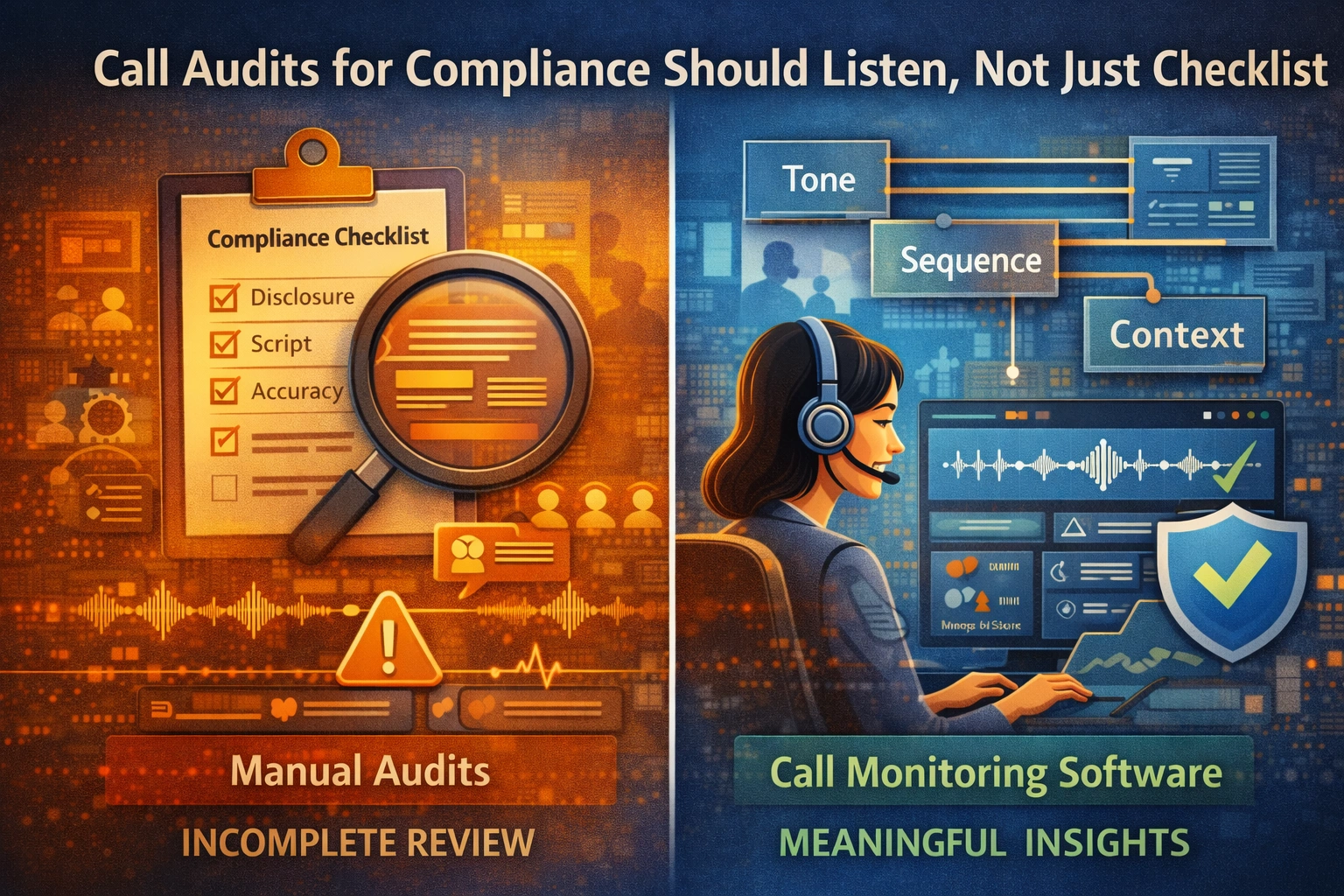
Call Audits for Compliance Miss What Customers Actually Hear
Manual call audits for compliance often focus on checklists rather than customer experience. They miss tone, sequencing, and context; factors regulators increasingly consider.
Call monitoring software enhances call audits for compliance by analyzing conversations as customers experience them. It captures not just what was said, but how and when.
Call audits for compliance become meaningful in insurance when supported by call monitoring software.
Once risks are visible and measurable, insurance leaders begin asking a broader question: how does this impact quality and customer trust?
See how call monitoring software scales QA.
How Call Monitoring Software Improves Quality and Consistency
Compliance and quality are often treated as separate functions. In reality, they’re deeply connected. Call monitoring software bridges this gap by aligning quality assurance with compliance outcomes.
For insurance contact centers, consistency is the foundation of trust.
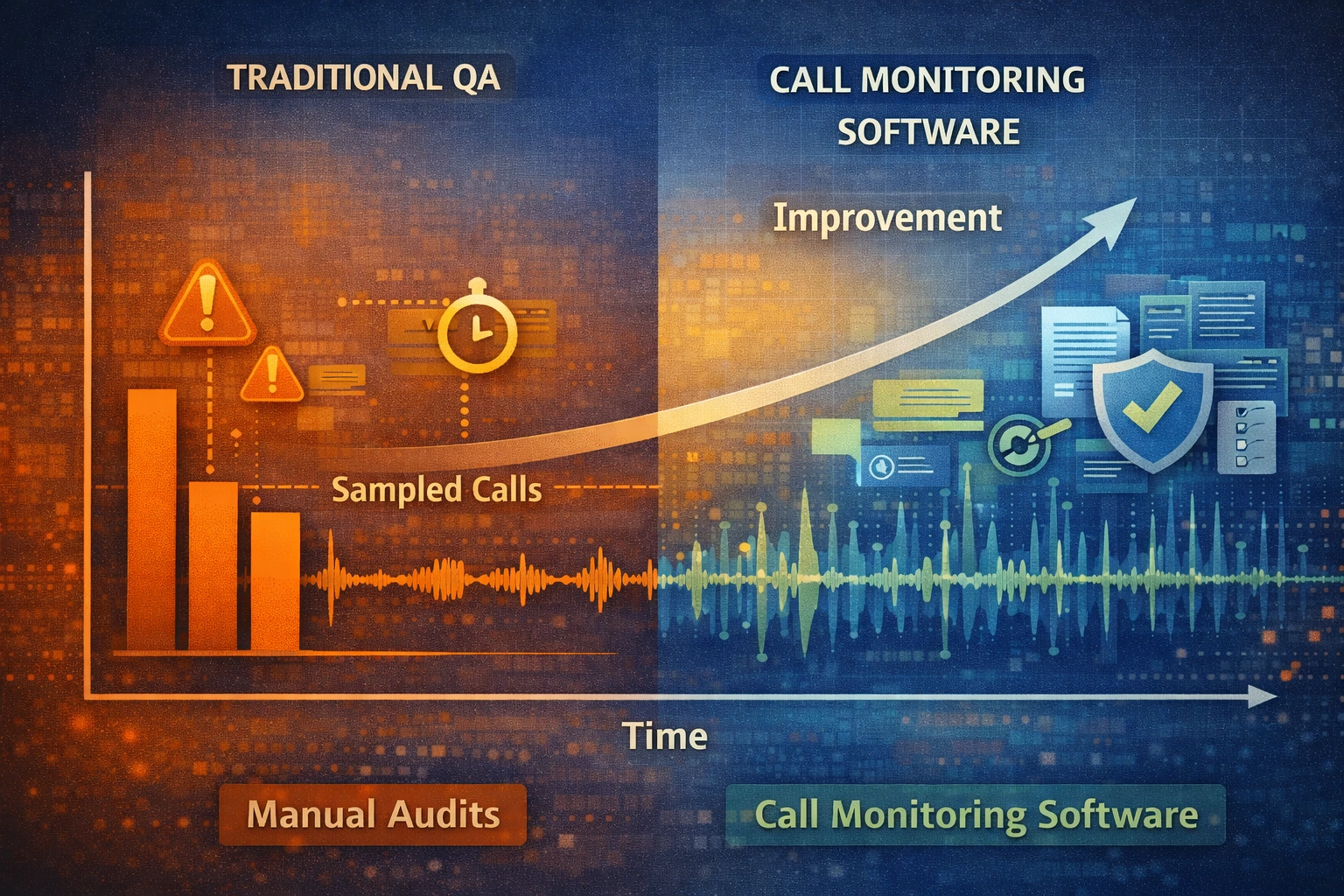
Quality Assurance in Call Centers Can’t Rely on Sampling
Traditional quality assurance in call centers reviews too few interactions to drive consistent improvement. Feedback arrives late, and coaching feels disconnected from real behavior.
Call monitoring software transforms quality assurance in call centers by analyzing every call. Patterns emerge faster, coaching becomes precise, and compliance improves as a byproduct.
Quality assurance in call centers becomes continuous and effective with call monitoring software.
Contact Center Compliance Depends on Repeatable Standards
Insurance compliance isn’t about one perfect call; it’s about repeatability. Contact center compliance improves when expectations are measured the same way every time.
Call monitoring software enforces consistent standards across agents, teams, and locations. It removes subjectivity and aligns QA and compliance teams around shared metrics.
Sustainable contact center compliance in insurance depends on call monitoring software.
With compliance, risk, and quality aligned, insurance teams turn to the practical question: how does this fit into daily workflows?
Replace sampling with smarter call monitoring software.
How Modern Call Monitoring Software Fits Insurance Workflows
Insurance operations don’t need more dashboards; they need fewer blind spots and faster action. This is where Convin’s call monitoring software fits naturally into existing QA, compliance, and coaching workflows. Instead of adding another layer of manual review, Convin works in the background, analyzing every insurance call and surfacing only what matters.
By combining automated quality management with contact center conversation intelligence, Convin turns raw conversations into structured compliance signals. Teams don’t chase data; they get clarity, prioritized risks, and clear next steps.
Sales Compliance Monitoring Works Best When Automated
Manual reviews slow teams down and create inconsistent outcomes across agents and regions. With Convin, sales compliance monitoring becomes automated and continuous, ensuring mandatory disclosures, eligibility checks, and exclusions are consistently delivered on every call.
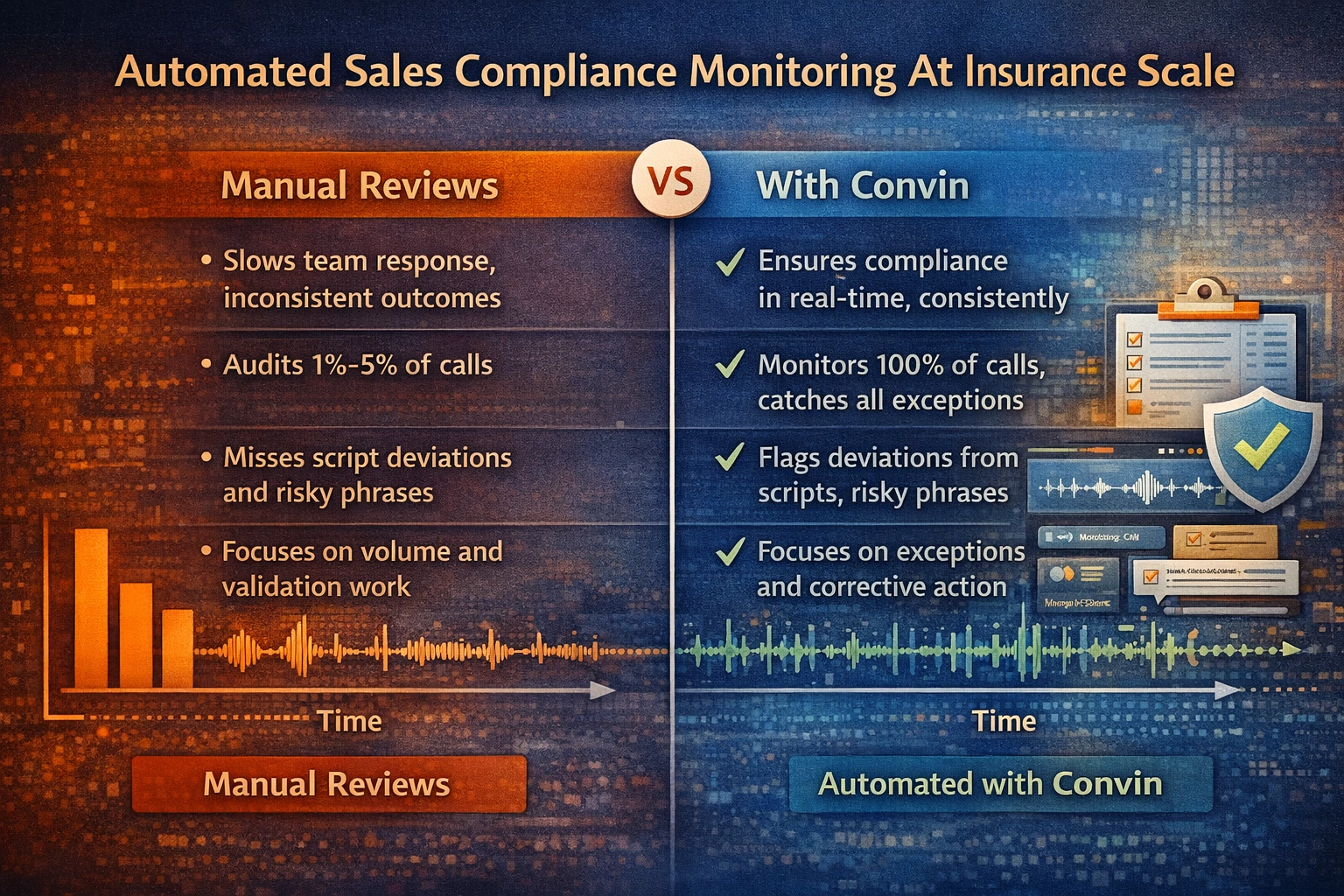
Convin’s call monitoring software listens for required lines, risky phrases, and deviations from approved scripts across 100% of conversations. Compliance teams no longer spend time validating volume; they focus on exceptions, patterns, and corrective action.
Automated sales compliance monitoring at an insurance scale is achievable when Convin’s call monitoring software handles the heavy lifting.
Regulatory Compliance on Calls Requires Ongoing Oversight
Insurance regulations evolve constantly, and scripts need frequent updates to stay aligned. Regulatory compliance on calls can’t be treated as a one-time audit; it demands continuous oversight as rules, products, and customer expectations change.
Convin’s call monitoring software adapts alongside these changes, allowing compliance teams to update rules, mandatory disclosures, and risk indicators without rebuilding processes. This ensures regulatory compliance on calls stays intact even as volumes and regulations shift.
In insurance, ongoing regulatory compliance on calls depends on adaptable call monitoring software like Convin.
Book your Convin demo now!
Why Call Monitoring Software Is Now Table Stakes
Insurance compliance teams can no longer afford partial visibility. Sampling, hearsay, and delayed audits expose organizations to unnecessary risk. Call monitoring software has moved from a compliance aid to a core operational capability.
Risk Monitoring in Contact Centers Defines Future-Ready Teams
Future-ready insurance teams don’t just react to risk; they anticipate it. Risk monitoring in contact centers becomes strategic when powered by call monitoring software that listens, flags, and informs in real time.
The question for insurance leaders is no longer whether to adopt call monitoring software—but how long they can afford to wait.
FAQs
- What is the best call tracking software?
The best call tracking software captures, analyzes, and monitors customer calls end to end, helping teams improve compliance, quality assurance, and risk monitoring across high-volume contact centers.
- What software do most call centers use?
Most call centers use a mix of CRM systems, call monitoring software, quality assurance tools, and conversation intelligence platforms to manage interactions, track performance, and ensure compliance.
- What are the 4 types of CRM?
The four types of CRM are operational CRM, analytical CRM, collaborative CRM, and strategic CRM, each supporting customer engagement, data analysis, and cross-team coordination differently.
- What software does BPO use?
BPOs typically use call monitoring software, CRM platforms, workforce management tools, and quality assurance systems to handle high call volumes while maintaining service quality and regulatory compliance.
- What are 5 types of incoming calls?
Five types of incoming calls include sales inquiries, customer support calls, billing or payment queries, complaint or escalation calls, and compliance-related or verification calls.
.avif)


.avif)