

In a high-stakes industry like insurance, audit success is often mistakenly attributed to well-written policies or having the right software in place.
But here is the hard truth: most audits don't fail because controls are missing. They fail because the evidence is inconsistent, the documentation is scattered, and the reviewer can't trace actions to outcomes.
Imagine a CISO spending six weeks prepping for an audit. The policies are solid, the tools are in place, and the team is confident.
But during the review, the auditor asks for encryption logs for a specific month. The logs are buried in an engineer's inbox, not linked to the policy or its enforcement. Confidence evaporates. That's how audit failures happen.
Insurance for compliance automation becomes crucial in this situation. It goes beyond simply having controls. It involves organizing those controls into repeatable, traceable, and transparent procedures that correspond to actual risks and reviewer expectations.
This article is designed for the compliance automation insurance sector, breaking down how to build and maintain audit-ready evidence using automation, reviewer checklists, and realistic documentation practices.
Structure your controls into proof-ready, auditable stories.
What Does a Real Audit Reviewer Actually Want?
When external auditors assess an insurer's compliance posture, they follow a simple but strict logic: show me what you said you'd do, prove you did it, and prove it was done continuously. They don’t want slides or summaries. They want:
1. Policy, Implementation, and Operational Proof
- A written policy: e.g., "All sensitive data must be encrypted at rest."
- Evidence that the policy is implemented: screenshots of encryption settings, infrastructure documentation.
- Proof it's working: logs, metrics, and periodic verification reports.
2. Traceable Ownership and Time Stamps
- Every document should show who created it, when it was last reviewed, and what version is active.
- Auditors look for signs of accountability and clear audit trails.
3. Consistency Over Time
- A single snapshot won’t cut it. Auditors look for periodic scans, recurring tasks, and patterns of compliance.
4. Reviewer-Friendly Formatting
- Audit packs should have indexes, organized sections, and file naming conventions.
- The more organized your documentation, the fewer questions you'll face.
Build your audit trail with logic, ownership, and consistency.
Why Most Audit Evidence Fails the Test
Most audit evidence fails not because it lacks content but because it lacks structure.
For example:
- Logs are generated but never archived.
- Access reviews are completed but stored in inconsistent formats.
- Security tests are run, but the results are siloed in personal drives.
This fragmented evidence fails the two key tests of auditability:
- Can someone verify this?
- Can someone else trace it?
Automated Compliance Audit Checklist: The Backbone of Real Readiness
The best insurance firms use automated compliance audit checklists to manage their obligations. These checklists:
- List each required control or process
- Link directly to policies and operating procedures
- Automate evidence collection and version control
- Send alerts when data is missing or outdated
For example, if your policy says access rights must be reviewed quarterly, the checklist should:
- Trigger the review task
- Collect the review logs
- Timestamp them
- Store them in a review-ready format
Why Manual Checklists Don’t Work
- They rely on memory and manual documentation
- They often miss steps or deadlines
- They lack enforcement and audit trails
Automation brings rigor, reduces human error, and builds confidence in the evidence being produced.
Automate tasks to build audit confidence every day.
This blog is just the start.
Unlock the power of Convin’s AI with a live demo.

Insurance Compliance Software Tools: What Matters
When evaluating insurance compliance software tools, don’t just look for frameworks and templates. Look for:
- Pre-built mappings to insurance-specific regulatory standards
- Integration with your tech stack for evidence collection
- Audit logs that are immutable and clearly versioned
- Role-based access to enforce separation of duties
A strong tool won't just document policy compliance; it will also ensure it. It will actively enforce it through rules, alerts, and audits.
Choose tools that support structure, not just storage.
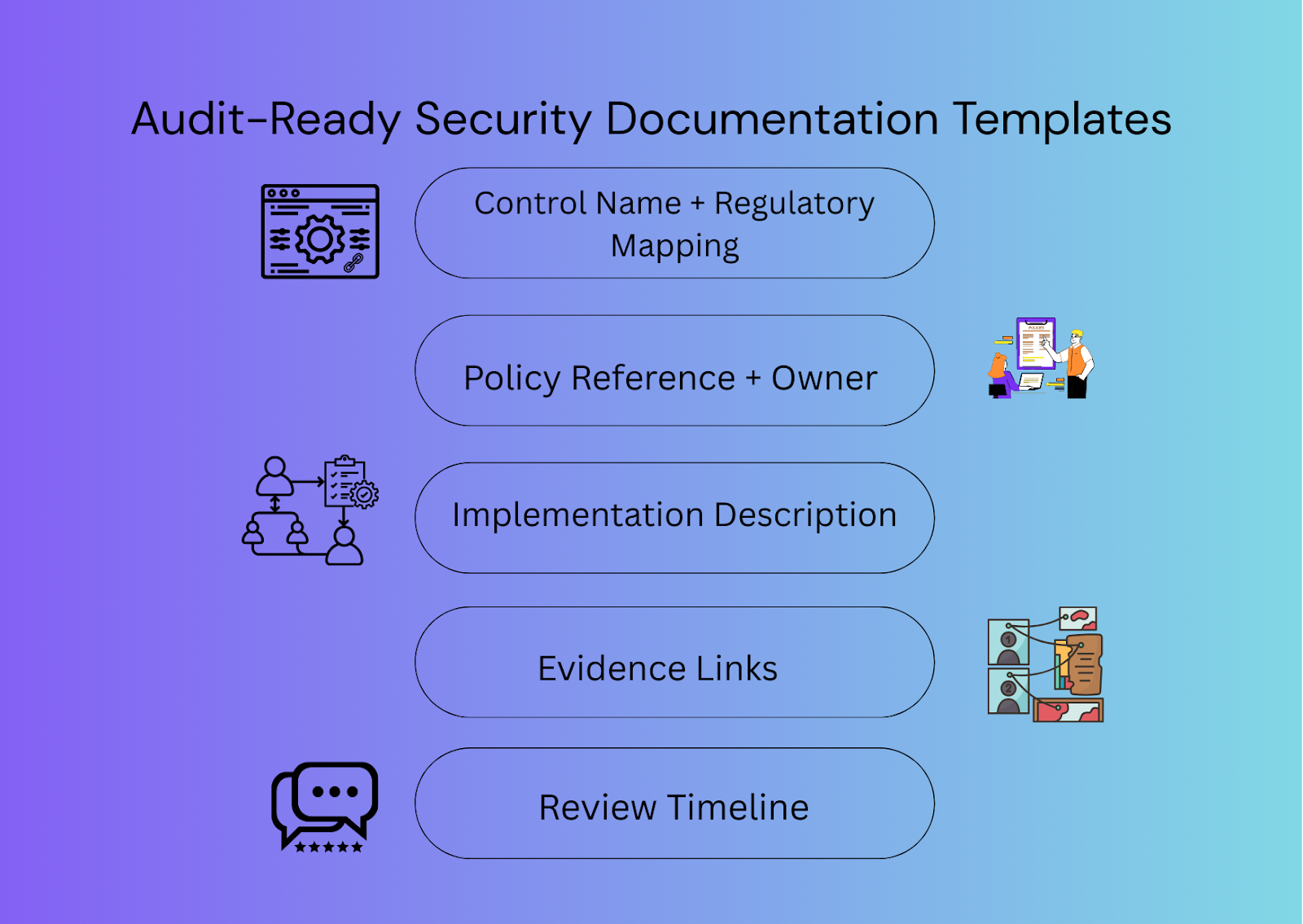
Audit-Ready Security Documentation Templates
Templates save time and reduce inconsistency. Every audit-ready template should include:
- Control name and regulatory mapping
- Policy reference and owner
- Implementation description
- Links to actual evidence
- Timestamp of last review and next review date
For instance, a patch management template would include:
- System owner
- Patch frequency
- Evidence of the last three patch cycles
- Exceptions, if any, with risk rationale
Building Evidence Into Insurance Industry Compliance Workflows
Evidence can’t be an afterthought. The most audit-ready insurers build it into their everyday workflows:
1. Embed Evidence Capture in Daily Ops
- Change management tools that log configuration changes
- Access management systems that timestamp user updates
- CI/CD pipelines that log security tests
2. Use Scheduled Tasks
- Monthly vulnerability scans
- Quarterly access reviews
- Bi-annual policy reviews
3. Create Ownership Loops
- Assign compliance owners to every domain
- Reviewers validate, approvers sign off
- Logs reflect each handoff
4. Build Reviewer Checklists
- What will your auditor ask?
- Where is that evidence stored?
- Who owns that control?
Standardize documentation to speed up review and reduce risk.
An Example: The Audit That Passed in One Day
An insurer with offices across 3 countries underwent a regulatory audit. Instead of assembling evidence manually, they used a compliance automation system with:
- A live dashboard showing control status
- Versioned logs and time-stamped reports
- Pre-built reviewer checklists
- Audit-ready documentation templates
The auditor completed their review in under 8 hours. There were no major findings. Why? Because the firm didn’t just have policies. They had structured proof of compliance built into their workflows.
Conclusion: Passing Audits Starts Long Before the Audit
Audits don’t pass because you scrambled hard in the last two weeks. They pass because your compliance posture is sustained, documented, and automated.
Compliance automation insurance is not about ticking boxes. It’s about building a system of trust. One where evidence is always ready, review is always possible, and accountability is baked into every control.
For CISOs and legal leaders in insurance, this mindset is no longer optional. It's the standard. And it’s how real security stories are written.
Schedule a demo and see how Convin helps insurers stay audit-ready, always.
Frequently Asked Questions
1. What is regulatory compliance automation for insurers?
Regulatory compliance automation for insurers streamlines adherence to evolving regulations by automating evidence collection, reporting, and audit workflows tailored to insurance industry standards.
2. How do insurance industry compliance workflows impact operational risk?
Well-defined insurance industry compliance workflows reduce operational risk by ensuring repeatable processes, timely reviews, and automated alerts for non-compliance.
3. Can automated compliance audit checklists be customized per region or regulator?
Automated compliance audit checklists can be tailored to meet the specific requirements of local regulators, including IRDAI, NAIC, and Solvency II.
4. Why are audit-ready security documentation templates critical during M&A or third-party audits?
Templates ensure consistency and transparency, making it easier for third parties to validate compliance posture quickly during mergers or due diligence processes.

%20BLOG10%20examples%20of%20artificial%20intelligence%20in%202024.webp)



.avif)