

Legal and procurement teams in insurance often lose hours chasing call evidence to support redlines, disclosures, or contract clarity. Even when the data exists, it’s scattered, inconsistent, or locked in systems they don’t control. This blog explores how instant transcript evidence reshapes that reality, and why faster, defensible proof is becoming a quiet legal advantage. So the question becomes: what could your team do with those hours back?
Compliance automation insurance refers to using automated systems to capture, document, and verify insurance interactions for faster, audit-ready compliance. It reduces manual review, strengthens legal accuracy, and accelerates evidence-based decision-making.
Speed up redlines with automated transcript packs.
Why Compliance Automation Insurance Teams Need Faster Legal Proof
Legal and procurement teams in insurance are expected to validate conversations quickly, whether for disputes, vendor agreements, disclosures, or edge-case exceptions. Yet the actual evidence-gathering process still feels old-school: hunting for calls, verifying details, and stitching together fragments to support a redline.
That delay slows business decisions and adds risk exposure. It’s no surprise that many teams now expect faster, cleaner, and more defensible proof.
Insurance Compliance Workflows
Insurance compliance workflows often involve several disconnected systems, manual evidence pulls, and inconsistent documentation. For legal teams, that means the same question keeps returning: “Do we have proof?” And the hunt begins, again.
Even when the data exists, pulling it into a form that legal can trust is almost always harder than it should be.
These workflow inefficiencies ultimately cost legal and procurement teams hours of unnecessary review time and increase the likelihood of missed details. By surfacing structured, ready-to-use conversation evidence, teams cut back on the repetitive back-and-forth and maintain accuracy without slowing the business down.
Fixing the workflow isn’t just about efficiency; it’s about ensuring legal, procurement, and compliance move with confidence instead of chasing data across systems.
With workflows growing more complex and expectations rising, legal teams need a way to bring clarity and speed to document-heavy reviews. That’s exactly where automation steps in.
Accelerate legal approvals using automated QA insights.
How Compliance Automation Insurance Removes Bottlenecks In Contract Reviews
Insurance legal teams know that most contract delays have nothing to do with the complexity of a clause itself; it's the underlying proof. When a policy term, disclosure, or exception needs validation, the evidence rarely sits in one place.
And when everyone is under pressure to finalize paperwork, even small delays ripple across underwriting, claims, vendor management, or customer remediation. Compliance automation insurance helps remove these friction points by bringing data, transcripts, and context together in a format that legal can instantly use.
Instead of relying on ad hoc requests to operations or QA, automation delivers verified context at the moment of review. That means fewer cycles of “Can you confirm this?” and more cycles of productive markup and negotiation.
For procurement, it also reduces the time spent reconciling call-based vendor commitments with contractual wording, which is often a major hidden source of delay.
Automated Compliance Documentation
Automated compliance documentation changes the dynamic entirely. Legal teams no longer need to search for the right call, escalate to supervisors for confirmation, or reproduce the historical trail leading to a contract decision. The system captures every interaction consistently, labels it, and packages it, so legal always starts with the most accurate version of events.
.webp)
This removes the guesswork that often creeps into insurance conversations about coverage levels, policy terms, or risk explanations. Instead of relying on partial notes or memory, the documentation stays uniform, timestamped, and defensible. That consistency reduces the cognitive overhead of reviewing evidence during redlines.
When documentation becomes a reliable input rather than a scavenger hunt, legal teams dramatically reduce back-and-forth and free up time for deeper contract evaluation, not basic fact-gathering.
With documentation streamlined, the next challenge becomes clarity. Legal teams don’t just need information; they need certainty about what was said, promised, or disputed. That’s where transcript evidence becomes the accelerant.
Validate disclosures faster with automated proof.
This blog is just the start.
Unlock the power of Convin’s AI with a live demo.

Where Transcript Evidence Changes The Game For Compliance Automation Insurance
In insurance, the spoken word often carries regulatory weight, especially around exclusions, risk disclosures, customer consent, claims accuracy, and policy boundaries. When disputes arise, legal teams inevitably end up reviewing what was said, and more importantly, how it was said. Compliance automation insurance surfaces this context instantly, transforming a messy evidence trail into a clean, review-ready asset.
Instead of juggling audio files, transcription tools, and partial summaries, legal teams receive structured transcripts with speaker labels, keyword triggers, disclosure checks, and contextual markers. This eliminates hours of manual listening and makes redline decisions significantly faster.
For procurement, it means vendor claims are easier to validate, shortening the time between issue identification and contract adjustment.
Call Transcript Compliance
Call transcript compliance shifts legal reviews from reactive to proactive. When transcripts consistently capture compliance language, flag deviations, and highlight regulatory statements, legal teams no longer need to dig for validation. They can open a transcript, scan the highlighted sections, and confirm whether required statements were delivered correctly.
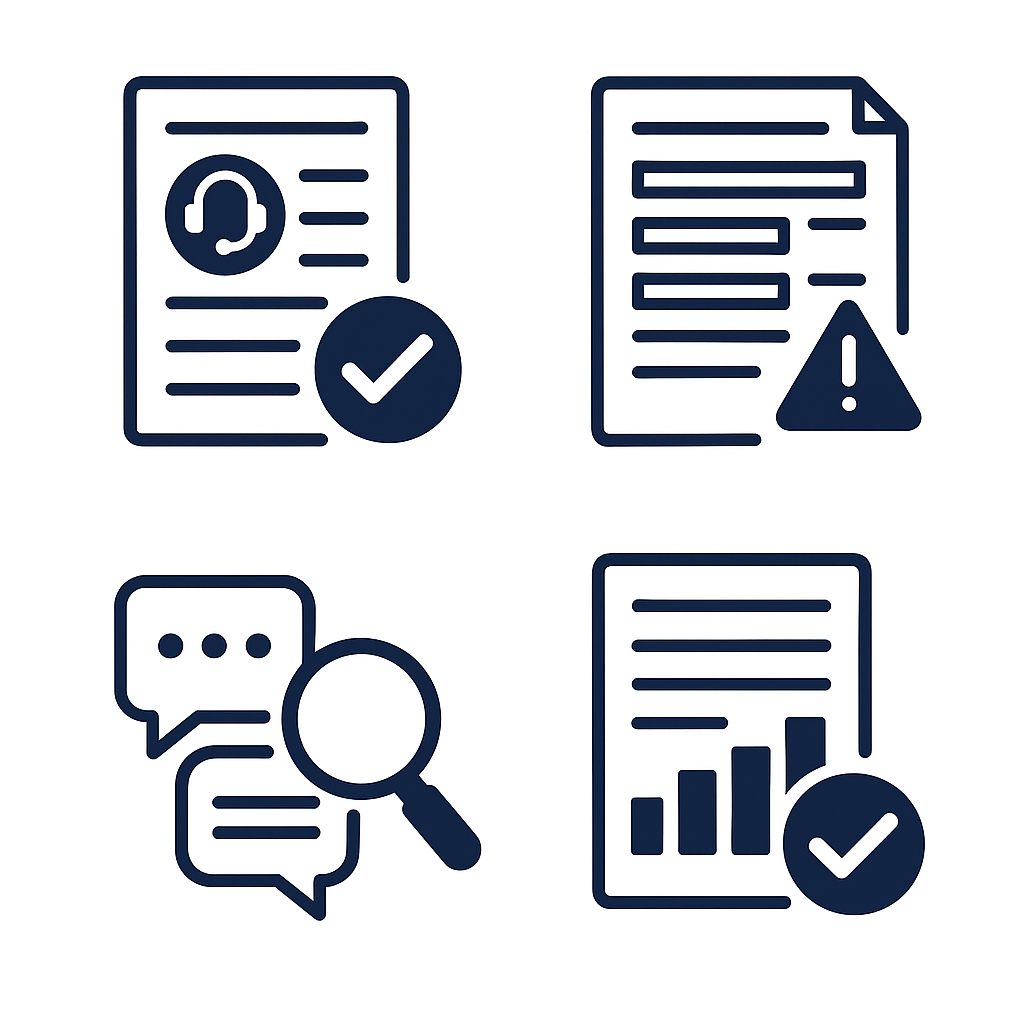
This structured clarity reduces disputes between teams about whether a step was followed or whether a customer was informed appropriately. Not only does this speed up legal work, but it also supports more informed decision-making during negotiations, audits, or external reviews.
Reliable transcript compliance removes ambiguity from conversation-based evidence, giving legal teams instant confidence in their redline decisions.
Audit-Ready Evidence Automation
Audit-ready evidence automation takes transcript clarity one step further by compiling everything legal needs into a clean, ready-to-present pack. Instead of exporting multiple files or summarizing findings manually, the system pulls together the transcript, key moments, compliance flags, QA insights, and summaries into a single artifact.
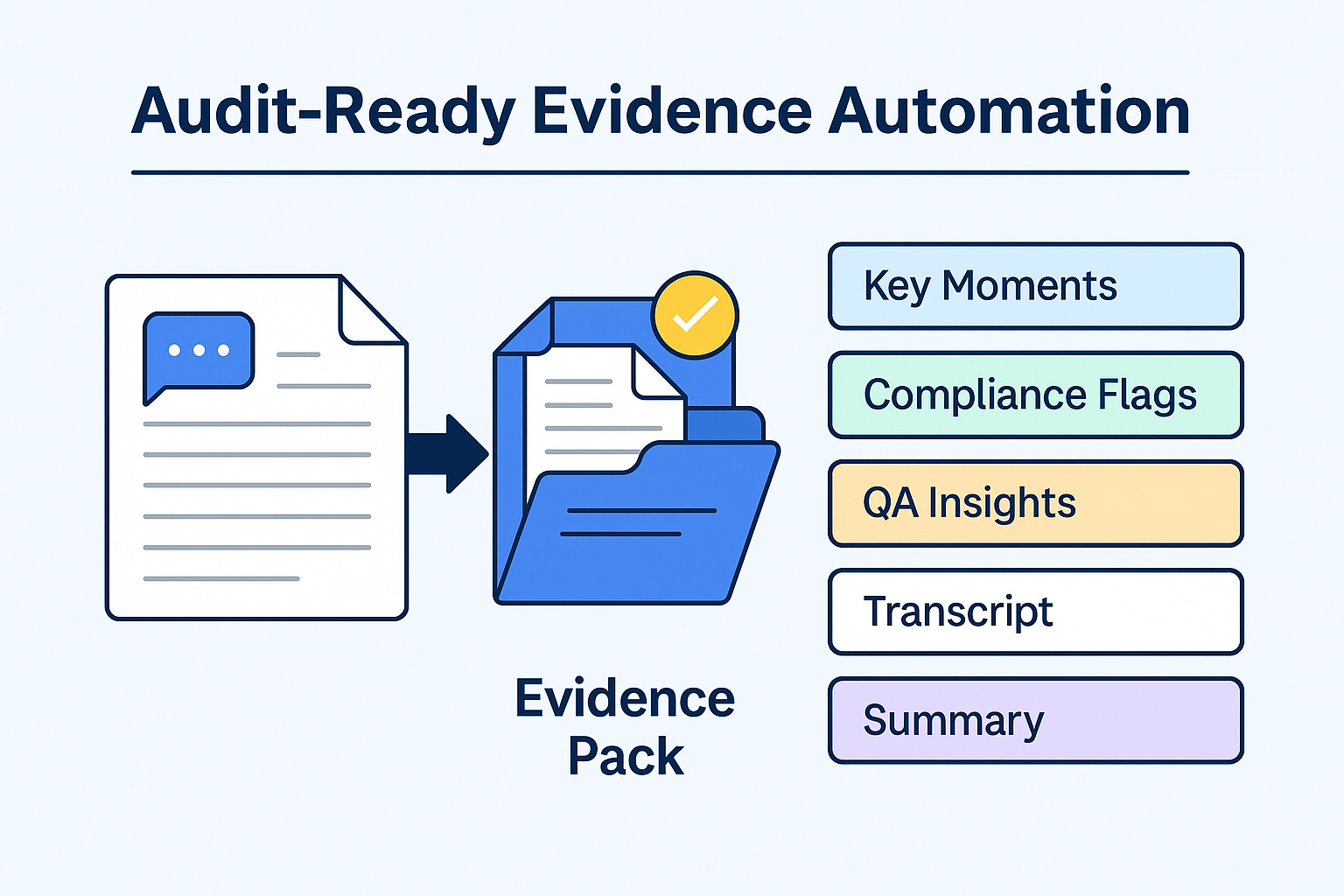
For legal teams, this is transformative. It removes hours of assembly work and ensures every evidence pack follows the same structure, critical during disputes or vendor escalations. Procuring clarity becomes a matter of opening a pack rather than coordinating with three different departments.
Evidence packs end the cycle of manually assembling proof and instead give legal teams polished, consistent, and defensible documentation from the start.
With strong transcripts and ready-made evidence packs in place, legal and procurement teams finally gain breathing room. The next step is understanding the real, everyday wins these tools unlock.
Cut legal cycle time with instant evidence workflows.
Practical Wins For Compliance Automation Insurance Teams Using Instant Evidence
Legal and procurement teams don’t need more tools; they need more certainty. Compliance automation insurance delivers that certainty by transforming raw conversations into structured, review-ready insight. It reduces duplicate effort, enables faster decisions, and cuts down on the constant re-verification that drains time from both counsel and operations.
In insurance workflows that rely heavily on verbal explanations, claims, underwriting exceptions, policy clarifications, and sales disclosures, instant evidence removes the usual friction. Teams no longer need to recreate the context of a call; they receive a complete, self-contained snapshot that supports legal evaluation. This improves alignment across departments while lowering the risk of miscommunication or oversight.
Insurance QA Automation
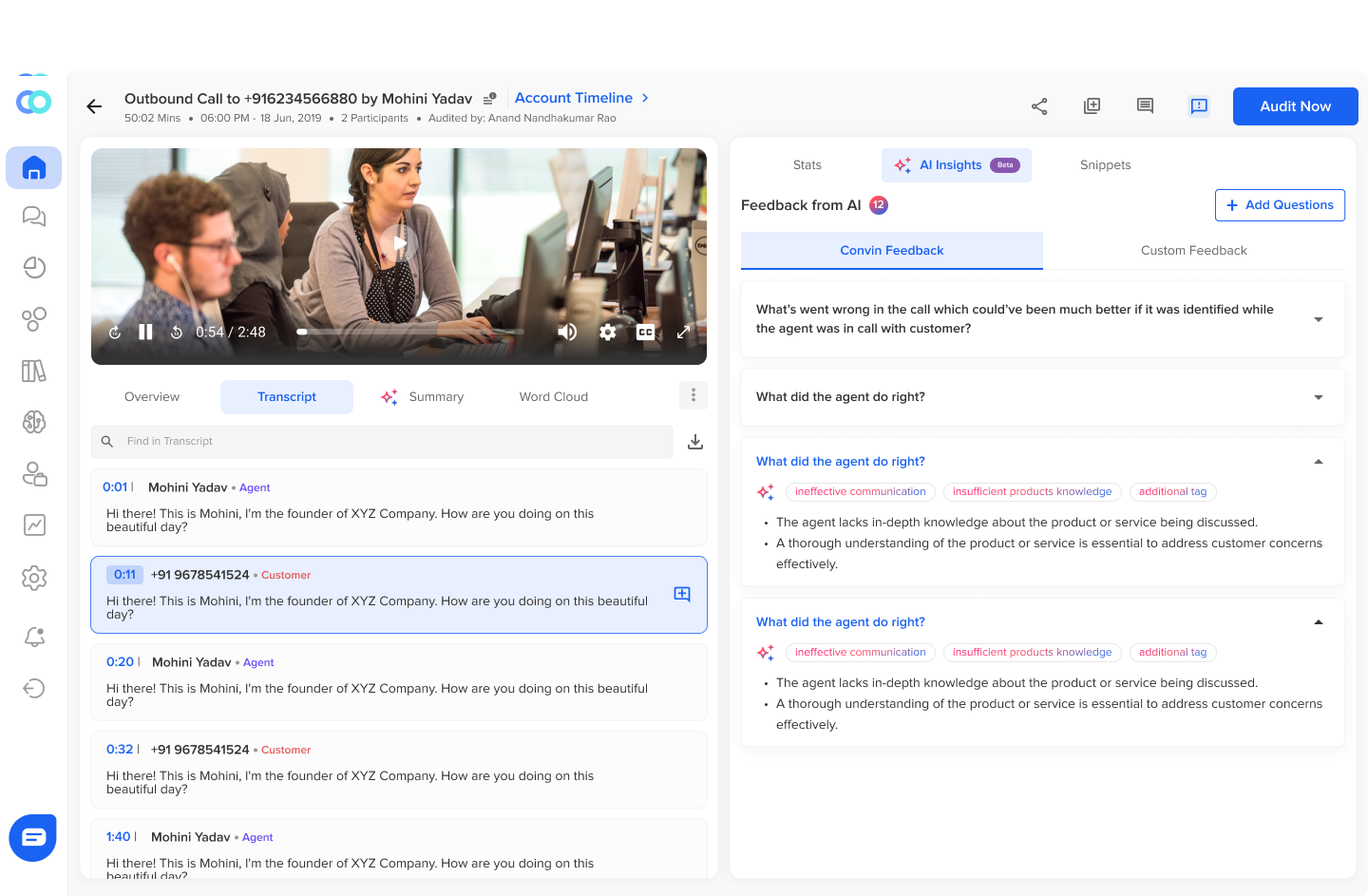
Insurance QA automation proactively flags inconsistencies or deviations that could later become legal issues. Instead of waiting for problems to surface during contract review, potential risks are caught much earlier. That makes the redline process smoother and far more predictable.
For legal teams, this means fewer unpleasant surprises, no hidden compliance misses waiting to derail a contract decision. And for procurement, it guarantees cleaner inputs when assessing or negotiating with external vendors.
Automated QA ensures that by the time legal sees data, it’s already clean, consistent, and aligned with compliance expectations.
Conversation Intelligence For Compliance
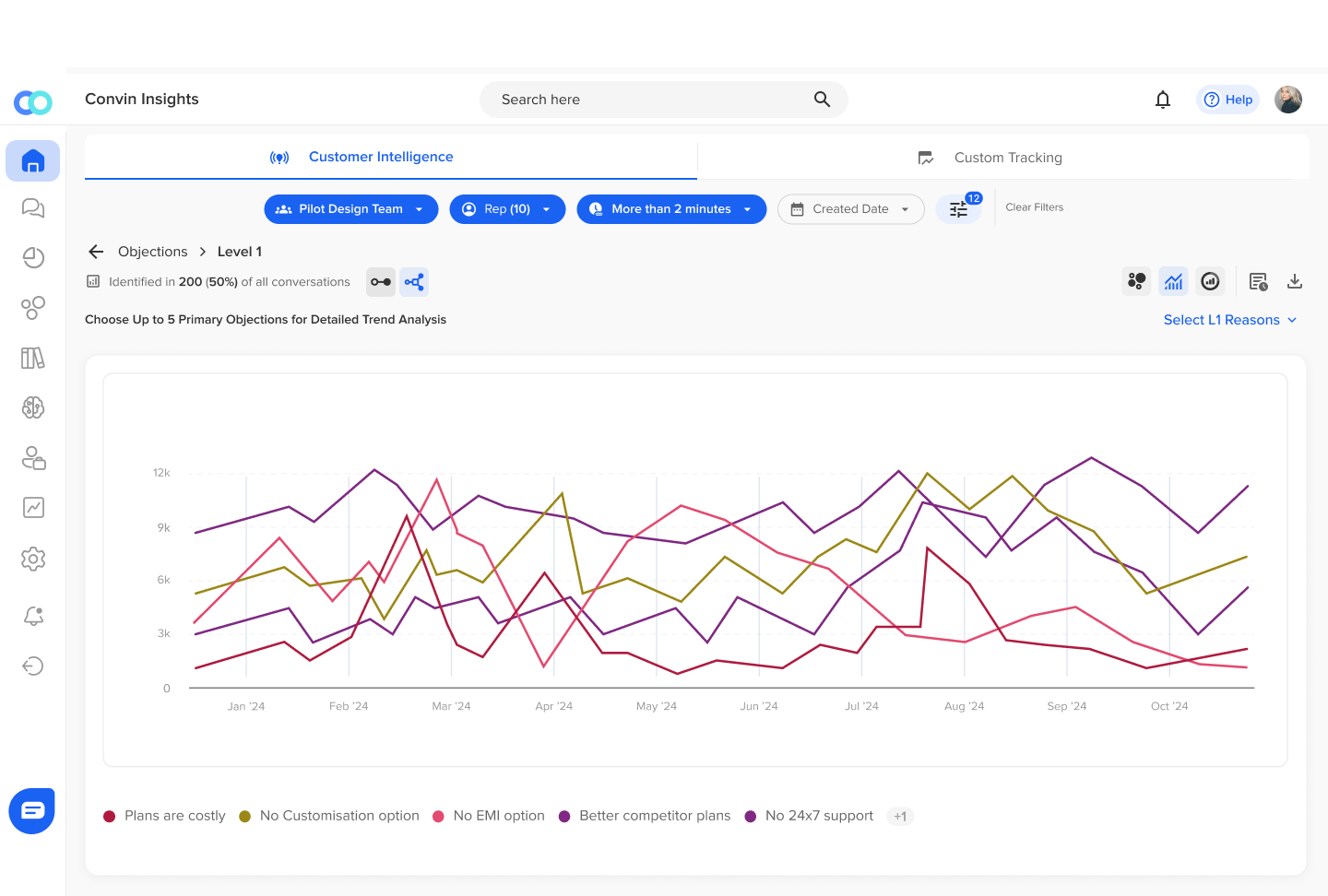
Conversation intelligence for compliance adds a layer of meaning on top of transcripts. Instead of simply reading what was said, legal teams can understand sentiment shifts, topic transitions, product nuances, objection patterns, or risk triggers that shaped the interaction. This context often clarifies disputes that would otherwise stall negotiations.
This deeper layer of insight helps procurement teams understand vendor behavior more objectively and helps legal teams anticipate where misalignment may emerge in contracts. It ultimately reduces escalations and repetitive clarifications that normally drag out review cycles.
When intelligence is layered into evidence, teams not only see the truth, they understand it, accelerating every legal and procurement decision.
Pulling these capabilities together, the conclusion becomes clear: legal teams gain a measurable edge when evidence is instant, structured, and defensible.
Book your Convin demo now!
A Clear Edge For Compliance Automation Insurance Teams
When transcript packs, automation, and intelligence converge, legal and procurement teams finally get the clarity they’ve lacked for years. No more slow hunts for evidence. No more contradictory notes. No more back-and-forth between departments just to confirm what was said. Instant, audit-ready proof simply accelerates everything.
As cycle times shrink and accuracy improves, insurance organizations gain a sharper legal advantage across underwriting, claims, renewals, and vendor negotiations. And with automated QA and conversation intelligence working quietly in the background, teams stay confident that their decisions are grounded in precise, defensible data.
FAQs
1. What is compliance automation insurance, and why does it matter for regulated teams?
Compliance automation insurance helps regulated teams reduce manual checks, enforce documentation standards, and maintain consistent audit trails across policy, claims, and customer interactions.
2. How does compliance automation insurance improve regulatory reporting accuracy?
Automated capture and validation eliminate human error, making reports more consistent and reducing risk during state or federal insurance audits.
3. Can compliance automation insurance integrate with existing policy or claims systems?
Most modern solutions support integrations via APIs, enabling automated evidence capture within existing underwriting, claims, or servicing workflows.
4. How does compliance automation insurance help during external audits or investigations?
It centralizes evidence in a standardized, retrievable format, helping teams respond faster with precise documentation.
5. What security standards should compliance automation insurance tools follow?
Tools should support role-based access, encryption, and industry standards like SOC 2 to protect sensitive customer and claims-related information.


.avif)


.avif)