


In BFSI, data residency must cover every backup, log, DR copy, and analytics step inside your compliance automation insurance workflows, not just storage. CISOs need full visibility into hidden retention paths and India-only processing. Convin supports this with localized QA, analytics, backups, and retention controls that prevent silent cross-border data movement.
Compliance automation insurance refers to technology that helps insurance teams automatically meet regulatory, data-residency, and audit requirements across calls, documents, analytics, and retention workflows. It reduces manual checks, strengthens governance, and ensures consistent, India-first compliance across every customer interaction and operational process.
Check metadata safety via Convin’s retention logs!
Why Data Residency for BFSI Needs a Buyer Lens in Compliance Automation Insurance
When you’re a CISO in a bank or insurance firm in India, “data residency” isn’t just a checkbox; it’s the foundation of trust, regulatory safety, and long-term resilience. Many articles define residency as “where the servers sit.” That’s a start. But in a real-world compliance automation insurance setup, what really matters is: where do all traces of data live, raw calls, transcripts, logs, backups, analytics outputs, and DR copies.
According to a study on cloud adaptation in BFSI, 91% of financial institutions had adopted cloud by late 2023 (up from ~37% in 2020). (source)
Relying solely on “data resides in-country” can lull teams into a false sense of security. For the Indian BFSI (banks, insurers, NBFCs), regulations already require local storage of financial/payment/insurance data. (Khaitan & Co)
That means as you evaluate a compliance automation insurance vendor, you need a buyer’s lens, one that demands transparency not only on storage but on retention, backup, logs, analytics pipelines, disaster recovery, and audit-readiness. Only then does “data residency for BFSI” become practical and enforceable.
See Convin’s India-locked support ticket controls!
The Hidden Residency Risks CISOs See Inside Compliance Automation Insurance Pipelines
When you partner with a vendor for compliance automation insurance, the system likely touches data at multiple phases: ingestion, processing, QA scoring, analytics, reports, and, behind the scenes, often backups, DR snapshots, logs, and support-ticket storage. Each of these stages introduces “shadow retention paths” that can subvert data residency unless controlled.
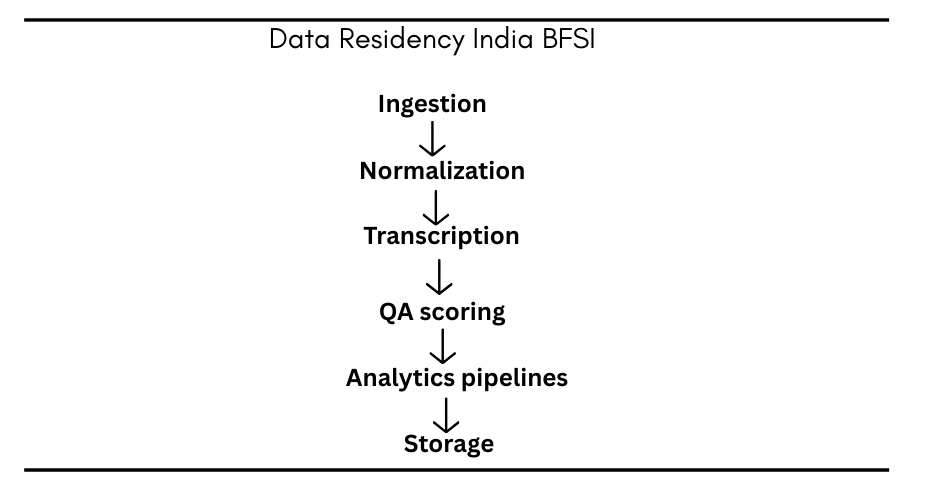
Data Residency India BFSI: Where Data Actually Moves
A typical vendor pipeline isn’t just “store call recording, run QA.” Instead, data may flow through microservices: ingestion to normalization to transcription to QA scoring to analytics pipelines, and finally to storage. Unless architecture maps are clear, some microservices might run in non-India regions, or backups might default to multi-region storage.
What good looks like: a full end-to-end data-flow map, showing every microservice, processing node, storage cluster, and a guarantee that all run within India.
Data localization insurance sector shadow retention in backups & snapshots
Even if the “live” database is India-only, backups, DR snapshots, and disaster-recovery replicas could be pushed to global mirrors for availability. That directly violates data localization norms for insurance sector data.
If a backup or snapshot ends up outside India (or accessible outside), that undermines regulatory compliance.
IRDAI data residency compliance: what logs & support tickets leak
Beyond core data, logs (access logs, QA logs, system logs), support-ticket attachments, debug dumps, and metadata, these often contain PII or sensitive metadata. If the vendor pushes these logs to global observability or support systems, data residency is broken in practice.
BFSI data retention controls how metadata survives longer than expected
In compliance automation insurance setups, transcripts, QA scorecards, analytics reports, coaching reports, and metadata often outlive the original call recordings. If retention policies don’t account for these “derived artefacts,” data may stay indefinitely, sometimes in older storage or archive buckets, often with weaker controls.
Automated QA residency controls BFSI, ensuring analytics don’t push data outside India.
Modern compliance automation insurance tools often run ML/LLM scoring, analytics, and reporting. If those pipelines are global, or use global model-serving infrastructure, then even if raw data is stored in India, derived data or model inputs/outputs might leak outside.
Assess retention with Convin’s granular controls!
This blog is just the start.
Unlock the power of Convin’s AI with a live demo.

How Compliance Automation Insurance Should Handle Residency & Retention Together
If you treat residency and retention as separate, e.g., “data stored in India, we’re done”, you miss the bigger picture. For BFSI, good compliance automation insurance demands integrated policies covering all stages: raw data, backups, logs, analytics, and retention lifecycle.
What good looks like (vendor-agnostic):
- Residency enforced for raw data, transformed data, analytics outputs, and logs.
- DR and backup only within India, with no cross-region replication.
- Support tickets/logs/metadata are also India-hosted.
- Explicit retention policies for each data category: calls, transcripts, QA outputs, logs, analytics.
- Audit-ready trails and evidence packs: data-flow diagrams, access logs, deletion logs, retention schedules, and DR snapshots metadata.
For a buyer, this becomes a checklist.
What CISOs Should Validate in Compliance Automation Insurance Platforms
If you’re shortlisting vendors for compliance automation insurance, here’s a checklist to vet against, beyond standard demos and SLAs.
- Residency Evidence Pack: Architecture diagrams, microservice maps, data-flow documentation.
- DR & Backup Validation: Proof that backups and DR snapshots are India-only, with no implicit multi-region replication.
- Log Forwarding Proof: Assurance logs (system logs, access logs, QA logs) are not forwarded to global observability or monitoring systems.
- Retention Duration Transparency: Clear retention windows for audio, transcripts, QA reports, analytics outputs; auto-deletion schedule.
- LLM/ML Residency Proof: If the vendor uses ML/LLM for QA, analytics, or scoring, verify that inference and model serving run on the India-region infrastructure only.
- Audit Readiness / Evidence Export: Ability to export audit-ready logs, retention history, deletion history, DR snapshot metadata, suitable for regulators like Insurance Regulatory and Development Authority of India (IRDAI) or Reserve Bank of India (RBI).
A vendor meeting these criteria earns buyer confidence and ensures that compliance automation insurance is truly “compliant.”
See Convin’s India-only QA pipeline in action!
How Convin Supports India-First Residency Inside Compliance Automation Insurance Workflows
This is where Convin brings real value, without over-selling. Convin’s platform is designed with India-first deployment, structured for BFSI, and built to avoid the hidden retention paths other vendors ignore.
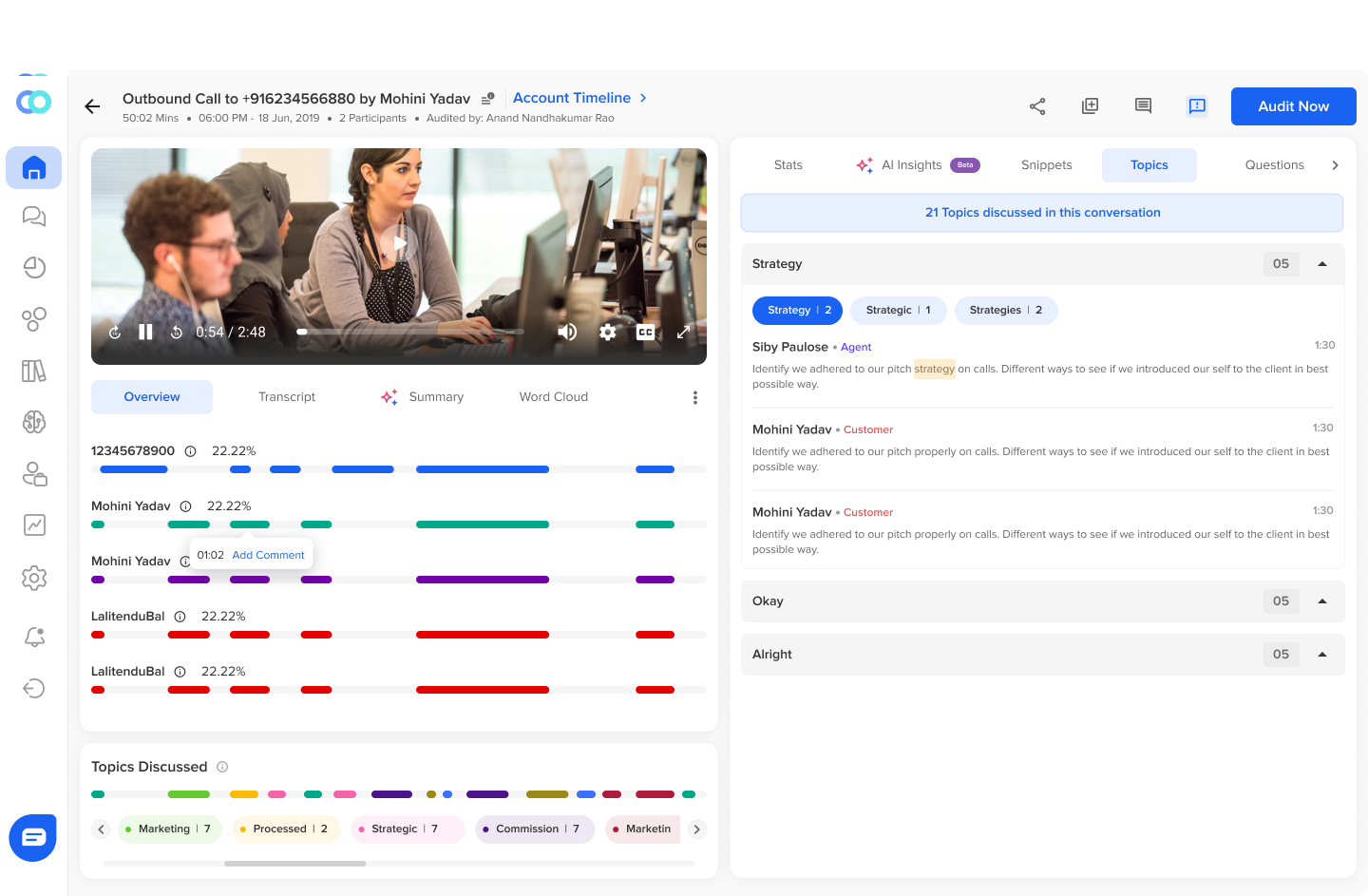
- India-Region Processing & Storage: All ingestion, transcription, QA scoring, and analytics pipelines run on India-hosted clusters. That covers “raw data,” “transformed data,” and “analytics outputs.”
- India-Only Backups & DR Snapshots: Backup, disaster-recovery (DR), and snapshot infrastructure remains within India: no cross-region replication, no global mirrors.
- Controlled Logging & Support Access: QA logs, access logs, and support-ticket data are stored in India, with role-based access controls and audit trails.
- Fine-Grained Retention Policies: Convin allows custom retention windows per data type, call audio, transcript, QA output, and analytics reports, aligning with internal policy or regulator requirements.
- ML/Analytics Residency Guardrails: Automated QA, analytics pipelines, and model inference execute in an India-only environment. No data leaves India during ML/LLM processing.
- Audit-Ready Evidence Packs: On demand, Convin can provide documentation, data-flow diagrams, logs, retention metadata, and deletion logs, enabling compliance audits, regulatory reviews, or internal governance.
In short, Convin isn’t just another vendor; it’s built to address precisely the “shadow retention” problem many CISOs fear when evaluating compliance automation insurance platforms.
Book your Convin demo today!
What CISOs Can Take Forward From Compliance Automation Insurance
Data residency for BFSI isn’t just about where you store data; it’s about how you handle everything thereafter. Backups, logs, analytics, DR, and support tickets can each silently undermine regulatory compliance if not planned for.
For CISOs and IT heads evaluating compliance automation insurance, the right vendor will treat residency and retention as two sides of the same coin and offer visibility, controls, and evidence.
Convin’s India-first architecture and transparency-first features mean you can move forward confidently, not just meeting regulatory requirements, but building a defensible, audit-ready data posture.
FAQs
- How often should insurance companies update their compliance automation rules?
It’s ideal to update rules quarterly or whenever new regulations, internal audit findings, risk shifts, or product changes occur.
- What reporting capabilities should compliance automation insurance offer?
Strong platforms provide dashboards, audit logs, exception reports, trend insights, and exportable, regulator-ready documentation.
- Can compliance automation insurance improve customer experience?
Yes. Faster validation, fewer manual steps, and consistent compliance checks create smoother customer journeys and reduce rework.
- How secure is compliance automation insurance?
Security depends on the vendor, but leading systems include encryption, access controls, anonymization, logging, and continuous compliance monitoring.


.avif)

.avif)