

Claims are where insurance promises are tested. This is also where most friction appears. Delays, errors, and backlogs frustrate customers. Teams struggle with volume and complexity. Traditional insurance claims processing relies on manual work. Emails, documents, and handoffs slow everything down.
This is why insurance claims automation is gaining attention. It helps insurers rethink how claims actually move. But confusion remains. Is automation the same as processing?
What should be automated first?
This guide breaks it down clearly. You’ll learn definitions, differences, and priorities. No tools. No buying advice. Just clarity.
Explore how modern claims teams reduce friction step by step
How does automation differ from processing?
The difference is operational. Not philosophical. Insurance claims processing depends heavily on people. Insurance claims automation depends on systems acting first. Both exist for different reasons. Understanding this difference prevents poor automation decisions. Claims processing defines what must happen. Automation defines how some of those steps move forward.
What manual claims processing looks like
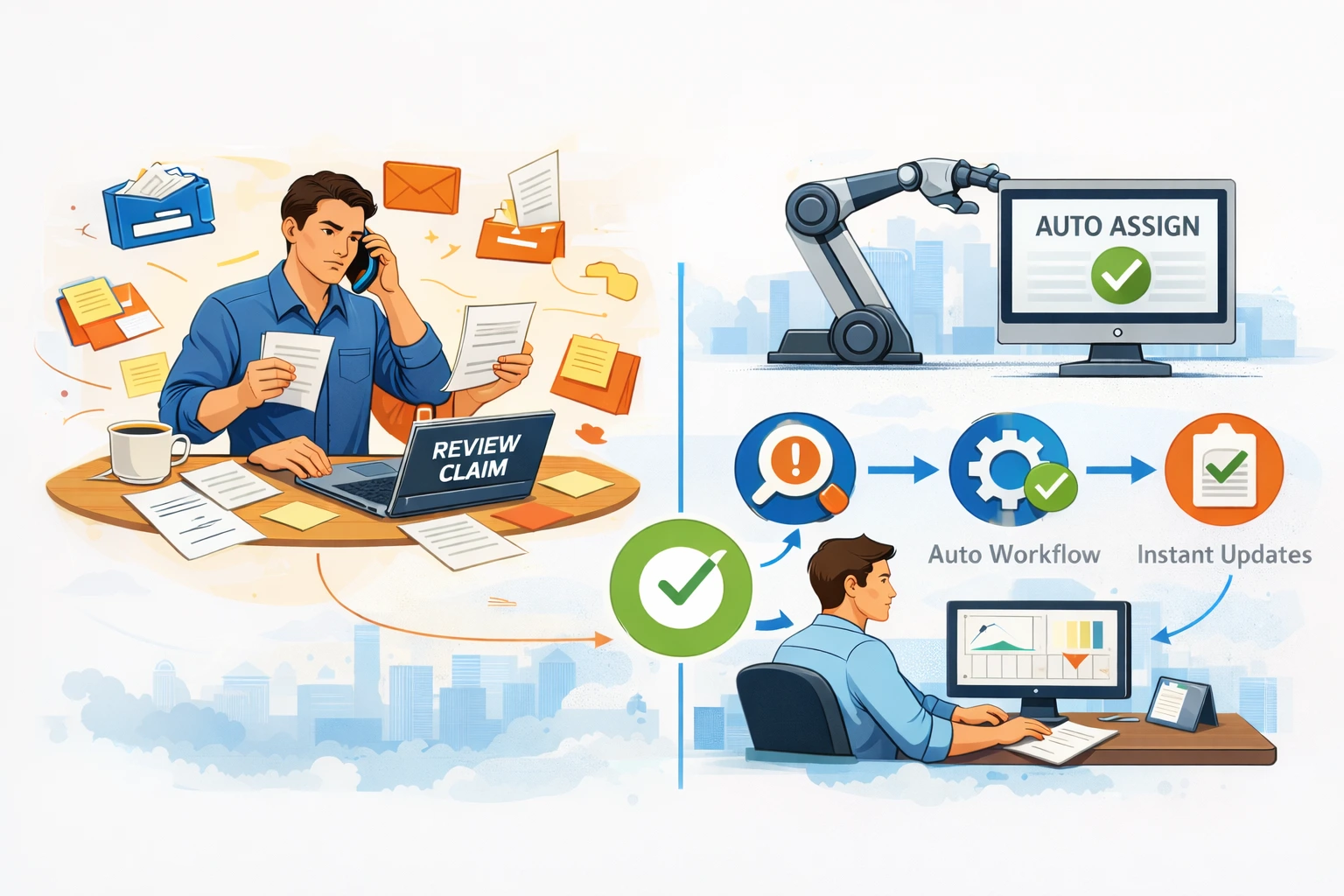
Manual processing relies on human experience. It also relies on memory and judgment. Adjusters spend significant time coordinating work. Much of this effort is invisible.
On a typical day, adjusters:
- Check multiple systems for updates
- Re-enter the same information
- Follow up with emails or calls
How claims processing automation changes daily work
Claims processing automation shifts execution to systems. Judgment remains with people. Automation handles tasks that follow rules. It acts as soon as conditions are met.
For example, systems can:
- Assign claims instantly
- Flag missing or incorrect data
- Trigger the next step automatically
This reduces mental load. Adjusters spend less time tracking work. They focus more on evaluating claims.

Why automation improves consistency
Consistency is central to trust. Customers expect similar outcomes for similar situations. Automation applies the same rules every time. This reduces unintended variation.
However, it does not remove control.
Adjusters still:
- Review exceptions
- Make final decisions
- Handle complex or sensitive cases
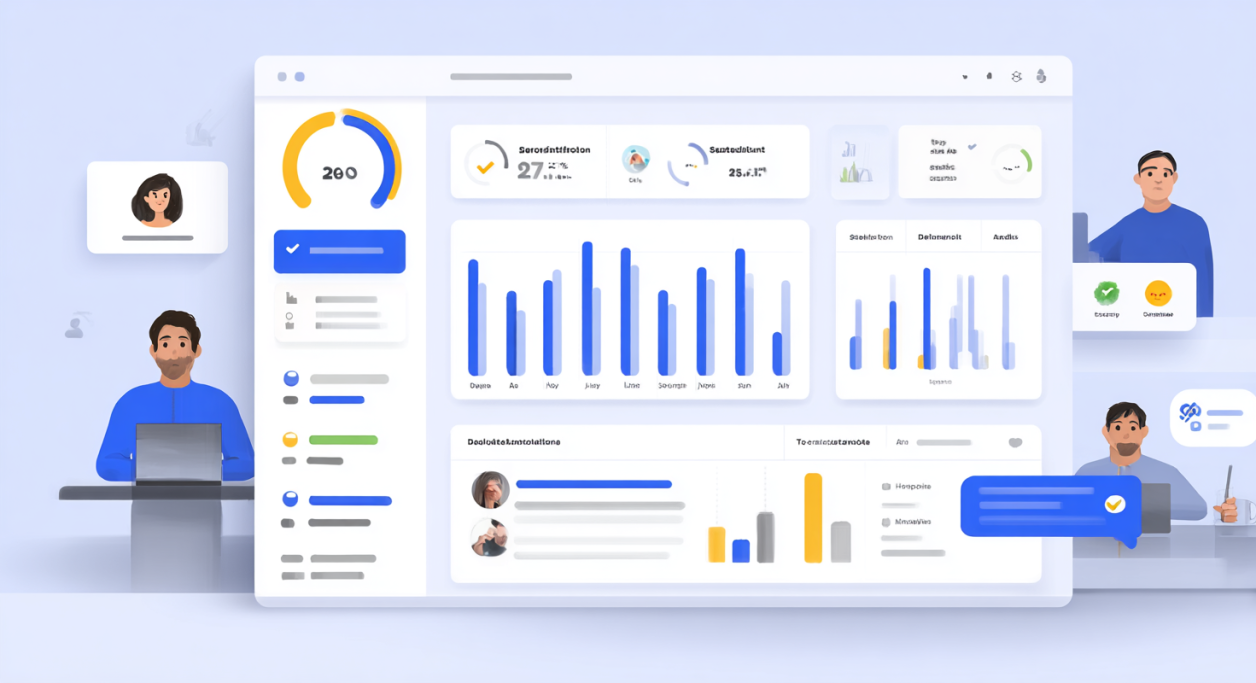
Automation handles predictable steps. Humans handle nuance and empathy. As automation expands, teams often look at platforms to understand how quality trends and workflow insights help measure consistency and identify gaps after automation is introduced.
Learn how insurers evaluate consistency at scale
Which automation areas come first?
Not every claim step should be automated. Prioritization determines success. Automation works best where repetition is high. Complex judgment should come later. Early decisions shape long-term outcomes.
Why automated claims processing starts with data
Data movement causes most delays. Information often arrives incomplete or late. Adjusters spend time fixing basics. This slows everything else.
Automated claims processing focuses on:
- Data capture from multiple sources
- Validation against rules
- System updates without re-entry
Why FNOL automation come early
First notice of loss sets expectations. Delays here cascade downstream.FNOL automation improves:
- Intake speed
- Data accuracy
- Customer confidence
How workflow automation removes bottlenecks
Workflow delays are often hidden. Work stalls between steps.
Claims workflow automation:
- Moves tasks automatically
- Triggers reminders
- Escalates overdue actions
Workflow automation supports scale. Without it, growth creates chaos. As teams mature, some look at platforms like Convin’s conversation intelligence and quality analytics to understand how workflow insights and quality signals help refine automation priorities over time.
See how insurers sequence automation efforts
This blog is just the start.
Unlock the power of Convin’s AI with a live demo.

What is automation’s future role?
Automation in claims is evolving. It is no longer limited to task execution. Early automation focused on speed. Future automation focuses on intelligence. This shift changes how claims teams operate. Systems begin to support decisions, not just actions. Automation becomes a layer of guidance. Humans remain accountable.
How AI in insurance claims supports decisions
AI in insurance claims analyzes patterns at scale. It does not replace judgment. AI helps surface what humans may miss. This is critical as claim volumes rise.
Common use cases include:
- Risk scoring based on historical data
- Fraud signals from behavior patterns
- Claim triage using similarity detection
AI flags anomalies early. Humans review and decide outcomes. This partnership reduces blind spots. It also improves consistency over time. AI becomes more useful as data quality improves. Automation maturity directly affects results.
Why automation platforms focus on orchestration
Modern claims environments are fragmented. Multiple systems handle parts of the journey. Claims automation platforms do not replace cores. They sit above them. Their role is orchestration.
They connect:
- Tasks across teams
- Data across systems
- Decisions across workflows
How insurers balance automation and expertise
Claims remain human-centric. Trust and fairness matter. Automation handles volume and repetition. People handle empathy and complexity.
Successful teams:
- Define clear automation boundaries
- Monitor automation outcomes continuously
- Refine rules as patterns change
Maintaining this balance is critical as automation expands. It keeps claims both efficient and human. In this context, some insurers turn to platforms such as Convin, which use conversation intelligence and quality analytics to surface how human decision-making interacts with automated workflows.
Learn how teams prepare for intelligent claims operations
Insurance claims automation helps insurers move faster without losing control. The real advantage comes from knowing what to automate first. Claims teams that start small learn faster. Teams that prioritize workflows see lasting gains. Many insurers study platforms like Convin as examples of how quality monitoring and workflow insights support modern claims operations. The focus remains on learning and improvement, not tools.
Get started with Convin’s solution today.
FAQs
1. What is insurance claims automation?
Insurance claims automation refers to using systems to handle repetitive claim tasks. It supports workflows like intake, routing, and validation. Human judgment still guides decisions.
2. How is insurance claims automation different from claims processing?
Claims processing covers the full claim lifecycle. Automation supports specific steps within that lifecycle. It helps workflows move faster and more consistently.
3. Which claim processes should be automated first?
Insurers usually start with repetitive steps. Examples include data capture, FNOL, and workflow routing. Complex decisions are automated later.
4. Does insurance claims automation replace adjusters?
No. Automation handles predictable tasks. Adjusters focus on judgment, empathy, and exceptions.
5. How do insurers measure success after automation?
Success is measured through cycle time, consistency, and quality. Workflow visibility and interaction insights help track improvement.



.avif)