

If you’re evaluating call tracking pricing, the confusion is real. Pricing looks straightforward at first but quickly becomes layered and unpredictable. What seems like a low-cost solution often turns into a growing expense with unclear returns.
According to Gartner, hidden SaaS costs can increase total ownership by up to 30%. This explains why many businesses underestimate their actual spend. At the same time, call-driven interactions are becoming more critical.
The challenge is that pricing scales faster than expected. As campaigns grow, so does the need for more tracking numbers, more call minutes, and deeper analytics. This can increase your call tracking cost per month by three to five times.
Even more frustrating is the lack of insight. Many tools provide data but fail to explain what actually drives conversions.
According to Forrester, companies using advanced analytics are 2.8 times more likely to achieve significant revenue growth. Without that level of insight, businesses struggle to connect calls to outcomes.
This is why call tracking often feels like a cost center instead of a growth driver. In this guide, you’ll learn how to break down pricing, identify real cost drivers, and calculate ROI—so your investment actually contributes to revenue.
See how Convin drives real ROI. Book a demo.
Call Tracking Pricing Models Explained
Understanding call tracking pricing models is key to answering one core question: how much does call tracking cost and whether it delivers measurable ROI.
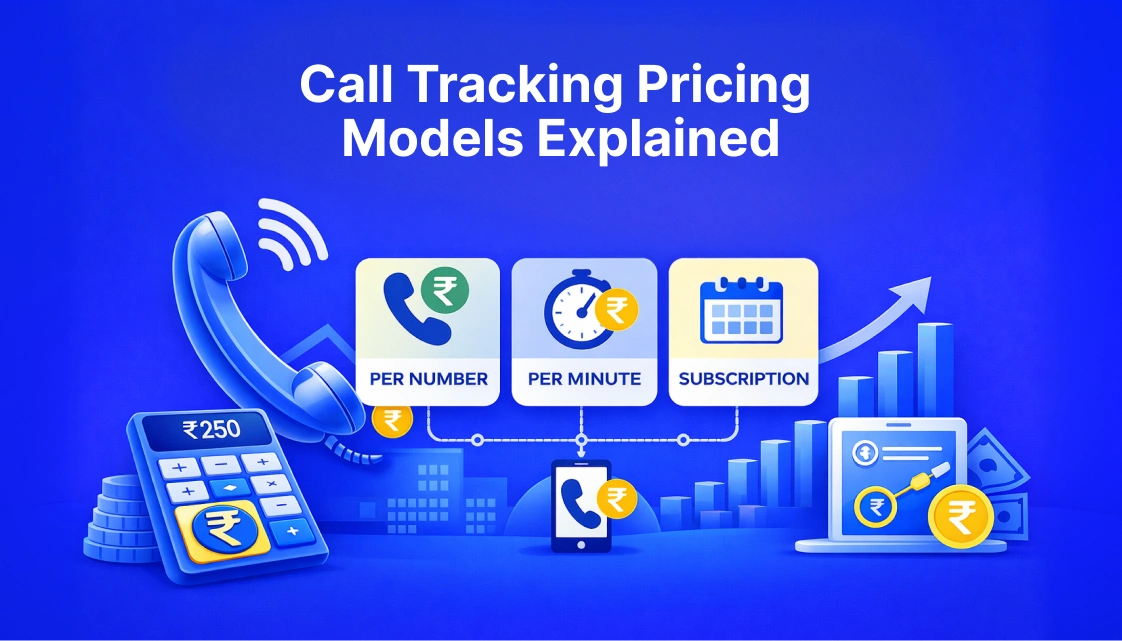
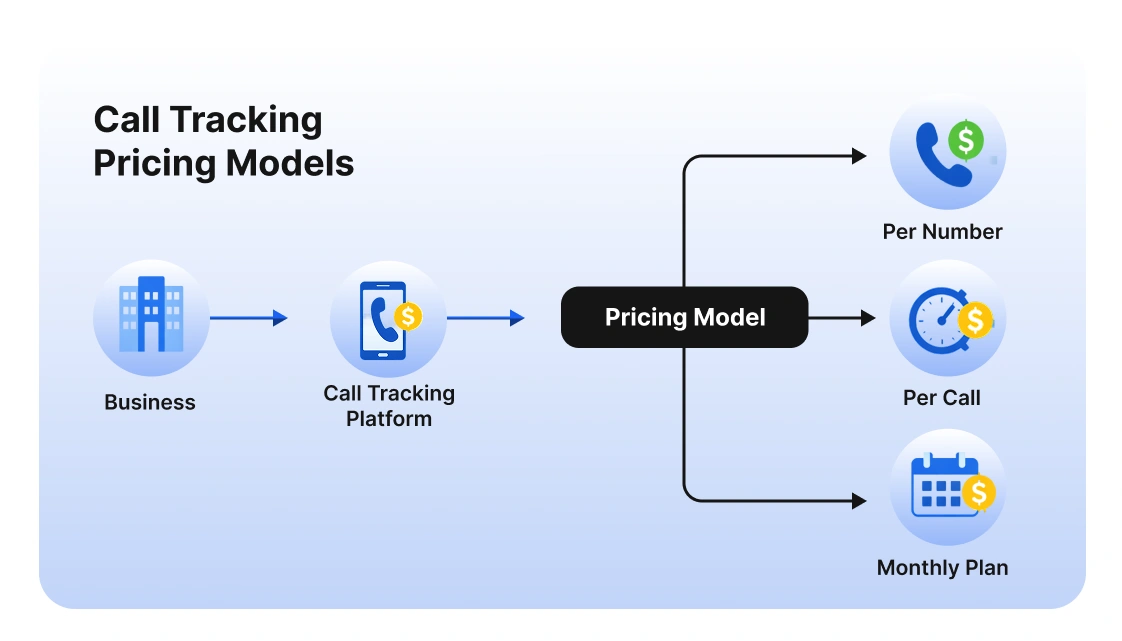
There are three primary models used across vendors. Each impacts your call tracking cost per month, scalability, and ROI differently.
Per-number pricing is the simplest model. You pay for each tracking number used across campaigns. This works for small setups but becomes expensive as you scale. If you run multiple campaigns or channels, costs increase quickly because each source needs a unique number. This is one of the main factors affecting call tracking pricing.
Per-minute pricing is based on call duration. This model is common in inbound-heavy businesses. While entry costs may look low, longer conversations and higher call volumes increase monthly spending.
This makes budgeting difficult and often leads to unexpected bills. It also directly affects call tracking ROI calculations, since higher usage does not always translate into more conversions.
Subscription-based pricing offers a fixed monthly plan that includes a bundle of numbers, minutes, and features. This is the most predictable model and is widely used by mid-size and enterprise teams.
However, limits still apply. Exceeding usage caps leads to overage charges, which are part of the hidden costs of call tracking software.
A quick call tracking pricing comparison shows that per-number and per minute models appear cheaper initially but scale poorly. Subscription models cost more upfront but provide better cost control and visibility.
Across all models, pricing is influenced by usage, features, and integrations. Advanced capabilities like AI analytics, transcription, and CRM integrations increase costs but also improve attribution and conversion tracking.
The right model depends on your volume, growth plans, and need for insights. Choosing only based on price often leads to higher long-term costs and weaker ROI.
Choose the right pricing model. Get better ROI.
How Much Does Call Tracking Cost Per Month?
The answer to how much call tracking costs depends on usage, features, and the call tracking pricing models used.
Average Call Tracking Cost Per Month
- Small businesses: $30 to $150
- Mid-size companies: $150 to $500
- Enterprise: $500 to $2000+
This is the typical call tracking cost per month, but actual costs vary.
Factors Affecting Call Tracking Pricing
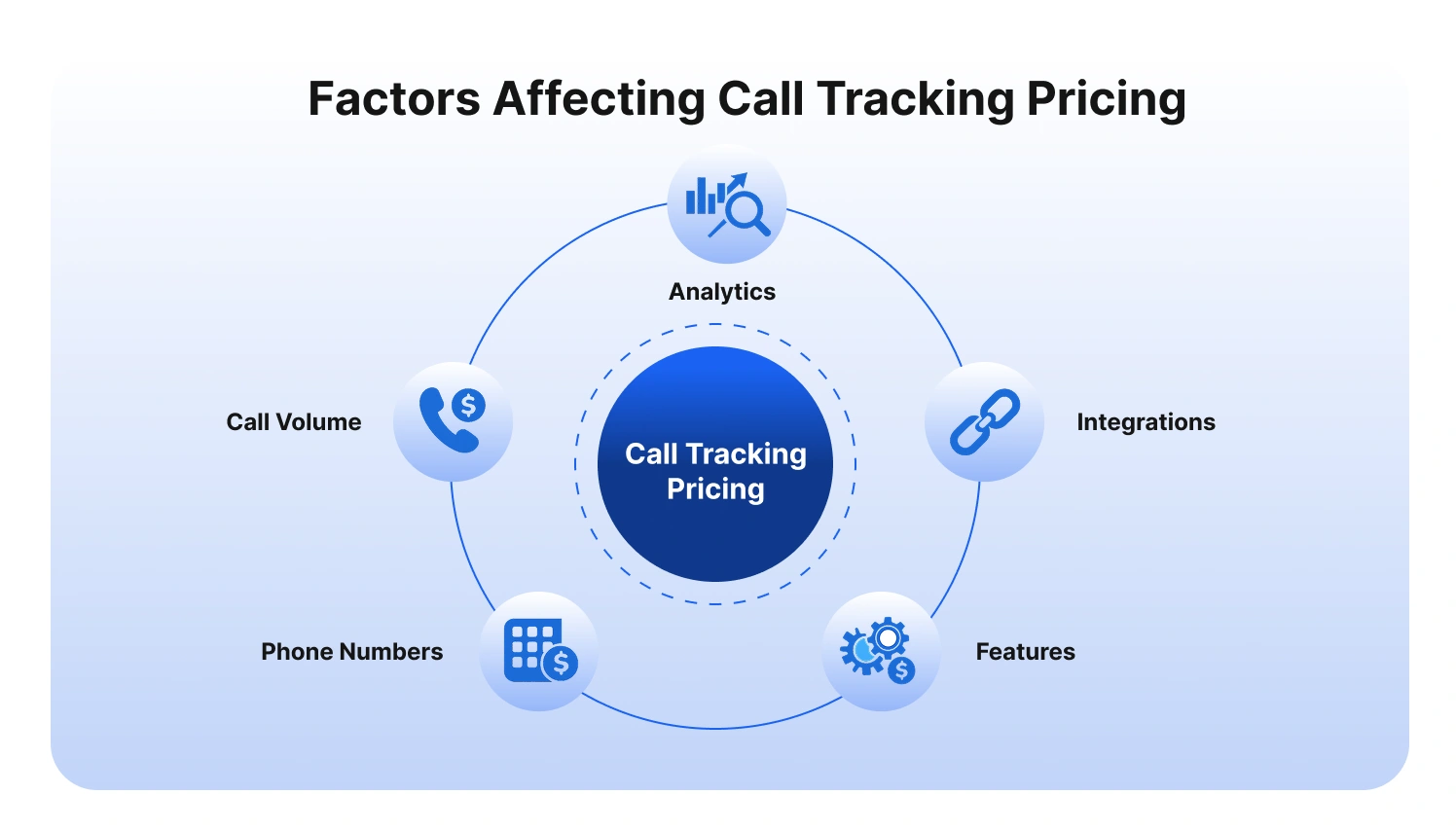
The main factors affecting call tracking pricing are
- Number of tracking numbers
- Call volume and call duration
- Pricing model selected
- Features such as call recording, analytics, and AI insights
- CRM and marketing integrations
More usage and advanced features increase total spend.
Cost by Pricing Model
Different call tracking pricing models impact the monthly cost:
- Per number model increases cost as you add campaigns
- Per minute model increases cost with higher call duration
- Subscription model offers fixed pricing but includes usage limits
A clear call tracking pricing comparison shows that subscription models are more predictable, while usage-based models fluctuate.
Hidden Costs to Watch
Many businesses miss the hidden costs of call tracking software:
- Additional tracking numbers
- Overage charges on minutes
- Storage for call recordings
- Advanced analytics in higher tiers
- Integration and onboarding fees
These can increase total cost by 20 to 30 percent.
Cost vs ROI
Do not evaluate pricing in isolation. Focus on call tracking ROI calculation. Lower-cost tools often lack insights. Higher cost tools can improve attribution and conversions.
The goal is to align call tracking cost per month with revenue impact, not just minimize spend.
Know your real costs before you scale.
Factors Affecting Call Tracking Pricing
Call tracking pricing varies based on usage, features, and business requirements. Understanding these factors affecting call tracking pricing helps estimate the real call tracking cost per month and avoid unexpected expenses.
1. Number of Tracking Numbers
Each campaign, channel, or location requires unique numbers. More numbers directly increase cost, especially in per-number call tracking pricing models.
2. Call Volume and Duration
Higher call volume increases usage costs. Longer call durations also raise expenses in per-minute models.
This is a key factor when estimating how much call tracking costs for high inbound businesses.
3. Pricing Model Used
Different call tracking pricing models impact cost differently:
- Per number scales with campaigns
- Per minute scales with usage
- Subscription offers fixed pricing with limits
A proper call tracking pricing comparison is required to choose the right model.
4. Features and Capabilities
Basic tracking is low-cost. Advanced features increase pricing. Common cost-driving features:
- Call recording
- Transcription
- AI analytics
- Conversation insights
These features also improve call tracking ROI calculation by enabling better decision-making.
5. Integrations
Connecting with CRM and marketing tools adds cost. Examples:
- Salesforce
- HubSpot
- Google Ads
Integration complexity can increase both setup and monthly fees.
6. Data Storage and Retention
Call recordings and transcripts require storage. Longer retention periods increase cost and are often part of the hidden costs of call tracking software.
7. Scalability Requirements
As campaigns grow, usage increases across numbers, calls, and features. This leads to higher call tracking cost per month, especially if pricing is usage-based.
Impact on Cost and ROI
All these factors influence total cost and performance. Ignoring them leads to underestimating spend and weak call tracking ROI calculation.
Understanding these variables helps control cost and choose a model that aligns with business goals.
Control cost drivers. Improve performance.
Hidden Costs of Call Tracking Software
Most gaps in call tracking pricing come from costs not shown upfront. These hidden costs of call tracking software increase your total call tracking cost per month.
Additional Tracking Numbers
Plans include limited numbers. Scaling campaigns requires more numbers, which increases cost in most call tracking pricing models.
Overage Charges
Subscription plans have usage limits. Exceeding call or minute limits leads to extra charges, making it harder to predict how much call tracking costs.
Call Recording and Storage
Recording may be included, but storage often costs extra. More calls and longer retention increase expenses.
Advanced Features
AI analytics, transcription, and insights are usually part of higher tiers. These improve call tracking ROI calculation but increase pricing.
Integration Costs
CRM and marketing integrations may require additional fees. This impacts the overall call tracking pricing comparison.
Setup and Scaling Costs
Setup fees and growing usage across numbers and calls increase total spend over time.
Impact
Hidden costs can increase total pricing by 20 to 30 percent. Ignoring them leads to inaccurate budgeting and lower ROI.
Avoid hidden costs. Maximize every dollar.
This blog is just the start.
Unlock the power of Convin’s AI with a live demo.

Call Tracking Pricing Comparison
Cost and Feature Comparison
Key Insights
- How much does call tracking cost depends on usage and model selection
- Call tracking cost per month increases fastest in per number and per minute models
- Factors affecting call tracking pricing include volume, features, and integrations
- Hidden costs of call tracking software apply across all models
- Best choice depends on balancing cost, scalability, and ROI
This call tracking pricing comparison helps select a model that aligns with growth and revenue goals.
Compare smarter. Invest where it matters.
How to Calculate Call Tracking ROI
Call tracking ROI calculation measures the revenue generated from calls compared to your total call tracking cost per month.
ROI Formula
ROI = Revenue − Cost / Cost × 100 ROI
How to Calculate
- Track total number of calls
- Identify how many calls convert into customers
- Assign average revenue per conversion
- Subtract total call tracking cost
Example
- Monthly cost: $500
- Calls: 200
- Conversions: 40
- Revenue per customer: $100
Revenue = $4000
ROI = 700%
A higher call tracking cost per month does not mean lower ROI. Tools with better insights improve conversions, making call tracking pricing models more efficient despite higher cost.
Measure what matters. Optimize for revenue.
Why Teams Today Pick Smarter Call Tracking
Modern teams no longer rely on basic tools that only show call volume and sources. They focus on solutions that connect calls to revenue. This shift is driven by the need to improve call tracking ROI calculation and justify increasing call tracking cost per month.
Basic tools answer where calls come from. Smarter platforms explain why calls convert. They analyze conversations, identify patterns, and highlight what drives outcomes. This directly impacts conversion rates and revenue.
As call tracking pricing models evolve, businesses are moving away from low-cost tools that lack insights. A simple call tracking pricing comparison shows that cheaper tools often result in poor attribution and missed opportunities. This reduces ROI even if upfront costs are lower.
Smarter call tracking also addresses key factors affecting call tracking pricing. Instead of just increasing spend on numbers and minutes, teams invest in features that improve performance. This includes AI analysis, agent coaching, and real-time insights.
It also helps reduce the hidden costs of call tracking software. By improving efficiency and conversions, businesses generate more value from the same or slightly higher spend.
The focus shifts from tracking calls to optimizing outcomes. This is where real ROI is created.
Move from tracking calls to driving conversions.
Stop Looking at Cost, Start Looking at ROI
Focusing only on how much call tracking costs leads to short-term decisions. Lower pricing often comes with limited insights and weaker results.
The better approach is to evaluate how pricing impacts revenue. A higher call tracking cost per month can deliver stronger returns if it improves conversions and decision-making.
The goal is not to minimize cost but to maximize impact. Teams that prioritize ROI over price turn call tracking into a revenue driver instead of a cost center.
Stop focusing on cost. Focus on ROI. Book a demo with Convin and see how to turn call tracking into real revenue.
FAQs
1. What is the best call tracking pricing model for small businesses?
The best call tracking pricing models for small businesses are usually per number or basic subscription plans, as they offer lower upfront call tracking cost per month.
2. Why does call tracking pricing vary between vendors?
Factors affecting call tracking pricing include features, call volume, integrations, and analytics capabilities, which differ across providers.
3. Can call tracking pricing impact marketing performance?
Poor call tracking pricing comparison decisions can limit insights, reducing optimization and lowering overall ROI.
4. How do integrations affect call tracking cost?
CRM and marketing integrations increase call tracking cost per month and are often part of the hidden costs of call tracking software.
5. Is higher call tracking cost always better for ROI?
Effective call tracking ROI calculation depends on insights and conversions, not just higher pricing.


.avif)


.avif)