

In 1876, Alexander Graham Bell sent the first telephone message to his assistant: "Mr. Watson, come here, I want to see you." One line. One channel. One moment that changed how people communicate .
For the next century, the telephone was the backbone of customer communication, businesses built entire customer service empires around it. Then came the fax. Then email. Then SMS. Then live chat. Then WhatsApp.
Each new channel didn't kill the last, it added another layer to customer communication.
Today, a mid-sized enterprise might be running customer conversations across seven or eight touchpoints simultaneously, each with its own rhythm, its own open rates, its own psychology. And amid all those touchpoints, a customer is waiting, not for the right message, but for the right message on the right channel at the right moment.
That's the real problem modern businesses are trying to solve. Not "which channel should we use?" but "which channel should AI use, when, and why?"
Because the shift isn't just about adding channels to your tech stack. It's about helping those channels respond at the right moment.
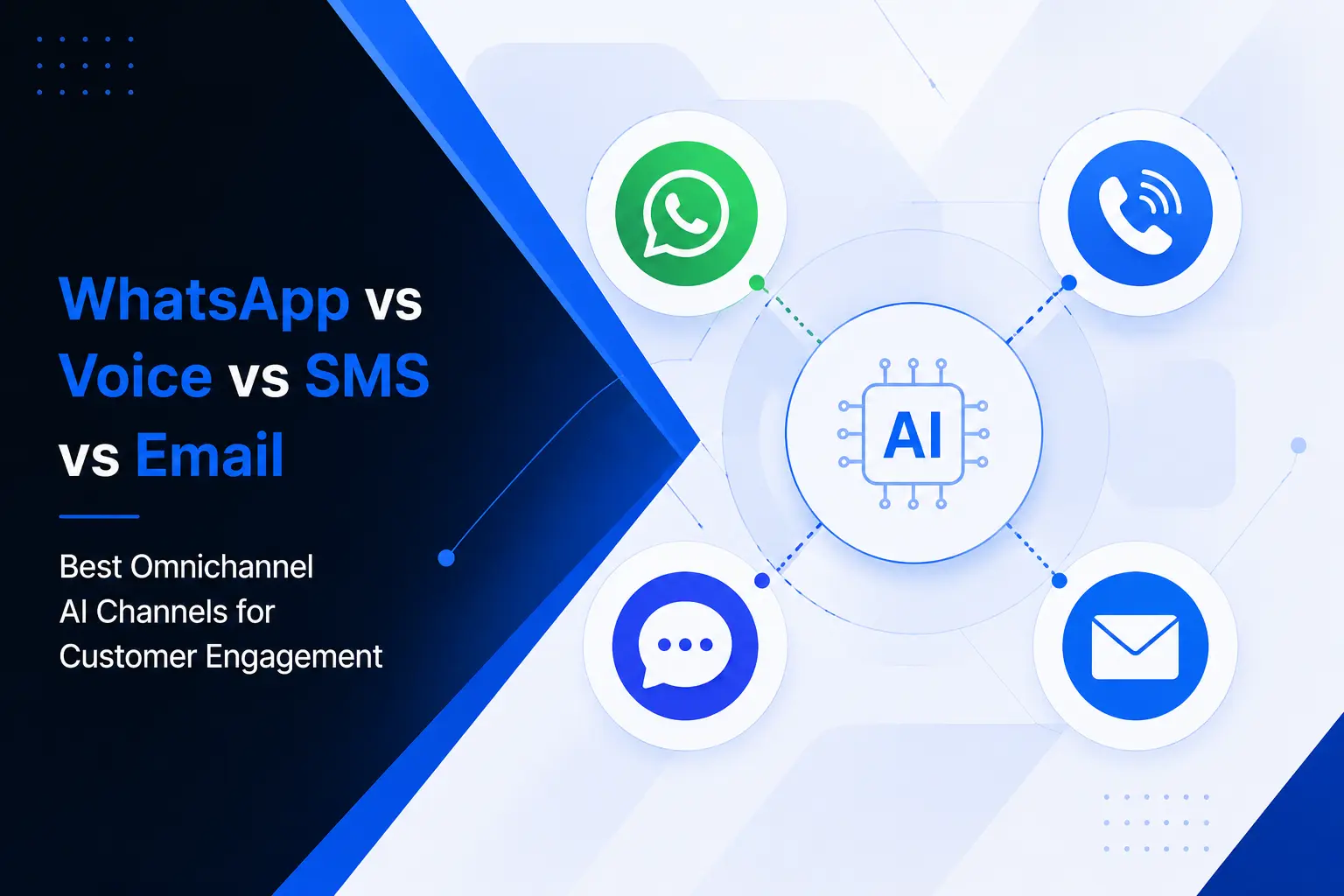
Which AI Channels Should Be in an Omnichannel Customer Engagement Strategy?
Let’s begin with a simple truth: more channels do not automatically create better engagement. They create more complexity unless every channel is purposeful, AI-powered, and connected to the others.
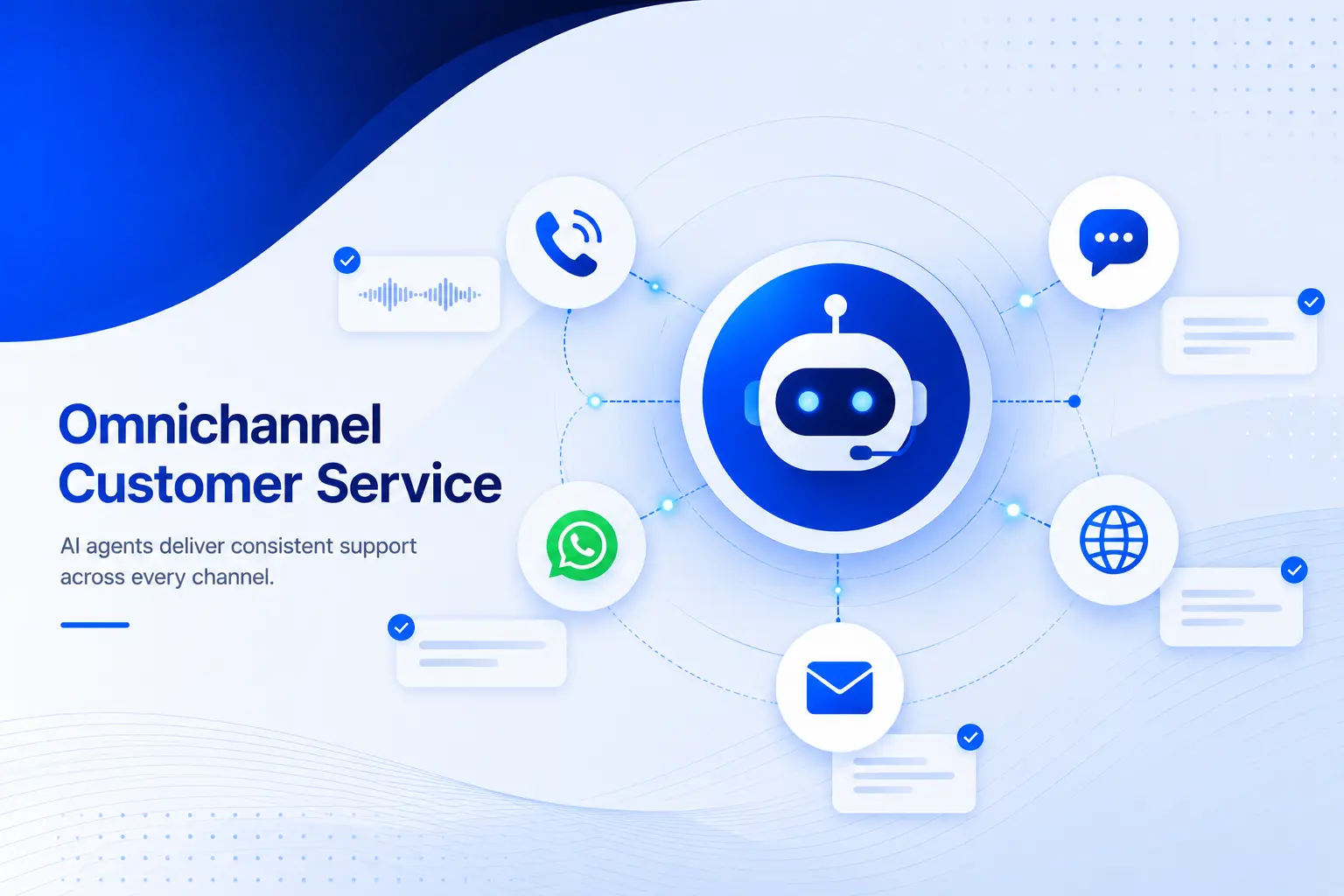
An omnichannel strategy that only routes messages across platforms is still just multichannel communication with better branding. The real difference appears when AI can understand the full customer conversation, regardless of where it started.
So which channels deserve a place in your omnichannel stack?
Why These Channels Matter Together
WhatsApp AI
WhatsApp has become one of the strongest conversational channels in markets like India, Southeast Asia, Latin America, and the Middle East. Customers already use it daily, which makes communication feel natural instead of promotional.
When connected with AI through the WhatsApp Business API, businesses can automate appointment scheduling, payment reminders, personalized follow-ups, product recommendations, and interactive customer support at scale.
Voice AI
Voice remains the preferred channel when conversations become urgent or emotionally sensitive. Customers dealing with failed payments, claims processing, or complex support issues often want immediate answers in real time.
AI-powered voice systems help businesses handle inbound and outbound calls consistently while maintaining tone, compliance, and faster response times across high call volumes.
SMS AI
SMS continues to be one of the most dependable customer communication channels. It works across all mobile devices without requiring apps or internet connectivity.
AI-powered SMS workflows are especially effective for time-sensitive communication such as OTP verification, appointment reminders, delivery notifications, and payment alerts.
Email AI
Email supports longer customer journeys where trust and information depth matter more than instant replies.
Modern AI-driven email systems personalize subject lines, optimize send times, and dynamically adapt content based on customer behavior, making onboarding, nurture campaigns, and product education more effective over time.
When to Use WhatsApp AI vs. Voice AI vs. SMS in Omnichannel?
This is where most strategy conversations fall apart, not in choosing channels, but in knowing when each channel adds value. Channel selection isn't a one-time decision made during a planning offsite. It's a dynamic, real-time judgment call that your AI needs to make on behalf of every customer at every stage of their journey.
Think of it this way: each channel has a natural habitat.
WhatsApp AI: Best for Ongoing Engagement
It's the channel that bridges awareness and action, ideal for the consideration and nurture phase, when a prospect has shown intent but hasn't converted.
WhatsApp AI works best during the consideration and nurture stages.
It is ideal for:
- Lead qualification
- Product queries
- Demo scheduling
- Personalized follow-ups
- Customer onboarding
The conversational format feels natural and interactive, making customers more likely to respond compared to traditional outreach channels.
Voice AI: Best for Urgent or Complex Conversations
It shines brightest in two very different scenarios: high-urgency situations and high-complexity conversations. When a customer's internet payment just failed at checkout, they're not going to wait for an email reply. Voice AI performs best when conversations require speed, clarity, or emotional reassurance.
It is commonly used for:
- Payment failures
- Claims verification
- Renewals and collections
- High-intent sales conversations
- Escalated support issues
Voice interactions help businesses resolve high-stakes situations faster while maintaining conversational depth.
SMS: Best for Instant Alerts and Action Triggers
It doesn't have a conversation, it starts one. Or it closes one. AI-powered SMS works best when precision timing matters more than rich content. SMS works best for time-sensitive notifications where speed matters more than conversation.
Common use cases include:
- OTPs and login codes
- Payment reminders
- Appointment alerts
- Delivery updates
- Quick action prompts
SMS is less about engagement and more about immediate visibility and response.
The real art of omnichannel isn't picking one of these. It's knowing when to hand off between them. A journey that starts with an SMS alert, transitions into a WhatsApp conversation, escalates to a voice AI call, and closes with an email summary, that’s what effective omnichannel orchestration looks like. And it's only possible when your AI layer has full context of what happened in every previous interaction.
This blog is just the start.
Unlock the power of Convin’s AI with a live demo.

What Are the Engagement Rates Across Different AI Channels?
Engagement metrics only matter when viewed in context. A high open rate does not always mean high engagement, and every channel behaves differently depending on customer intent and timing.
WhatsApp- It consistently leads in engagement, with open rates often crossing 90% and response rates reaching 40–60% when messages are timely and personalized. That is why it has become such a powerful channel for conversational commerce and customer support. But WhatsApp engagement drops quickly when communication feels repetitive or irrelevant, which makes personalization critical.
Voice AI- This one measures success differently. There are no “open rates” in voice conversations, but metrics like first-call resolution, successful call completion, and right-party contact rates matter far more. AI-powered voice systems perform especially well in collections, renewals, and support workflows because they can engage customers at the right time and maintain consistent conversation quality at scale.
SMS- It remains one of the most reliable channels for visibility and delivery. Open rates are extremely high, but most SMS interactions are short-lived. Customers usually scan the message and act only if the communication is relevant and urgent. That makes SMS particularly effective for OTPs, reminders, alerts, and transactional updates where timing matters more than conversation depth.
Email- It operates on a much longer engagement cycle. Average open rates typically range between 20–35%, while click-through rates remain lower than messaging channels. However, AI-personalized email campaigns often perform significantly better because they adapt content, timing, and subject lines based on customer behavior. Email works best for nurture journeys, onboarding, education, and long-term relationship building.
What makes AI valuable across all these channels is not improving one metric in isolation. It is the ability to optimize the right channel, timing, and message for each customer without relying entirely on manual decision-making.
Convin's AI agents are purpose-built to drive measurable outcomes, whether that's first-call resolution on voice, response rates on WhatsApp, or conversion attribution across email and SMS.
How Do You Decide Which Channel to Use for Which Customer Journey Stage?
Choosing the right AI channel is not about picking the “best” platform. It is about understanding customer intent at every stage of the journey.
Different moments need different communication styles. A customer discovering your brand behaves differently from someone comparing vendors, waiting for onboarding help, or renewing a subscription. The role of AI is to recognize that context and choose the channel that feels most natural at that moment.
Here’s how different AI channels typically fit across the customer journey:
Where Each Channel Performs Best
Email and SMS Work Well at the Awareness Stage
At the top of the funnel, customers are still exploring. The goal here is visibility without overwhelming them.
- Email AI works well for:
- Educational content
- Webinar follow-ups
- Product explainers
- Long-form nurture campaigns
- SMS AI works best for:
- Registration confirmations
- OTPs and alerts
- Trial sign-up notifications
- Time-sensitive reminders
WhatsApp can also work here, but only when the customer has already opted into the conversation.
WhatsApp AI Becomes Stronger During Consideration
This is where customers start asking questions, comparing vendors, and evaluating options.
WhatsApp AI helps because conversations feel natural and immediate.
It is especially useful for:
- Lead qualification
- Product FAQs
- Demo scheduling
- Sharing brochures or videos
- Personalized follow-ups
- Handling objections in real time
Customers are more likely to respond to a conversational WhatsApp interaction than another promotional email sitting in their inbox.
Voice AI Matters Most During High-Intent Decisions
Some decisions still need human-like conversations.
When customers are:
- close to purchasing,
- dealing with financial issues,
- discussing renewals,
- resolving complaints,
- or handling complex support queries,
voice becomes the fastest trust-building channel.
Voice AI helps businesses:
- manage inbound support calls,
- run outbound sales or collection campaigns,
- resolve issues faster,
- and maintain consistent communication quality at scale.
A phone call often signals urgency and importance in ways text channels cannot.
Onboarding Works Best as a Multi-Channel Experience
No single channel handles onboarding perfectly on its own.
The strongest onboarding journeys combine channels together:
- Email → welcome guides and documentation
- SMS → reminders and status updates
- WhatsApp → quick support and conversational check-ins
- Voice AI → proactive follow-ups for inactive customers
The experience feels smoother when customers can move across channels without repeating themselves.
Retention Depends on Context and Personalization
Long-term customers expect communication to feel familiar and relevant.
AI should adapt based on:
- customer history,
- engagement behavior,
- preferred channels,
- and previous interactions.
For example:
- A customer who always responds on WhatsApp should receive renewal reminders there.
- A customer who regularly engages with email newsletters may prefer detailed email updates instead.
Retention improves when communication feels tailored rather than repetitive.
This is exactly what Convin is built for. Convin's conversation intelligence doesn't just listen in, it builds a complete customer context for every customer across every channel, empowering your AI agents and human teams alike to make the right call, every time. If your omnichannel stack is generating conversations but not intelligence, it's time to talk.
FAQs
1. How do businesses prevent customers from feeling spammed across multiple AI channels?
The key is frequency control and channel coordination. Omnichannel AI platforms track customer engagement across channels and avoid sending repetitive messages. Instead of blasting the same message everywhere, AI prioritizes the channel a customer responds to most and spaces communication based on behavior and intent.
2. Can small businesses use omnichannel AI, or is it only for enterprises?
Omnichannel AI is no longer limited to large enterprises. Many small and mid-sized businesses now use AI-powered WhatsApp, email, SMS, and voice workflows for lead nurturing, appointment reminders, customer support, and follow-ups without needing large support teams.
3. What role does customer consent play in omnichannel AI communication?
Customer consent is critical, especially for channels like WhatsApp, SMS, and email. Businesses need opt-ins before sending promotional communication. AI systems also help manage consent preferences by tracking which channels customers have approved and how frequently they want to be contacted.
4. How do AI channels integrate with CRM and customer data platforms?
Modern conversational AI platforms connect directly with CRMs, helpdesk tools, and marketing automation systems. This allows AI agents to access customer history, past interactions, purchase behavior, and support records before responding, making conversations more contextual and personalized.
5. What are the biggest mistakes companies make with omnichannel AI?
One of the biggest mistakes is treating every channel the same way. Customers expect different experiences on WhatsApp, voice, SMS, and email. Another common issue is disconnected communication where teams lack visibility into previous interactions, forcing customers to repeat information across channels.




.avif)