


Most enterprises today rely on platforms such as Zendesk, Freshworks, Intercom, Salesforce, Genesys, Five9, and Amazon to support customer engagement across voice, chat, email, WhatsApp, and digital channels.
These platforms already provide strong omnichannel support, contact center infrastructure, CRM integration, automation, and workflow management capabilities. However, enterprises often extend them with additional AI intelligence, conversation analytics, QA automation, and orchestration layers to achieve deeper cross-channel continuity and operational visibility.
For example:
- Zendesk provides mature omnichannel ticketing, automation, and AI-assisted support workflows, though enterprises frequently integrate additional systems for advanced conversation intelligence and deeper operational analytics.
- Freshdesk supports multichannel customer engagement and workflow automation, while larger CX environments may still require additional orchestration and AI intelligence layers.
- Intercom is widely adopted for conversational engagement, AI-powered messaging, and chat-driven customer journeys, particularly in digital-first support environments.
- Genesys and Five9 deliver enterprise-grade contact center orchestration, workforce management, routing, and voice infrastructure, often operating alongside specialized analytics, QA, and conversational AI platforms.
This creates fragmented journeys where customers repeat information across channels.
Omnichannel conversational AI solves this by unifying these systems into a single intelligence layer. In contrast to fragmented CX stacks, organizations using Convin report 27% higher CSAT and 25% improved retention, proving the impact of unified context across systems.
Customers no longer repeat details, and teams reduce handling time by 56 seconds per interaction while gaining a complete journey view across all channels.
Omnichannel Conversational AI for Enterprise Teams
Enterprise CX stacks built on Salesforce Service Cloud + Zendesk + Genesys + separate QA tools like Observe.AI or Balto often create layered complexity rather than true orchestration.
Each tool solves a part of the problem:
- Salesforce = CRM layer
- Zendesk/Freshdesk = ticketing layer
- Genesys/Five9 = contact center layer
- Intercom = conversational chat layer
However, enterprises still commonly combine multiple systems to unify conversation intelligence, QA automation, real-time assistance, workflow orchestration, and CRM synchronization at scale.
Convin adds an AI-native conversation intelligence and orchestration layer across enterprise CX environments.
- 21% increase in sales conversion
- 12% increase in repeat purchases
- 17% improvement in collection rates
- 60% faster ramp-up for new agents
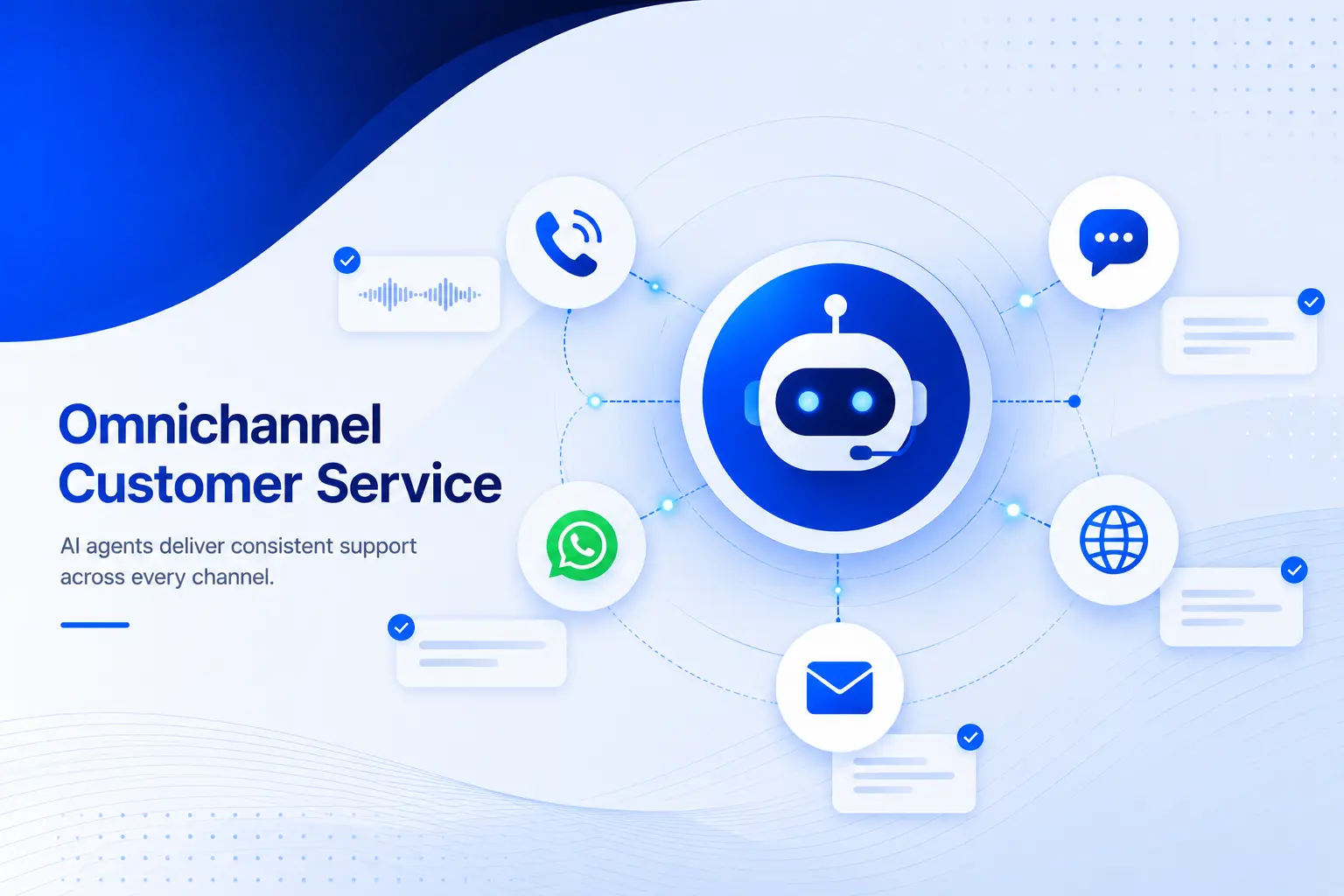
Instead of switching between multiple systems, Convin connects voice, chat, WhatsApp, and email into one operational intelligence loop.
Agents handle up to 3X more interactions per day, while enterprises gain consistent execution across channels without tool switching.
See how Convin unifies your CX stack into one omnichannel AI system.
Fixing Fragmented Customer Journeys with Omnichannel AI
In traditional stacks like Zendesk + Freshdesk + Intercom + Genesys combinations, the biggest issue is not capability—it is context fragmentation across tools.
Unlike platforms primarily optimized around specific CX functions such as messaging, ticketing, or contact center operations
Every repeated explanation signals a broken support experience.
This blog is just the start.
Unlock the power of Convin’s AI with a live demo.

What Conversation Memory Enables in Omnichannel AI Systems
Most legacy tools like Zendesk, Freshdesk, and Salesforce Service Cloud store interaction logs but do not maintain true cross-channel memory continuity.
Convin changes this with a unified conversation intelligence layer:
Even advanced tools like Salesforce Einstein or Zendesk AI features improve insights—but still rely on underlying fragmented systems.
Convin helps unify customer context, conversation intelligence, and automation workflows across the broader CX stack.
See how Convin integrates into your system
Convin’s Approach to Omnichannel Conversational AI
Platforms such as Observe.AI, Balto, Gong, and CallMiner each specialize in specific areas of the CX lifecycle, including QA automation, real-time guidance, revenue intelligence, and conversation analytics. Convin positions itself as a broader omnichannel conversational AI layer that connects these operational intelligence functions across customer interactions.
- Automated QA (100% coverage) → CSAT +27%
- Agent Assist (real-time guidance) → AHT reduced by 56 sec, FCR +22%
- Automated Coaching (AI-driven) → ramp-up 60% faster
- Conversation Intelligence (sentiment + intent) → retention +25%, repeat purchases +12%
- CRM Integration (real-time sync) → efficiency +18%
Unlike fragmented stacks where Observe.AI or Gong operate as analytics layers on top of other tools, Convin is built as an end-to-end orchestration system.
Scale Smarter Customer Conversations With Convin AI
Omnichannel AI Across Voice, WhatsApp, Email, and Chat
Most enterprise setups rely on:
- Genesys / Five9 / Amazon Connect for voice
- Zendesk / Freshdesk for tickets
- Intercom for chat
- Separate WhatsApp API providers
This creates disconnected channel behavior.
Convin connects customer interactions across channels through a shared conversational intelligence layer:
Because Convin sits across all channels, improvements in one channel enhance performance in all others.
One connected backend changes how every channel performs.
Business Impact of Omnichannel Conversational AI
Compared to fragmented CX stacks (Zendesk + Genesys + Intercom + Salesforce combinations), Convin delivers measurable system-wide gains:
Instead of improving isolated workflows independently, Convin helps coordinate intelligence and automation across the broader CX environment.
Operational clarity improves when conversations stop living in silos.
Risks of Operating Without Omnichannel AI
Multiple tools create isolated histories and duplicate workflows, which leads to operational drag. With Convin:
Each channel improvement benefits the ecosystem. A better intent model in chat improves voice interactions, creating enterprise-wide gains.
Disconnected platforms quietly increase cost, inconsistency, and customer frustration.
Building Scalable Omnichannel AI Systems
Stacks built on Zendesk + Salesforce + Genesys + Intercom + third-party QA tools eventually suffer from:
- duplicated workflows
- inconsistent customer context
- fragmented analytics
- high integration overhead
Instead of adding disconnected point solutions, Convin helps reduce operational fragmentation across customer engagement systems.
Strong CX scaling starts with continuity, not more disconnected tools.
FAQs
Q: What happens to a conversation when a customer switches from WhatsApp to voice?
The full context transfers, so the next agent or bot continues the same issue without asking the customer to repeat details.
Q: How do teams keep one customer record across support tools?
They use shared identifiers such as phone numbers, email addresses, and account IDs to link every touchpoint.
Q: Which metrics show that context continuity is actually working?
Repeat-contact rate, resolution speed, handoff success, and customer satisfaction usually reveal whether continuity is improving.
Q: How can enterprises decide which channel to automate first?
Start with the highest-volume channel that has repetitive requests and a stable process for handling them.
Q: What makes cross-channel memory reliable in a support platform?
A unified profile, consistent IDs, timestamps, intent history, and clean handoff rules keep the memory dependable.
.avif)




.avif)