

Most companies think they already have an omnichannel customer engagement platform.
They don’t.
What they actually have is a collection of disconnected channels:
- A CRM for customer records
- Separate inboxes for email and WhatsApp
- A chatbot that doesn’t share context
- Support teams switching tabs to piece conversations together
On paper, it looks “omnichannel.” Operationally, it is fragmented customer engagement.
And customers notice it immediately.
According to Salesforce research, 79% of customers expect consistent interactions across departments, yet more than half still feel like they are interacting with separate teams instead of one company.
That gap is exactly why the modern omnichannel customer engagement platform has become a strategic investment instead of just another CX tool.
In this guide, we’ll break down:
- What omnichannel engagement actually means
- What it is not
- Common misconceptions businesses still have
- Signs your organization has outgrown basic engagement tools
- Features that matter in AI-powered engagement platforms
- When businesses should actually invest
Unify fragmented customer conversations with AI-powered engagement.
What Is an Omnichannel Customer Engagement Platform?
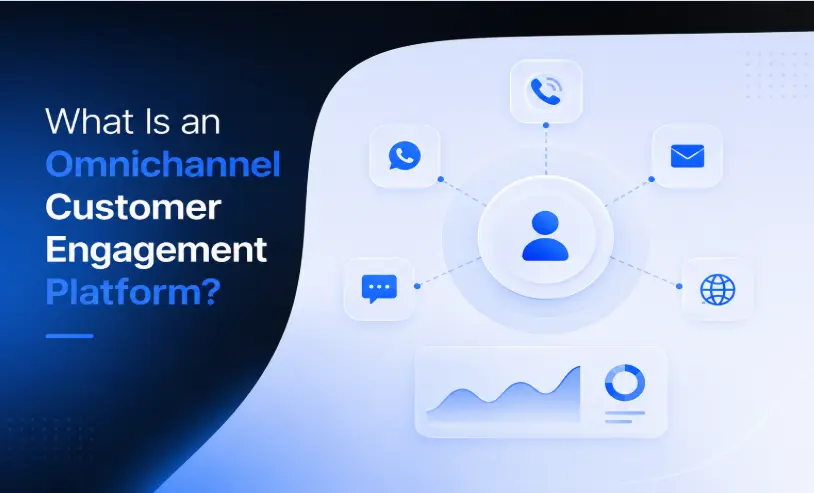
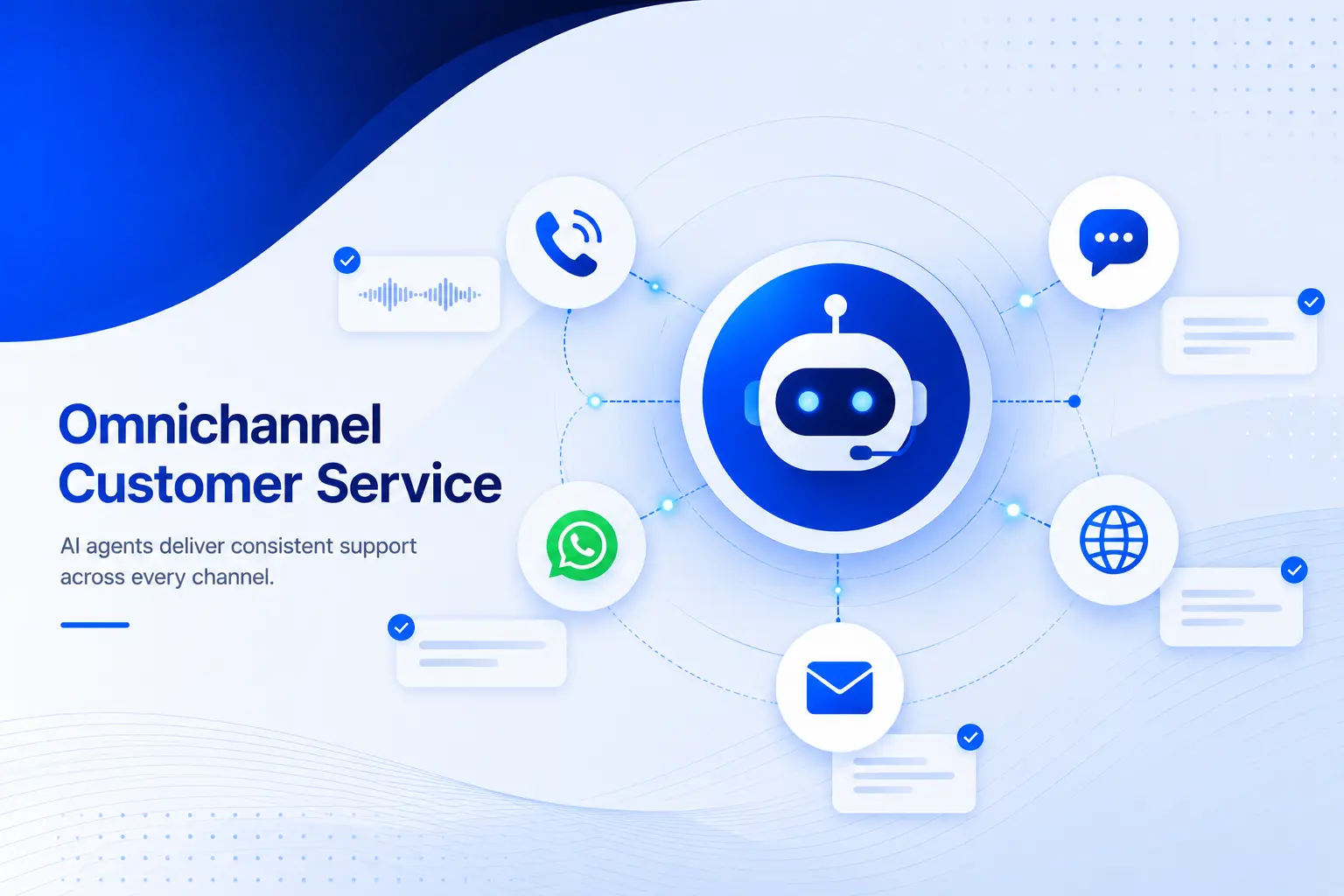
An omnichannel customer engagement platform is a unified system that enables businesses to manage customer conversations, interactions, and context seamlessly across channels.
These channels typically include:
- Voice
- Live chat
- Social messaging
- SMS
- In-app communication
The critical word here is unified.
A true omnichannel engagement platform does not simply “offer multiple channels.” It connects them into one continuous customer journey.
Improve engagement consistency across customer journeys.
What Omnichannel Engagement Actually Looks Like
Imagine this sequence:
- A customer starts with website chat
- Continues on WhatsApp
- Escalates to a support call
- Receives follow-up by email
In a real omnichannel customer engagement platform:
- The customer never repeats context
- Agents see the full interaction history
- AI understands prior intent and sentiment
- Handoffs happen without friction
The experience feels like one continuous conversation instead of four disconnected interactions.
Why This Matters Now
Modern customer behavior is no longer linear.
Gartner reports that more than 51% of customer service journeys now begin on third-party or external platforms before customers ever reach official company channels.
Meanwhile, customers increasingly move between channels based on urgency, convenience, and device preference.The operational challenge is no longer “adding channels.” It is maintaining continuity across them.
What an Omnichannel Customer Engagement Platform Is NOT
This is where most businesses misunderstand omnichannel engagement.
Many platforms claim to be omnichannel simply because they support multiple communication channels. But offering voice, email, chat, and WhatsApp separately does not create a true omnichannel customer engagement platform.
In most cases, these channels still operate in silos, causing customers to repeat information and agents to switch between disconnected tools.
A true omnichannel engagement platform connects every interaction into one continuous customer journey, preserving context, conversation history, and customer intent seamlessly across channels.
See the gap between omnichannel and multichannel engagement.
Multichannel Is Not Omnichannel
A multichannel setup allows customers to connect through multiple channels, but those channels often operate independently without shared context.
As a result, customers repeat information across chat, email, and calls, while agents switch between disconnected tools to understand the issue.
A true omnichannel customer engagement platform connects every interaction into one continuous, context-aware customer journey.
A multichannel setup means:
- Customers can contact you through multiple channels
- But each channel behaves independently
For example:
- Chat history is unavailable during calls
- Email conversations are isolated from WhatsApp interactions
- Agents manually copy context between systems
This creates fragmented experiences and operational inefficiency.
Common Signs Of Fake Omnichannel Systems
The distinction matters because customers experience the gaps immediately.
Salesforce research found that 56% of customers often have to repeat or re-explain information to different representatives.
That is usually not a staffing issue. It is an architecture issue
Common Misconceptions About Omnichannel Engagement
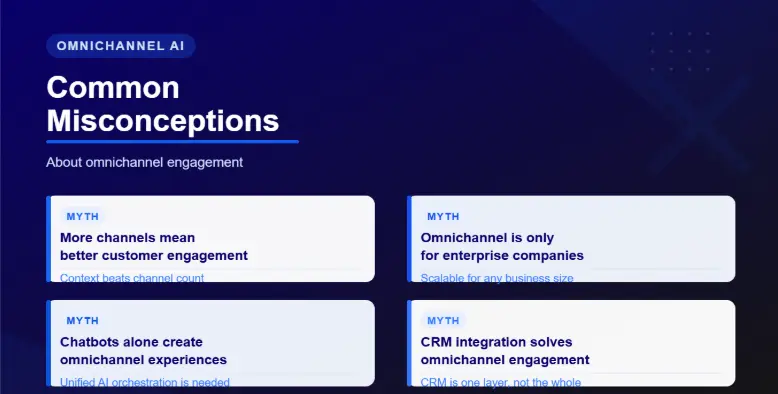
Misconception 1: “More channels mean better customer engagement”
Adding channels without unifying them simply increases operational complexity.
Many businesses mistake channel expansion for customer experience improvement.
In reality:
- More inboxes create more silos
- More touchpoints create more context loss
- More tools create slower resolution workflows
Without orchestration, multichannel engagement becomes operational chaos.
Misconception 2: “Omnichannel is only for enterprise companies”
Mid-sized businesses now face the same customer expectations as large enterprises.
Customers expect:
- Instant responses
- Consistent communication
- Personalized engagement
- Seamless channel switching
Those expectations are no longer limited to enterprise brands.
Misconception 3: “Chatbots alone create omnichannel experiences”
Automation alone does not create omnichannel engagement.
A true omnichannel customer engagement platform requires:
- Unified customer identity
- Shared conversation memory
- AI-powered routing and intelligence
- Agent visibility across touchpoints
Without those layers, automation simply accelerates fragmented experiences.
Misconception 4: “CRM integration solves omnichannel engagement”
CRMs store customer data.
Omnichannel platforms operationalize customer conversations in real time.
The difference is significant.
A CRM may tell an agent:
“This customer contacted support yesterday.”
An omnichannel engagement platform shows:
- What was discussed
- Sentiment during the interaction
- Resolution status
- Previous escalation attempts
- Recommended next action
That operational intelligence changes customer outcomes.
Understand what modern omnichannel engagement actually requires.
This blog is just the start.
Unlock the power of Convin’s AI with a live demo.

Operational Signs You Have Outgrown Basic Engagement Tools
Many organizations do not realize they have outgrown their current systems until customer experience metrics begin declining.
Sign 1: Customers repeat themselves constantly
This is one of the clearest signs of disconnected engagement systems.
Zendesk research cited in omnichannel CX reports shows that 78% of customers get frustrated when agents lack visibility into previous interactions
Sign 2: Agents switch between multiple tools during conversations
If agents constantly move between:
- CRM
- Ticketing tools
- Chat systems
- QA dashboards
- Email platforms
your operations are already fragmented.
This increases:
- Average handling time
- Agent fatigue
- Resolution delays
- Error rates
Sign 3: Your QA process is reactive
Traditional quality assurance models review only a small percentage of interactions manually.
Modern omnichannel customer engagement platforms increasingly use:
- Conversation intelligence
- Automated QA
- AI-driven coaching
- Real-time agent guidance
This enables continuous operational improvement instead of delayed audits.
Sign 4: Customer journeys disappear between channels
This happens when:
- Chat conversations are disconnected from voice support
- Email escalations lose prior context
- AI bots cannot transfer historical information
At this point, the business is no longer managing journeys—it is managing isolated tickets.
Sign 5: Leadership lacks unified customer visibility
Disconnected systems create fragmented reporting.
Teams cannot answer:
- Why customers churn
- Which channels drive escalation
- Which conversations reduce CSAT
- Which workflows slow resolution
Without unified interaction intelligence, CX optimization becomes guesswork.
Features That Matter in a Modern AI-Powered Omnichannel Engagement Platform
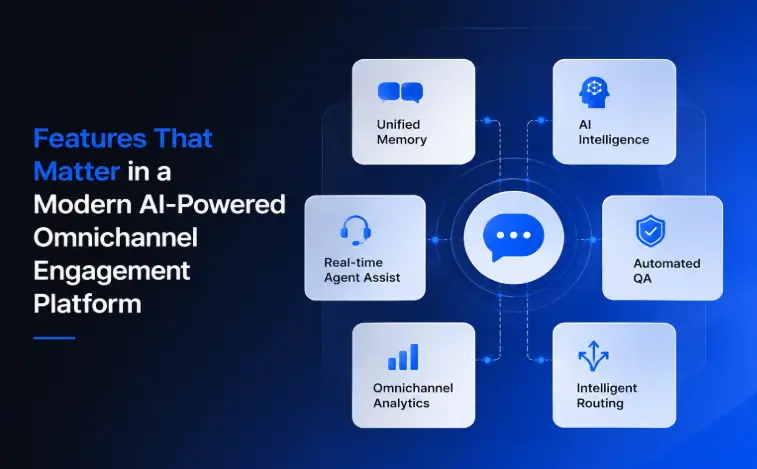
Not every omnichannel engagement platform is built for modern customer expectations.
Here are the capabilities that now matter most.
- Unified conversation memory
This is foundational.
Every customer interaction across:
- Voice
- Chat
- Social
should exist inside one continuous interaction timeline.
- AI-powered conversation intelligence
Modern platforms should analyze:
- Sentiment
- Intent
- Escalation risk
- Compliance gaps
- Resolution quality
This transforms conversations into operational insights.
- Real-time agent assist
AI-powered agent assist systems now provide:
- Suggested responses
- Next-best actions
- Compliance prompts
- Dynamic scripting
- Knowledge retrieval
This reduces resolution time while improving consistency.
- Automated quality management
Manual QA cannot scale across omnichannel operations.
AI-powered QA systems can automatically evaluate:
- 100% of interactions
- Soft skills
- Compliance adherence
- Customer sentiment
- Process deviations
- Omnichannel analytics
The platform should provide visibility into:
- Cross-channel journeys
- Resolution bottlenecks
- Escalation trends
- Customer effort scores
- Agent performance patterns
Without unified analytics, omnichannel engagement remains operationally blind.
- Intelligent routing and orchestration
Modern AI-powered customer engagement platforms increasingly prioritize:
- Intent-based routing
- Priority detection
- Predictive escalation handling
- Workforce optimization
This improves both CX and operational efficiency simultaneously.
When Businesses Should Invest in an Omnichannel Customer Engagement Platform
Not every company needs advanced omnichannel infrastructure immediately.
But certain operational conditions indicate strong readiness.
- Invest when customer journeys span multiple channels
If customers regularly move between:
- Calls
- Messaging apps
- Live chat
basic tools become insufficient very quickly.
- Invest when customer context gets lost frequently
This creates:
- Repeated explanations
- Slower resolutions
- Frustrated customers
- Higher churn risk
These are direct revenue-impacting issues.
- Invest when support teams become operationally overloaded
Disconnected systems force agents to spend time:
- Searching for history
- Copying context
- Switching platforms
- Manually escalating conversations
That operational drag compounds rapidly as ticket volume scales.
- Invest when leadership wants measurable CX intelligence
Modern customer engagement is no longer just about responsiveness.
Businesses increasingly need:
- Journey analytics
- Interaction intelligence
- AI coaching insights
- Real-time operational visibility
This is where AI-powered omnichannel engagement platforms create strategic value
- Invest when AI becomes part of your CX roadmap
As customer expectations evolve, businesses are rapidly shifting toward AI-powered engagement models that support seamless conversations across voice, chat, messaging, and digital channels.
This shift is changing how organizations evaluate customer engagement infrastructure. Modern businesses now need platforms that can:
- Maintain conversation continuity across channels
- Support real-time AI-driven interactions
- Deliver unified customer visibility
- Scale personalized engagement without increasing operational complexity
For many organizations, this is the point where basic engagement tools stop being enough.
What Is In For You
The future of customer engagement is not about adding more channels. It is about connecting them intelligently.
A true omnichannel customer engagement platform creates:
- Unified customer journeys
- Shared interaction memory
- AI-powered operational visibility
- Faster and more contextual support experiences
The companies succeeding in CX today are not simply “available everywhere.”
They are orchestrating conversations seamlessly across every touchpoint.
That distinction is becoming one of the biggest competitive advantages in customer experience operations.
Unify customer engagement with AI-powered omnichannel platforms.
FAQs
1. How does an omnichannel customer engagement platform impact customer retention?
A connected engagement experience reduces customer frustration by preserving context across channels and improving response consistency. When customers receive faster, more personalized support without repeating information, retention and long-term loyalty improve significantly.
2. Can omnichannel engagement platforms improve agent performance?
Yes. Modern omnichannel platforms provide agents with unified customer history, real-time conversation insights, and AI-powered guidance. This reduces manual effort, shortens resolution times, and helps agents handle interactions more confidently and efficiently.
3. Why are AI capabilities becoming important in customer engagement platforms?
As customer interactions increase across channels, businesses need AI to manage scale without sacrificing experience quality. AI-powered engagement platforms help automate workflows, analyze conversations, detect customer intent, and provide operational insights in real time.
4. How do omnichannel customer engagement platforms support faster resolutions?
By consolidating conversations into a single interface, agents gain instant visibility into previous interactions, reducing delays caused by searching across disconnected systems. This allows teams to resolve issues more efficiently and maintain continuity throughout the customer journey.
5. What should businesses evaluate before choosing an omnichannel engagement platform?
Businesses should assess whether the platform can unify conversations across channels, provide real-time analytics, support AI-powered automation, and integrate smoothly with existing workflows. Scalability, conversation intelligence, and operational visibility are also critical evaluation factors.
.avif)



.avif)