

Customers today do not experience businesses as organized systems. They experience delays, repeated questions, disconnected conversations, and inconsistent responses across channels.
A customer starts a conversation on Instagram but has to explain everything again on WhatsApp. They receive promotional emails minutes after raising a support complaint. They wait hours for responses while competitors reply instantly. High-intent buyers drop off simply because no one followed up at the right moment.
Most B2C brands already have enough communication tools. The real problem is the lack of continuity between them.
Traditional customer engagement platforms were designed to send campaigns and automate workflows across channels like email, SMS, WhatsApp, and web chat. For years, that worked. But customer expectations evolved faster than these systems.
Today’s customers expect businesses to remember context, respond instantly, personalize interactions, and maintain seamless conversations regardless of channel. This shift puts pressure on legacy engagement stacks that were never built for real-time memory or cross-channel continuity. Most systems can trigger messages, but they cannot maintain a unified conversation thread or understand intent as it moves from one channel to another. As a result, every interaction still resets context, forcing customers back into repetition loops that break momentum and reduce conversion.
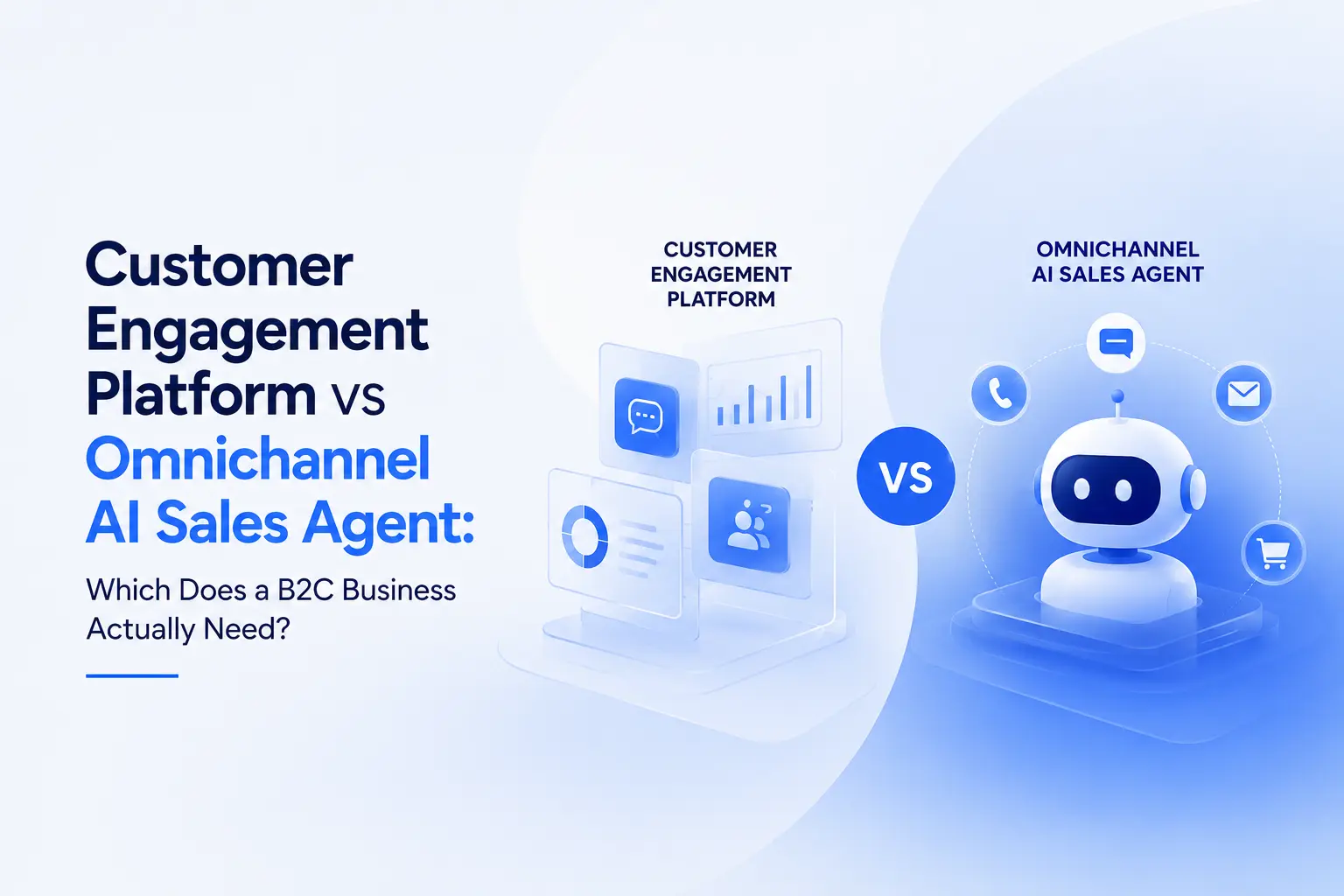
This is forcing B2C companies to confront a bigger question: Is a traditional customer engagement platform still enough, or does the business now need an omnichannel AI sales agent capable of managing customer conversations intelligently at scale?
According to research from McKinsey & Company, AI-powered engagement models are becoming central to modern customer experience strategies as businesses move toward more proactive and personalized digital interactions. This shift is not just about automation, but about intelligence layered on top of every interaction. AI-driven systems are starting to close the gap between intent and response by interpreting context across channels and triggering the next best action in real time. Instead of static workflows, engagement is becoming dynamic, adaptive, and continuously aware of where the customer is in their journey.
Similarly, KPMG reports that customers increasingly expect seamless, low-effort experiences across every touchpoint, especially in digital-first markets like India.
That expectation is exactly where traditional engagement systems begin to struggle.
What a Customer Engagement Platform Was Originally Designed to Solve
Most customer engagement platforms were designed around campaigns, workflows, and lifecycle automation. They work well when customer journeys follow predictable paths.
A customer signs up → an automated onboarding sequence begins → a reminder email is triggered → a promotional SMS follows → a support ticket gets routed.
The system ensures communication happens on schedule.
This approach helped businesses scale engagement operations without manually managing every interaction. It also created a centralized way to track campaigns, customer segments, and communication performance.
But modern customer journeys are no longer linear.
Customers move between channels rapidly. They ask pre-sales questions on WhatsApp, continue conversations through web chat, return days later through Instagram DMs, and expect the business to remember everything instantly.
This creates fragmented interaction histories where each channel behaves like an isolated system rather than part of a unified customer journey. Context is rarely shared in real time across touchpoints, so teams are forced to rely on incomplete CRM notes or manual handoffs. The result is slower responses, inconsistent messaging, and a growing gap between customer expectations and operational capability.
Traditional customer engagement platforms were not designed for persistent conversational continuity. They were designed for workflow orchestration.
That architectural difference becomes more visible as B2C businesses scale.
Don't just connect channels. Master B2C conversations with Convin.
Why Omnichannel AI Sales Agents Are Emerging So Quickly
The rise of omnichannel AI sales agents is not simply another software trend.
It is a response to operational pressure.
B2C businesses today deal with massive interaction volumes, rising response expectations, and increasingly fragmented customer journeys. Customers do not care which team owns the channel. They judge the experience as a single continuous conversation, not as separate interactions owned by different departments or tools. When the transition between channels breaks context or delays response, it directly impacts trust and reduces the likelihood of conversion or retention, regardless of how strong the underlying product may be.
They expect the conversation to continue instantly, whether they move from WhatsApp to voice support or from Instagram to website chat.
An omnichannel AI sales agent approaches this challenge differently from a traditional customer engagement platform.
Instead of focusing mainly on workflows and campaigns, it focuses on maintaining conversational intelligence across every touchpoint.
That means the system is capable of understanding customer intent, retaining context between channels, personalizing interactions dynamically, and continuing conversations without forcing the customer to restart every interaction.
This changes the nature of engagement entirely. The business is no longer automating communication alone. It is automating conversational continuity.
For B2C brands, this distinction has become increasingly important because customer experience is now heavily tied to response quality, contextual awareness, and speed.
Research from McKinsey & Company highlights that organizations adopting AI-powered engagement models are increasingly prioritizing personalization, operational efficiency, and proactive customer interaction capabilities. This is why enterprises are shifting focus from simply digitizing communication to making it context-aware and action-driven. AI agents are increasingly being evaluated not on how many messages they can send, but on how effectively they can interpret intent, reduce response latency, and maintain coherence across the entire customer journey without manual intervention.
These systems are designed to reduce friction while improving engagement quality across the customer lifecycle.
That shift is gradually redefining what businesses expect from customer engagement infrastructure itself.
The Real Difference Between a Customer Engagement Platform and an Omnichannel AI Sales Agent
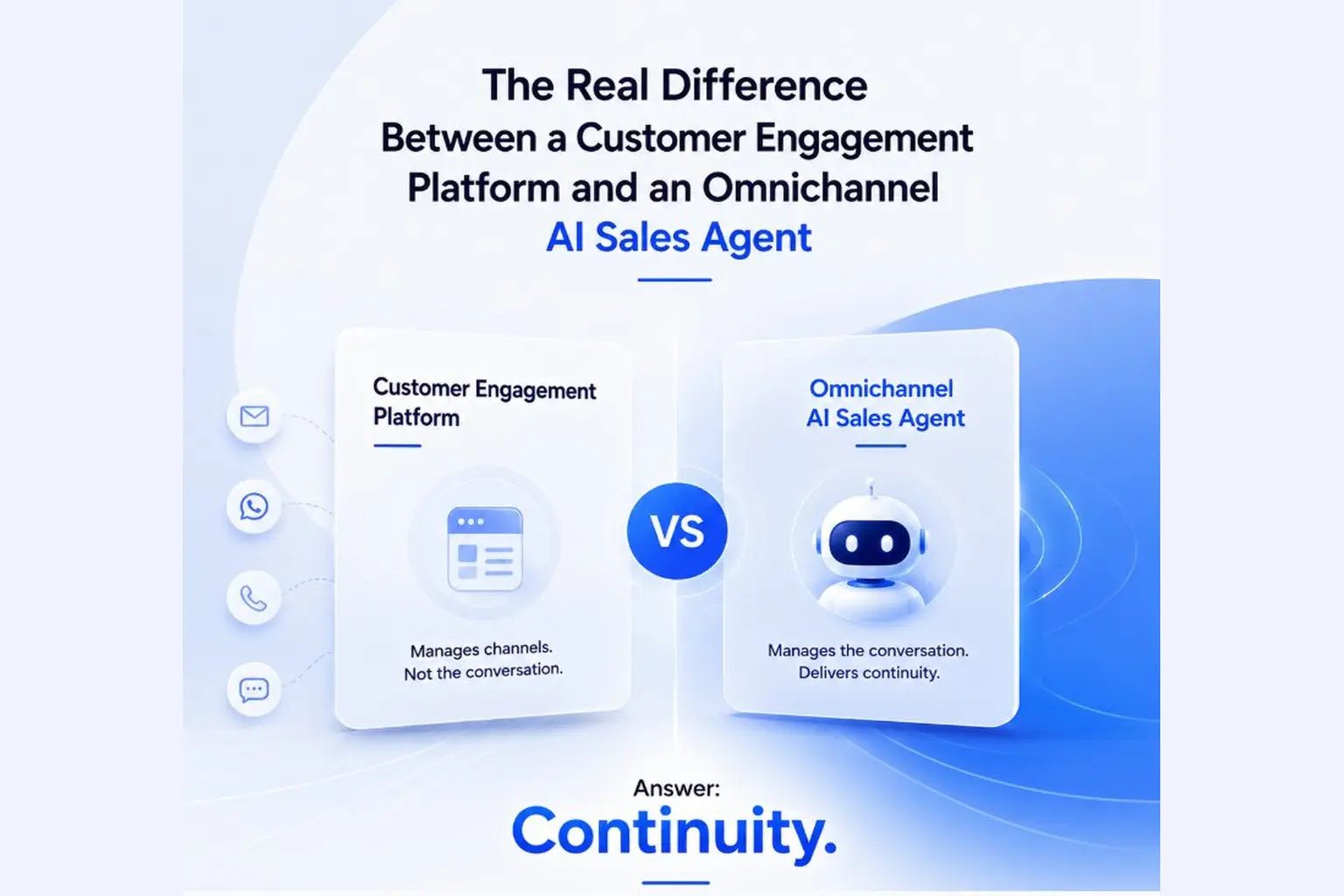
Most comparisons between these categories focus on features. That is not where the real difference exists. The real difference is operational philosophy. A customer engagement platform primarily manages communication workflows. An omnichannel AI sales agent manages live customer conversations.
One system automates sequences.
The other continuously interprets and responds to customer behavior in real time.
This distinction matters in B2C environments where customer intent changes rapidly.
A customer browsing products today may need support tomorrow and become a repeat buyer next month. Modern AI systems can carry contextual understanding across these stages instead of treating every interaction as isolated.
That continuity creates a very different customer experience.
It also changes internal operations.
Instead of teams manually stitching together conversations across tools and channels, AI-native systems create a unified engagement layer capable of handling interactions dynamically.
For businesses operating at scale, that distinction directly impacts:
- conversion rates,
- support efficiency,
- retention performance,
- and operational costs.
Discover how Convin connects conversations across every customer touchpoint.
This blog is just the start.
Unlock the power of Convin’s AI with a live demo.

Why Traditional Customer Engagement Platforms Start Creating Friction at Scale
The limitations of traditional engagement systems rarely appear early.
They emerge during scale.
At smaller volumes, workflow automation feels efficient. Campaign orchestration works. Teams can manually intervene when necessary. But as customer interactions grow across channels, operational fragmentation becomes difficult to control.
Businesses begin encountering problems like:
- inconsistent responses across channels,
- disconnected support and sales conversations,
- repetitive customer interactions,
- delayed lead qualification,
- shallow personalization,
- and rising operational overhead.
The challenge is not that customer engagement platforms stop functioning.
The challenge is that customer expectations evolve beyond what workflow-driven systems were originally built to support.
This is especially visible in India’s B2C ecosystem, where customer communication is increasingly mobile-first, WhatsApp-driven, and highly real time.
According to KPMG, customers now place significant value on low-effort interactions, faster resolution, and consistent experiences across channels. Businesses that fail to deliver continuity often experience declining engagement quality despite investing heavily in communication infrastructure.
This explains why many organizations are now reassessing whether adding more automation layers onto traditional platforms is actually solving the core problem.
In many cases, it is simply increasing operational complexity.
What Modern B2C Businesses Actually Need Today
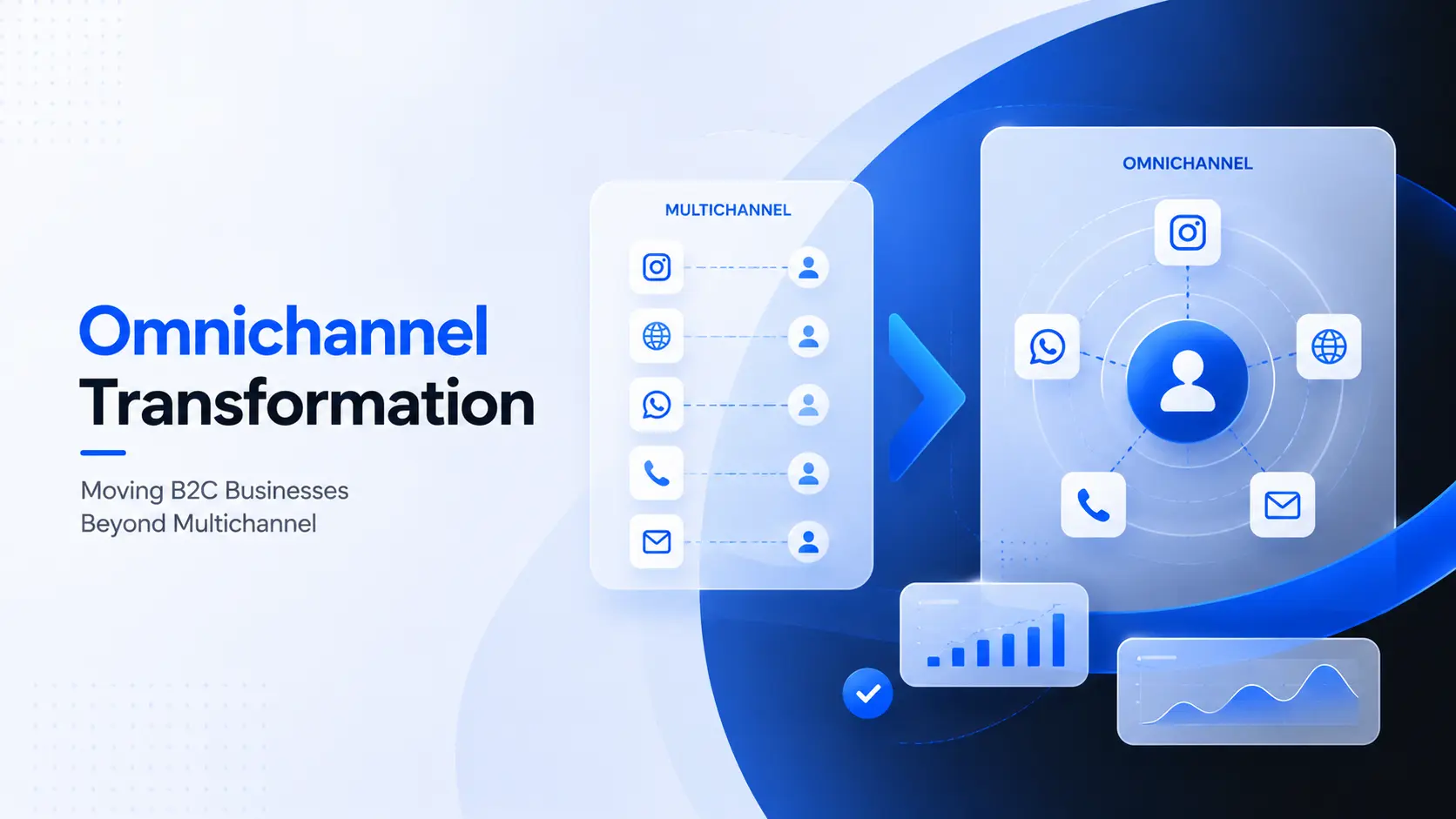
The conversation has shifted beyond multichannel engagement.
Modern B2C businesses now require engagement systems capable of operating as intelligent conversational infrastructure.
That includes the ability to:
- retain customer memory across channels,
- understand intent dynamically,
- qualify and route conversations automatically,
- personalize interactions in real time,
- and maintain consistent engagement quality at scale.
These requirements are becoming increasingly important because customers no longer separate support, sales, onboarding, and retention into distinct experiences.
To the customer, it is one continuous relationship with the brand.
This is where omnichannel AI systems create measurable operational advantages.
Instead of relying entirely on predefined workflows, they adapt conversations dynamically based on behavior, context, sentiment, and historical interaction patterns.
That flexibility is becoming essential for businesses managing large-scale digital engagement.
Especially in India, where customer journeys often move rapidly between social commerce, messaging platforms, voice interactions, and mobile applications.
Explore how Convin unifies omnichannel AI conversations at scale.
Can an Omnichannel AI Sales Agent Replace a Customer Engagement Platform?
For some businesses, yes. For others, not entirely.
Customer engagement platforms still play an important role in areas like campaign management, audience segmentation, lifecycle marketing, and CRM orchestration.
But many B2C businesses are realizing that these capabilities alone no longer define customer experience quality.
The market is gradually moving toward hybrid engagement architectures where conversational AI becomes the central operational layer while workflow systems support broader marketing coordination.
This shift mirrors broader industry movement toward AI-driven customer operations.
Research across customer experience and AI infrastructure increasingly suggests that businesses are prioritizing systems capable of proactive engagement, contextual reasoning, and autonomous interaction management instead of relying solely on static workflow automation.
The key takeaway is not that customer engagement platforms are disappearing.
It is that customer conversations themselves are becoming the primary operational layer of modern B2C growth.
Where Convin Fits Into the Future of B2C Customer Engagement
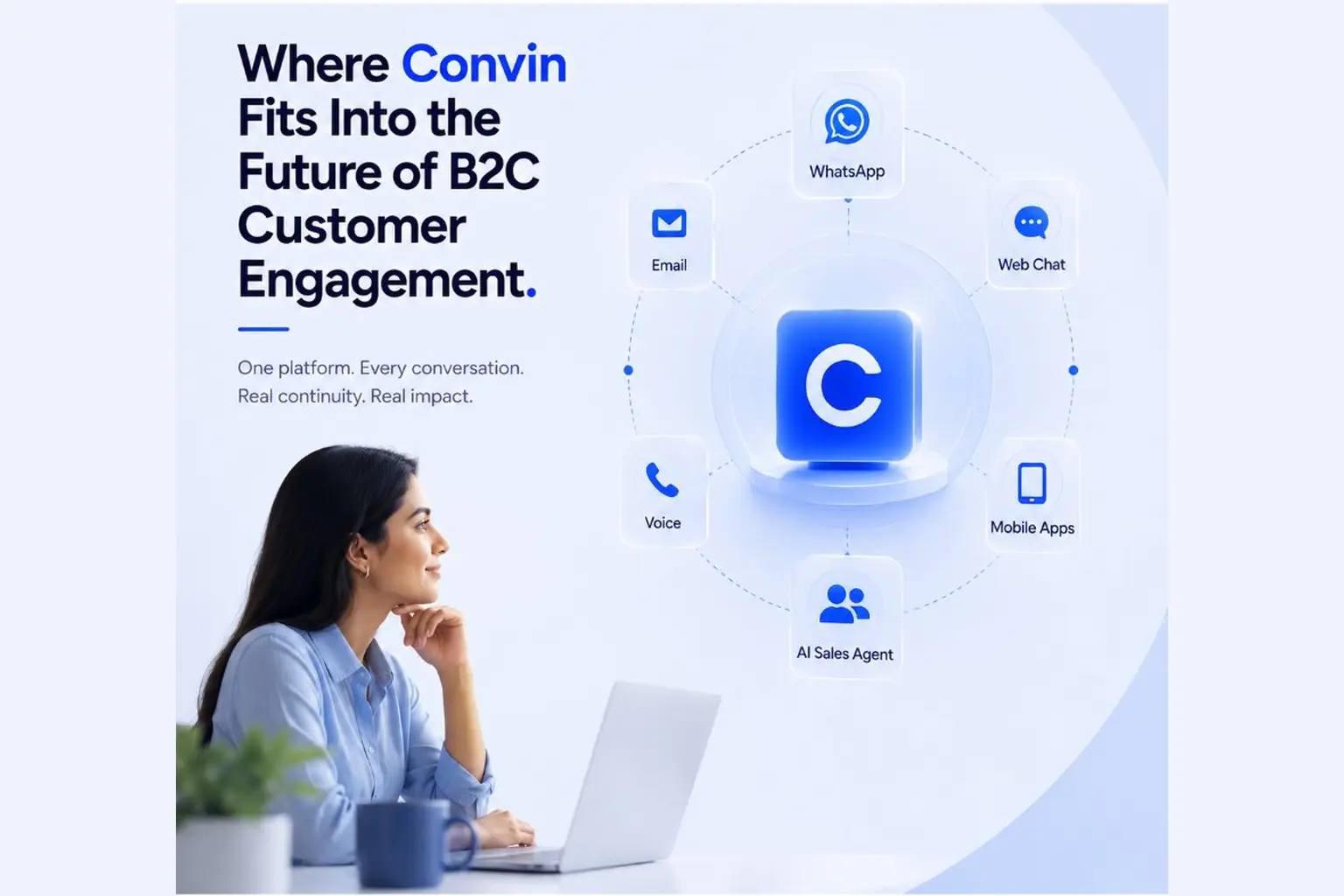
As businesses evaluate the future of customer engagement, the focus is shifting toward platforms capable of combining omnichannel communication, conversational intelligence, and operational automation into a unified system.
This is where AI-native platforms like Convin are becoming increasingly relevant for B2C businesses managing large-scale customer interactions.
Instead of functioning purely as campaign orchestration tools, modern conversational AI systems help businesses create continuity across sales, support, onboarding, and retention conversations while maintaining context across channels.
That shift matters because the future of customer engagement is no longer defined by how many channels a business supports.
It is defined by how intelligently the business can operate conversations across all of them.
What This Means For You
Customer engagement platforms helped businesses scale communication across channels. But modern B2C customer journeys now demand more than workflow automation.
Customers expect conversations to continue seamlessly across WhatsApp, voice, chat, and social platforms without losing context. That shift is pushing businesses toward omnichannel AI systems capable of managing customer conversations intelligently in real time.
As engagement becomes more conversation-driven, the future of B2C growth will depend less on the number of channels a business supports and more on how effectively it maintains continuity across them.
FAQs
1. What is a customer engagement platform and how does it differ from an omnichannel AI sales agent?
A customer engagement platform primarily focuses on communication workflows, campaigns, and customer outreach across multiple channels. An omnichannel AI sales agent focuses on managing live customer conversations through contextual AI, intent recognition, and real-time engagement continuity across channels.
2. Can an omnichannel AI agent replace a customer engagement platform for B2C businesses?
For many digital-first B2C brands, conversational AI platforms are gradually replacing large portions of traditional engagement workflows, especially in customer acquisition, qualification, and support automation.
3. What capabilities does a B2C brand need that a standard customer engagement platform cannot provide?
Modern B2C businesses increasingly require persistent customer memory, dynamic personalization, intent detection, autonomous qualification, real-time conversational continuity, and AI-powered engagement intelligence across channels.
4. How do Indian B2C companies evaluate customer engagement platforms vs omnichannel AI solutions?
Indian B2C businesses often evaluate factors like WhatsApp scalability, multilingual engagement, operational efficiency, automation depth, response consistency, customer context retention, and real-time conversational intelligence when comparing these systems.

.webp)


.avif)