

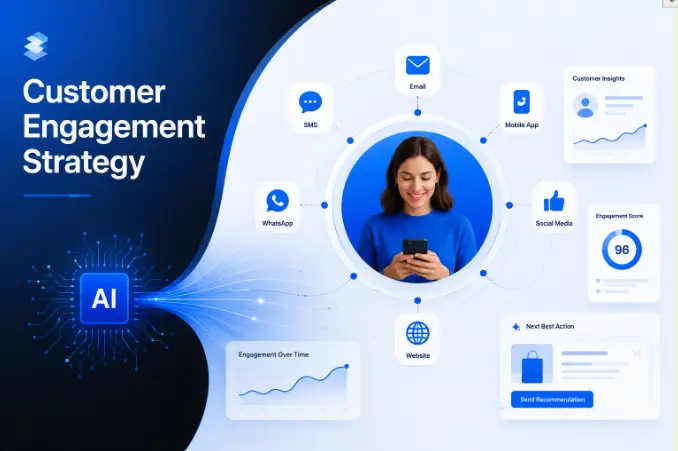
A typical customer journey looks simple on paper:
Ad Click → Website Visit → Product View → Cart Addition → Cart Abandonment → Follow-Up → Purchase → Repeat Purchase
In reality, this journey rarely unfolds that smoothly.
A customer browses a product during lunch, abandons their cart, opens a promotional email later that evening, asks a question on WhatsApp the next day, and eventually calls support before making a decision. Every interaction signals intent. The challenge is not creating a customer engagement strategy around these moments. The challenge is acting on them quickly and consistently.
This is where many B2C customer engagement efforts break down. Follow-ups get delayed, conversations become fragmented across teams, and customers are forced to restart the journey every time they switch channels. What begins as strong buying intent gradually turns into disengagement.
As customer journeys become more complex, omnichannel customer engagement is no longer about being present on multiple channels. It is about connecting every touchpoint into a continuous conversation. Brands that can identify intent, respond in real time, and coordinate engagement across voice, WhatsApp, and email are turning more customer interactions into conversions, retention, and long-term revenue.
Discover how Convin turns customer intent into action.
The Problem Isn't Customer Acquisition Anymore. It's Customer Follow-Through.
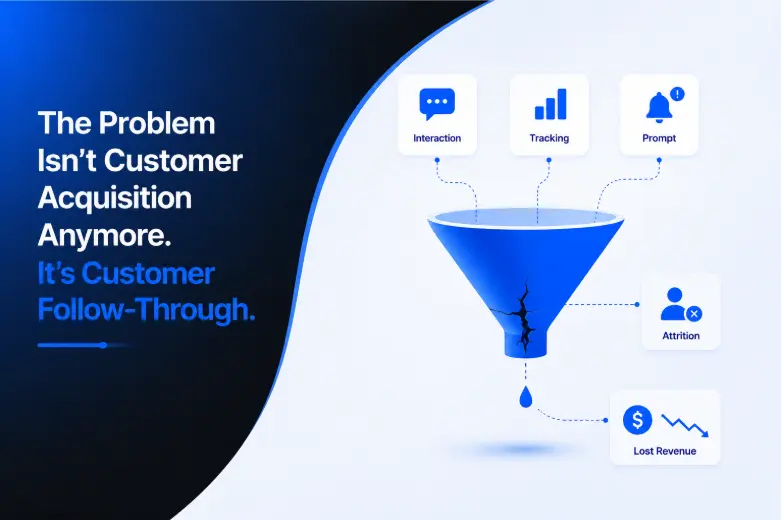
Customer Action → Intent Signal Generated → CRM Captures Activity → Intent Signal Generated → Task Assigned to Team → Follow-Up Delayed → Customer Loses Interest → Revenue Opportunity Lost
This is the reality for most B2C businesses today. Marketing teams spend heavily to generate traffic and leads, but customer engagement often depends on spreadsheets, manual reminders, disconnected teams, and inconsistent follow-up processes.
The result is predictable. Customers fall through the cracks. Follow-ups happen too late. Conversations stop when channels change. High-intent buyers disappear because nobody reached out at the right moment.
This is why customer engagement strategy has become one of the biggest growth priorities for modern B2C brands.
The question is no longer whether brands should engage customers. The question is whether human teams alone can execute engagement at the speed customers now expect.
Why Traditional Customer Engagement Strategy Is Reaching Its Limits
Most B2C customer engagement strategies were designed for a simpler environment.
Customers would visit a website, submit a form, receive an email, and eventually make a purchase.
Today's customer journey looks completely different.
A single buyer may:
- Discover a product through Instagram
- Visit the website
- Abandon a cart
- Receive a WhatsApp reminder
- Call customer support
- Open an email promotion
- Purchase through a mobile app
- Contact support again after delivery
The engagement journey spans multiple channels, devices, and touchpoints.
The challenge is not creating engagement campaigns. The challenge is executing them consistently.
Where Traditional Engagement Breaks
The larger the customer base becomes, the more difficult execution becomes.
This execution gap is where many customer engagement strategies fail.
How AI Executes B2C Customer Engagement at Scale
The most effective customer engagement strategy today is not built around channels.
It is built around customer intent.
Instead of asking:
"Which campaign should we send?"
AI-first organizations ask:
"What should happen next for this customer right now?"
This shift fundamentally changes how engagement works.
Traditional Engagement vs AI-Orchestrated Engagement
According to Salesforce's latest State of the Connected Customer research, customers increasingly expect personalized interactions while maintaining trust and transparency throughout the engagement journey. The report surveyed more than 14,000 consumers and business buyers globally and highlights growing expectations around AI-enabled customer experiences.
The implication is clear.
A modern customer engagement strategy must react continuously to customer behavior rather than relying solely on scheduled campaigns.
What AI Can Monitor Simultaneously
- Browsing activity
- Cart abandonment
- Purchase history
- Previous conversations
- Call outcomes
- Email engagement
- WhatsApp interactions
- Customer lifetime value
- Propensity-to-buy signals
Instead of waiting for teams to discover opportunities manually, AI identifies and acts on them automatically.
This blog is just the start.
Unlock the power of Convin’s AI with a live demo.

How Omnichannel AI Agent Coordinates Voice, WhatsApp, and Email?
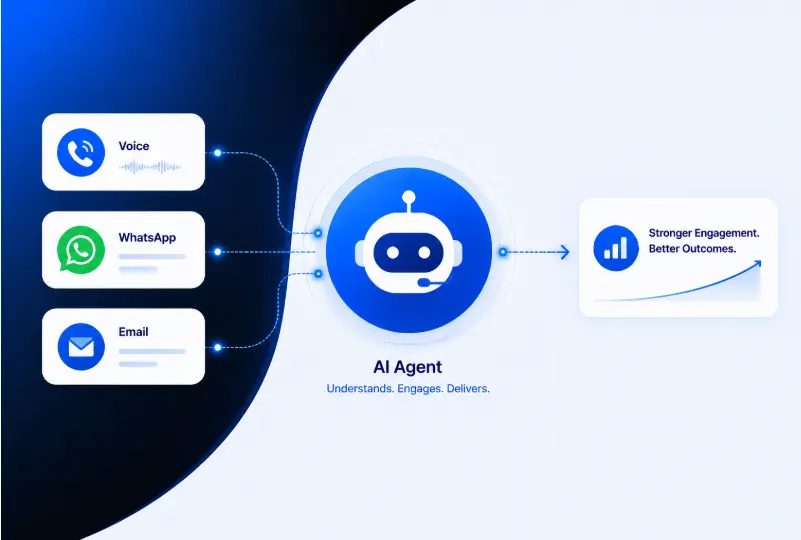
Execution is where omnichannel customer engagement becomes difficult.
Most organizations operate channels independently.
- Marketing owns email.
- Support owns voice.
- Sales owns WhatsApp.
The customer experiences fragmentation.
AI agents remove this fragmentation by maintaining a single engagement context across channels.
Example Customer Journey:
The customer experiences a continuous conversation.
The business experiences coordinated execution.
This is the core advantage of omnichannel customer engagement.
The channel becomes secondary.
The customer journey becomes primary.
KPMG's Global Customer Experience Excellence 2025-2026 research notes that leading organizations are moving from reactive service models toward proactive, predictive engagement powered by agentic AI while creating seamless interactions across channels.
How Manual Follow-Ups Create Customer Engagement Gaps
Most businesses do not have a customer engagement strategy problem, they have an execution problem. Consider a common scenario: a customer abandons a cart worth ₹4,000. The CRM captures the event, and the customer is automatically added to a remarketing workflow. However, the first email is sent 24 hours later, the customer never opens it, and no further action is taken. What looked like a qualified sales opportunity quietly disappears. The issue is not a lack of data or strategy; it is the inability to execute timely follow-ups when customer intent is at its highest.
This problem becomes even more significant at scale:
- A customer abandons a cart but receives outreach too late.
- A high-intent lead requests a callback but never gets contacted.
- An engaged customer stops interacting and receives no re-engagement attempt.
- A support conversation ends without a follow-up recommendation or upsell.
- A repeat buyer becomes inactive and gradually churns unnoticed.
Individually, these missed interactions may seem minor. Across thousands of customers, however, they create substantial revenue leakage. This is where many B2C customer engagement strategies fail, not because the plan is wrong, but because manual execution cannot consistently keep pace with customer behavior.
Common Manual Follow-Up Failures
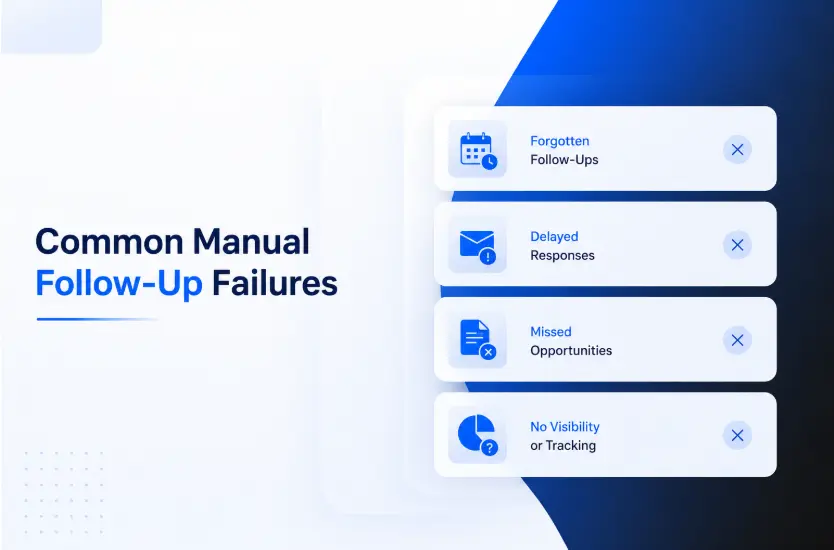
These failures are difficult to identify because they happen silently.
No customer submits a complaint saying: "I left because nobody followed up fast enough."
They simply buy elsewhere. This is why many B2C customer engagement initiatives underperform despite significant investments in marketing technology.
How D2C Brands Scale Customer Engagement Without More Headcount
As customer acquisition costs continue to rise, many D2C brands in India are realizing that sustainable growth depends on improving customer engagement rather than continuously expanding teams. Traditional scaling models often create operational bottlenecks. More inquiries require more agents, more abandoned carts demand more campaign management, and growing customer bases lead to larger retention and support teams. While this approach can support short-term growth, it becomes increasingly expensive and difficult to sustain.
Leading brands are now adopting AI-powered execution models that allow their customer engagement strategy to scale without proportional increases in headcount. Instead of adding more people, they use AI to automate outreach, personalize engagement, and orchestrate conversations across channels.
Key ways D2C brands are scaling customer engagement include:
- Using AI-powered conversations to handle growing inquiry volumes without increasing agent workloads.
- Automating cart recovery and re-engagement workflows based on customer intent signals rather than manual campaign execution.
- Launching personalized lifecycle journeys that nurture customers from first purchase to repeat purchase automatically.
- Scaling instantly during seasonal peaks and sale events without hiring temporary support teams.
- Unifying voice, WhatsApp, and email engagement through a single omnichannel customer engagement system.
- Triggering the next best action automatically based on customer behavior, purchase history, and engagement patterns.
This approach shifts the focus from workforce expansion to execution efficiency. Rather than building larger teams to manage growing customer interactions, brands build systems that engage customers continuously and consistently across channels. The result is a customer engagement strategy that delivers faster responses, better customer experiences, higher conversion rates, and stronger retention while keeping operational costs under control.
This allows brands to scale customer engagement strategy execution without proportional increases in operational costs.
The focus shifts from workforce expansion to workflow automation.
Research from KPMG's latest customer experience studies suggests that organizations leading in customer experience are increasingly combining personalization, trust, and AI-powered orchestration to create scalable engagement models.
Why Omnichannel Customer Engagement Is Becoming a Competitive Requirement
Customer expectations have changed faster than organizational processes.
Consumers no longer think in channels. They think in conversations. They expect businesses to remember context, recognize intent, and continue interactions regardless of where the conversation started.
Salesforce's latest customer research indicates that trust, personalization, and effective use of AI are increasingly influencing customer expectations and engagement decisions.
This creates a significant challenge for businesses relying on spreadsheets, manual follow-up systems, and disconnected workflows.
An effective customer engagement strategy now requires:
- Real-time decision making
- Continuous customer monitoring
- Cross-channel execution
- Personalized engagement
- Automated follow-up
- Consistent customer context
These capabilities are difficult to achieve manually.
They are increasingly becoming standard capabilities of omnichannel AI systems.
Discover how Convin scales omnichannel engagement.
What This Means for B2C Businesses
A customer engagement strategy is only as effective as its execution. While most B2C brands understand the importance of timely follow-ups, personalized outreach, and omnichannel customer engagement, manual processes often create delays that lead to missed opportunities and lost revenue. As customer journeys become more fragmented across voice, WhatsApp, and email, relying on spreadsheets and human coordination alone becomes increasingly difficult.
This is why leading brands are turning to AI-powered execution. By orchestrating conversations across channels, responding to customer intent in real time, and automating follow-ups at scale, omnichannel AI helps businesses engage more customers without adding operational complexity. The brands that close the gap between strategy and execution will be the ones that drive stronger conversions, retention, and long-term customer value.
Turn customer engagement into measurable revenue. Book your demo.
FAQs
1. How often should a B2C brand update its customer engagement strategy?
Most B2C brands should review their customer engagement strategy quarterly to account for changing customer behaviors, channel preferences, and business goals.
2. Which customer engagement metrics are most important for B2C businesses?
Key metrics include customer retention rate, repeat purchase rate, customer lifetime value (CLV), engagement rate, conversion rate, and response time.
3. Can small B2C businesses benefit from omnichannel customer engagement?
Yes. Even smaller businesses can improve customer experiences by maintaining consistent communication across channels and automating routine engagement workflows.
4. How does customer engagement impact customer lifetime value?
Effective engagement encourages repeat purchases, strengthens customer relationships, reduces churn, and increases the overall value customers generate over time.
5. What role does personalization play in customer engagement?
Personalization helps deliver relevant messages, offers, and experiences based on customer behavior, making engagement more meaningful and effective.

.avif)

.avif)


.avif)