

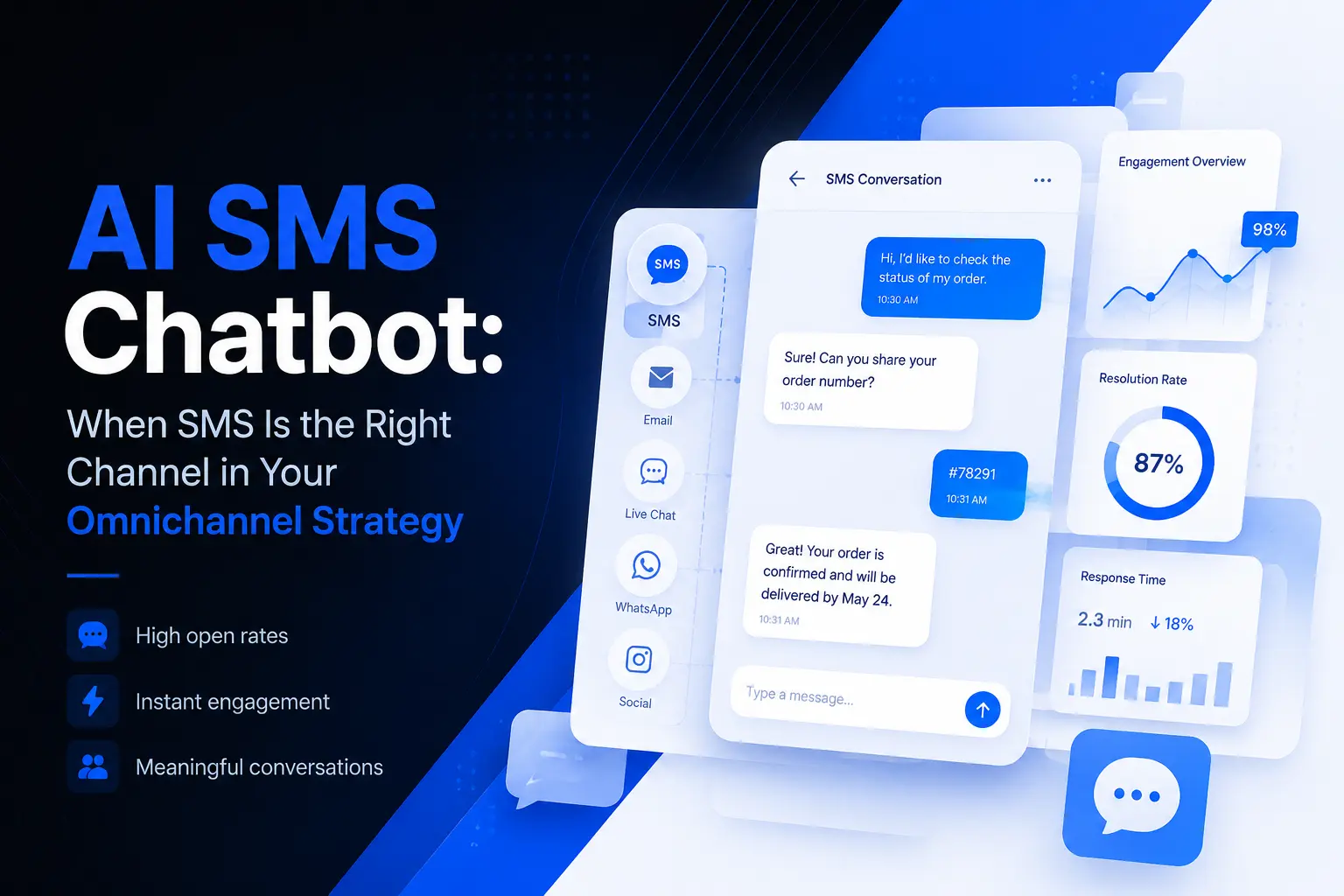
A customer ignores your app notification. Your email lands in promotions. Your WhatsApp message gets delayed.
But the SMS? Usually read within minutes.
That’s why enterprises are bringing SMS back into modern customer engagement strategies, this time powered by AI.
Today’s AI SMS chatbots handle everything from appointment reminders and OTP support to payment follow-ups, delivery updates, and lead qualification. When connected to an omnichannel AI platform, SMS becomes more than a messaging channel, it becomes a reliable engagement and fallback layer.
The question is no longer “Should we use SMS?”
It’s “When is SMS the right channel in the customer journey?”
Why SMS Still Outperforms Newer Channels in Critical Moments
Many businesses assume customers prefer newer messaging apps for every interaction. In reality, channel preference changes based on urgency, context, and accessibility.
An AI SMS chatbot works exceptionally well when:
- The interaction is time-sensitive
- Internet connectivity is unreliable
- Customers are not app-active
- Immediate visibility is required
- Authentication or verification is involved
- Response friction must stay minimal
For industries like banking, healthcare, logistics, insurance, and collections, SMS often becomes the fastest path to customer action.
Where AI SMS Chatbots Deliver the Most Value
- Transactional Alerts
AI can personalize reminders, payment nudges, and order updates while handling customer replies automatically.
- Lead Qualification
Instead of routing every inquiry to human teams, AI SMS chatbots can collect intent, budget, availability, and location data instantly.
- Appointment and Renewal Management
AI-driven SMS workflows reduce no-shows and improve renewal rates through conversational reminders.
- Escalation Fallbacks
If WhatsApp messages fail or customers remain inactive on email, AI systems can intelligently switch to SMS.
What Makes an AI SMS Chatbot Different From Traditional SMS Automation?
Traditional SMS systems are rule-based. AI SMS chatbots are intent-driven.
That difference changes customer experience entirely.
Instead of static flows like: “Reply 1 for support, Reply 2 for sales”
AI-powered SMS systems understand context, intent, and conversational patterns.
Core Capabilities of Modern AI SMS Chatbots
An AI SMS chatbot is far more than a texting automation tool. Modern systems are designed to understand customer intent, maintain context across conversations, automate workflows intelligently, and operate seamlessly inside a larger omnichannel ecosystem.
Unlike traditional SMS platforms that rely on predefined scripts and keyword triggers, AI-powered SMS chatbots can interpret natural language, personalize responses in real time, and continuously improve customer interactions using conversational intelligence.
Here are the capabilities that make modern AI SMS chatbots enterprise-ready:
- Natural Language Understanding
Traditional SMS systems often fail when customers deviate from expected replies. AI SMS chatbots solve this by understanding conversational language instead of depending entirely on rigid command structures.
For example, customers may respond with:
- “Can someone call me later?”
- “I already made the payment yesterday.”
- “I need to change my appointment timing.”
Instead of treating these as unrecognized inputs, the AI identifies the intent behind the message and responds appropriately. This creates smoother customer experiences and significantly reduces conversation drop-offs.
Natural language understanding also allows businesses to handle a broader range of customer queries without continuously redesigning workflows.
- Context Retention
One of the biggest frustrations in customer communication is repetition. Customers dislike restarting conversations every time they switch channels or reconnect later.
Modern AI SMS chatbots maintain contextual memory across sessions and communication channels. This means the system remembers:
- Previous interactions
- Purchase or support history
- Current ticket status
- Preferred language
- Customer sentiment
- Past resolutions
For example, a customer may begin a conversation on WhatsApp, continue via SMS after losing internet connectivity, and later escalate to a voice call, without repeating the issue from scratch.
This continuity is what transforms fragmented messaging into a true omnichannel customer experience.
- Intelligent Routing
Not every customer interaction should remain automated.
AI SMS chatbots can identify when a conversation requires human intervention based on factors like:
- Customer frustration or negative sentiment
- Complex support requests
- High-value sales opportunities
- Compliance-sensitive interactions
- Multiple failed resolution attempts
Once identified, the AI automatically routes the conversation to the most appropriate agent or department while sharing the complete interaction history.
This reduces customer frustration, improves first-contact resolution rates, and helps support teams focus on high-priority conversations instead of repetitive requests.
- Automated Personalization
Traditional SMS campaigns send the same message to every customer. AI SMS chatbots make conversations more contextual by adapting responses based on customer behavior, history, and journey stage in real time.
Instead of generic reminders or follow-ups, businesses can deliver communication that feels more relevant and timely without manually creating multiple workflows. This helps improve engagement rates while making large-scale customer communication feel far more personalized and responsive.
When SMS Should Be Part of Your Omnichannel Strategy
Not every customer interaction belongs on SMS, but in high-urgency moments, it becomes one of the most effective communication channels. The best omnichannel strategies use SMS strategically based on customer behavior, urgency, and accessibility.
SMS Works Best For High-Urgency Communication
SMS becomes incredibly effective when businesses need customers to notice and act immediately. Unlike emails that may sit unopened or app notifications that can be ignored, text messages are typically seen within minutes, making them ideal for time-sensitive communication.
- Time-Critical Notifications
- Fraud alerts
- Delivery status
- OTP authentication
- Missed payment reminders
- Service outage notifications
SMS delivers visibility faster than most channels.
- Low-Friction Customer Responses
One of the biggest advantages of SMS is how effortless it is for customers to respond. They do not need to install an app, log into a portal, or navigate through multiple screens just to continue a conversation. A simple text reply is often enough to confirm an appointment, make a payment choice, request support, or answer a query.
- Reaching Offline or Low-App Users
Not every customer consistently uses WhatsApp, mobile applications, or email throughout the day. Some users may have limited internet connectivity, disabled app notifications, or simply prefer not to engage through app-based channels. In these situations, SMS becomes one of the most reliable communication methods available.
Where SMS Is Not Ideal
SMS works best for urgency and responsiveness, but channels like WhatsApp or voice are often better for media-heavy support, onboarding, or complex troubleshooting.
Explore how to build connected customer journeys with Convin
This blog is just the start.
Unlock the power of Convin’s AI with a live demo.

How AI SMS Chatbots Work Inside an Omnichannel AI Platform
The biggest shift in customer engagement is not channel expansion.
It’s channel orchestration.
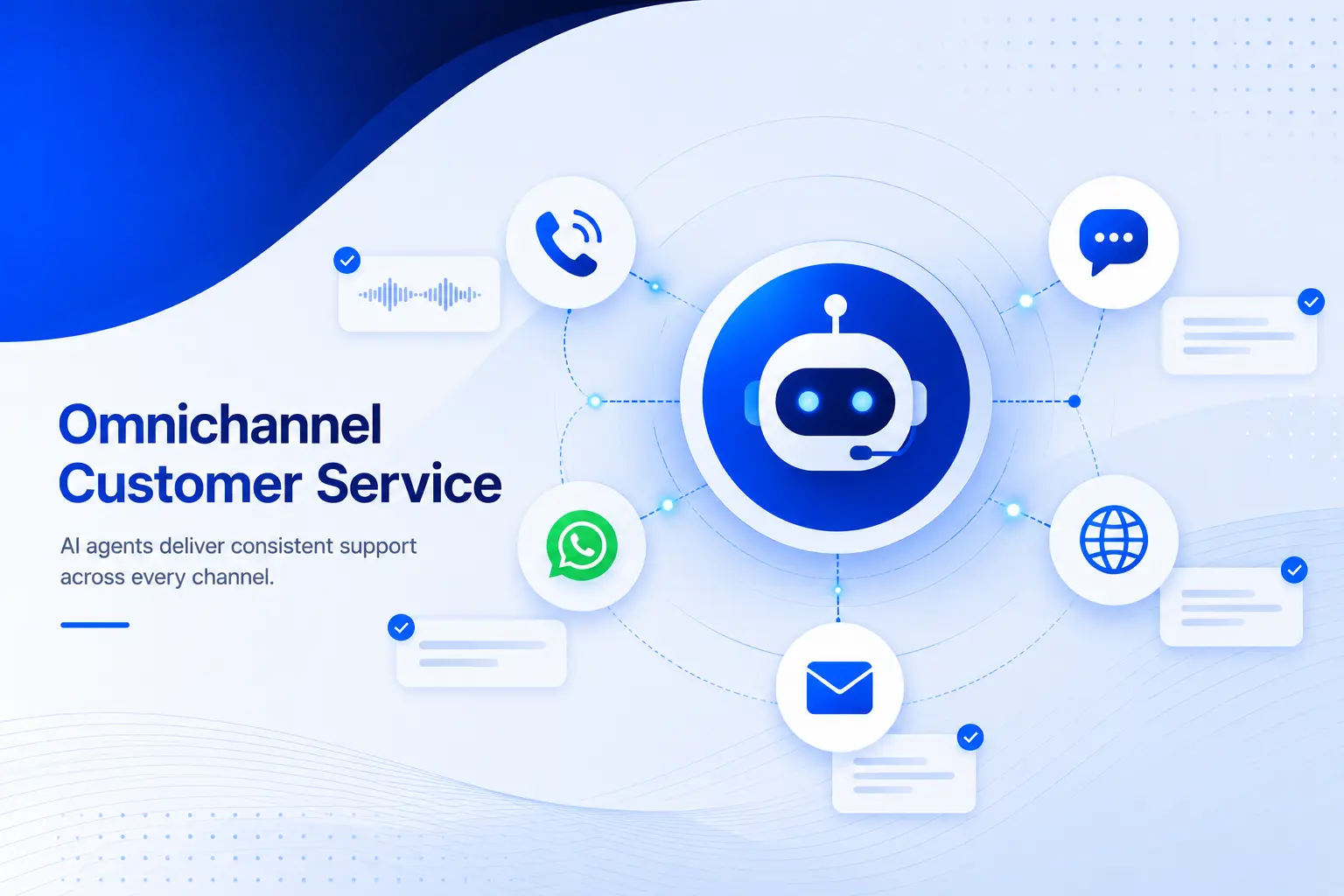
Modern AI platforms no longer treat SMS, WhatsApp, voice, email, and web chat as separate systems.
They operate as one unified conversational layer.
- Unified Customer Context
One of the biggest advantages of an omnichannel AI platform is the ability to maintain a single, connected customer conversation across every channel. Customers no longer need to repeat their issue when moving from SMS to WhatsApp, live chat, email, or voice support because the AI retains the full interaction history and context automatically.
- Intelligent Channel Switching
Omnichannel AI platforms automatically switch channels when communication fails or engagement drops. If a WhatsApp message goes unopened, the system can instantly move the conversation to SMS or escalate it to voice support when needed.
This helps businesses maintain uninterrupted customer communication across every touchpoint.
- Centralized Analytics
Teams gain visibility into:
- Response rates
- Conversion rates
- Drop-off points
- Escalation patterns
- Resolution times
This centralized visibility helps teams identify communication gaps faster, optimize workflows, and improve customer experience with data-driven decisions.
- AI-Powered Automation at Scale
AI platforms can automate millions of customer interactions while still maintaining personalized communication. This helps enterprises handle large-scale support, collections, and engagement operations far more efficiently.
Key Features to Evaluate Before Choosing an AI SMS Chatbot
Businesses evaluating conversational AI platforms should look beyond simple messaging capabilities.
The real value comes from orchestration, intelligence, and scalability.
Essential Features to Prioritize
Choosing an AI SMS chatbot is not just about automating text messages. The right platform should improve customer engagement, integrate with existing systems, and scale across channels without creating fragmented experiences.
- NLP and Intent Detection
A strong AI SMS chatbot should understand natural customer responses instead of relying only on predefined keywords. Customers rarely reply in fixed formats, so the platform must accurately detect intent, context, and sentiment even when messages are conversational or unstructured. Better intent recognition leads to smoother customer interactions and fewer failed conversations.
- CRM and API Integrations
Your AI SMS chatbot must connect with:
- CRM systems
- Contact center platforms
- Ticketing tools
- Payment systems
- Marketing automation platforms
These integrations allow the AI to access customer history, automate workflows, update records in real time, and deliver more contextual conversations without manual intervention.
Compliance and Security
Especially important for industries handling financial or healthcare data.
Evaluate:
- Consent management
- Opt-out workflows
- Data retention policies
- Regional messaging regulations
Businesses should also evaluate whether the platform supports regional messaging regulations and industry-specific compliance requirements across different markets. Strong security and governance capabilities help reduce operational risk while maintaining customer trust at scale.
Omnichannel Support
Avoid standalone SMS tools that create fragmented customer journeys.
Choose platforms that unify SMS with:
- WhatsApp Business API
- Voice AI
- Live chat
- Mobile apps
Human Handoff Capabilities
AI should enhance support teams, not replace them entirely. When conversations become complex or sensitive, the platform should seamlessly transfer customers to live agents with full conversation history and context attached.
This ensures smoother support experiences without forcing customers to repeat information.
The Business Impact of AI SMS Chatbots
Companies adopting AI SMS chatbots typically improve three areas simultaneously:
- Faster Customer Response Times
AI handles repetitive conversations instantly, reducing customer wait times.
- Lower Operational Costs
Support and collections teams can manage significantly larger conversation volumes.
- Higher Engagement and Conversion Rates
SMS remains one of the highest-visibility communication channels globally.
When AI adds personalization and conversational intelligence, engagement improves further.
For many enterprises, the outcome is not just automation.
It’s better customer responsiveness without increasing support headcount.
Why Enterprises Are Combining SMS With Conversational AI
The future of customer communication is not channel replacement.
It’s channel coordination.
SMS is no longer competing with WhatsApp, voicebots, or apps. It complements them.
An AI SMS chatbot becomes most powerful when it works as part of a broader omnichannel AI strategy that intelligently selects the best channel for every customer interaction.
That combination helps businesses:
- Reach customers faster
- Reduce communication failures
- Improve engagement consistency
- Automate repetitive conversations
- Deliver connected customer experiences
The result is a communication ecosystem where customers experience one continuous conversation regardless of channel.
FAQs
- What industries benefit the most from AI SMS chatbots?
Industries with high-volume, time-sensitive communication benefit the most, including banking, healthcare, insurance, logistics, telecom, and debt collections.
- Can AI SMS chatbots support multilingual conversations?
Yes. Modern conversational AI platforms can detect and respond in multiple languages based on customer preferences and regional requirements.
- How do AI SMS chatbots handle failed message delivery?
Most enterprise platforms use intelligent fallback mechanisms that reroute communication through channels like WhatsApp, voice calls, or email if SMS delivery fails.
- Can AI SMS chatbots integrate with contact center software?
Yes. Advanced platforms integrate with CRMs, helpdesk systems, dialers, and contact center infrastructure to maintain unified customer context.
- Are AI SMS chatbots suitable for outbound campaigns?
Yes. Businesses use them for lead nurturing, payment reminders, customer reactivation, surveys, appointment scheduling, and promotional engagement workflows.




.avif)