

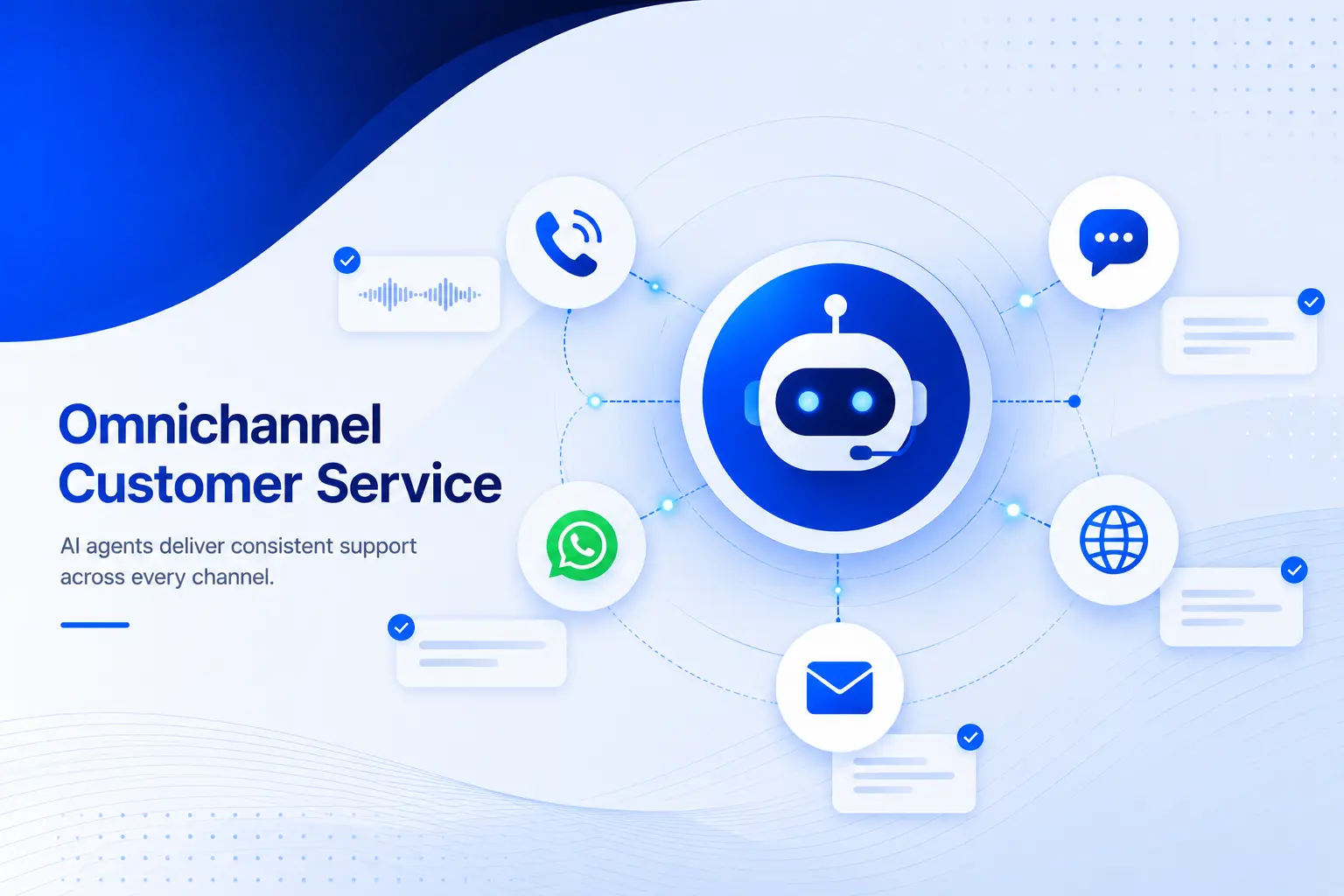
Your customer raised a complaint on WhatsApp Tuesday morning. By Thursday, they called your support line, and had to repeat everything from scratch. That's not a training problem. That's a structural one.
Most businesses today operate on multiple channels. But operating on multiple channels and delivering omnichannel customer service are not the same thing. The first is a presence strategy. The second is a continuity strategy, and it's the one that actually builds customer trust.
With AI agents now capable of maintaining context across voice, chat, WhatsApp, email, and social media simultaneously, the technical barrier to true omnichannel support has collapsed. What remains is the question of implementation: how do you actually get your support function there, and how do you know when it's working?
This guide is for customer experience leaders and support operations teams at the evaluation stage, teams that already understand the omnichannel imperative and are now deciding how AI fits into their architecture.
What Is Omnichannel Customer Service and Why Does the Definition Still Matter?
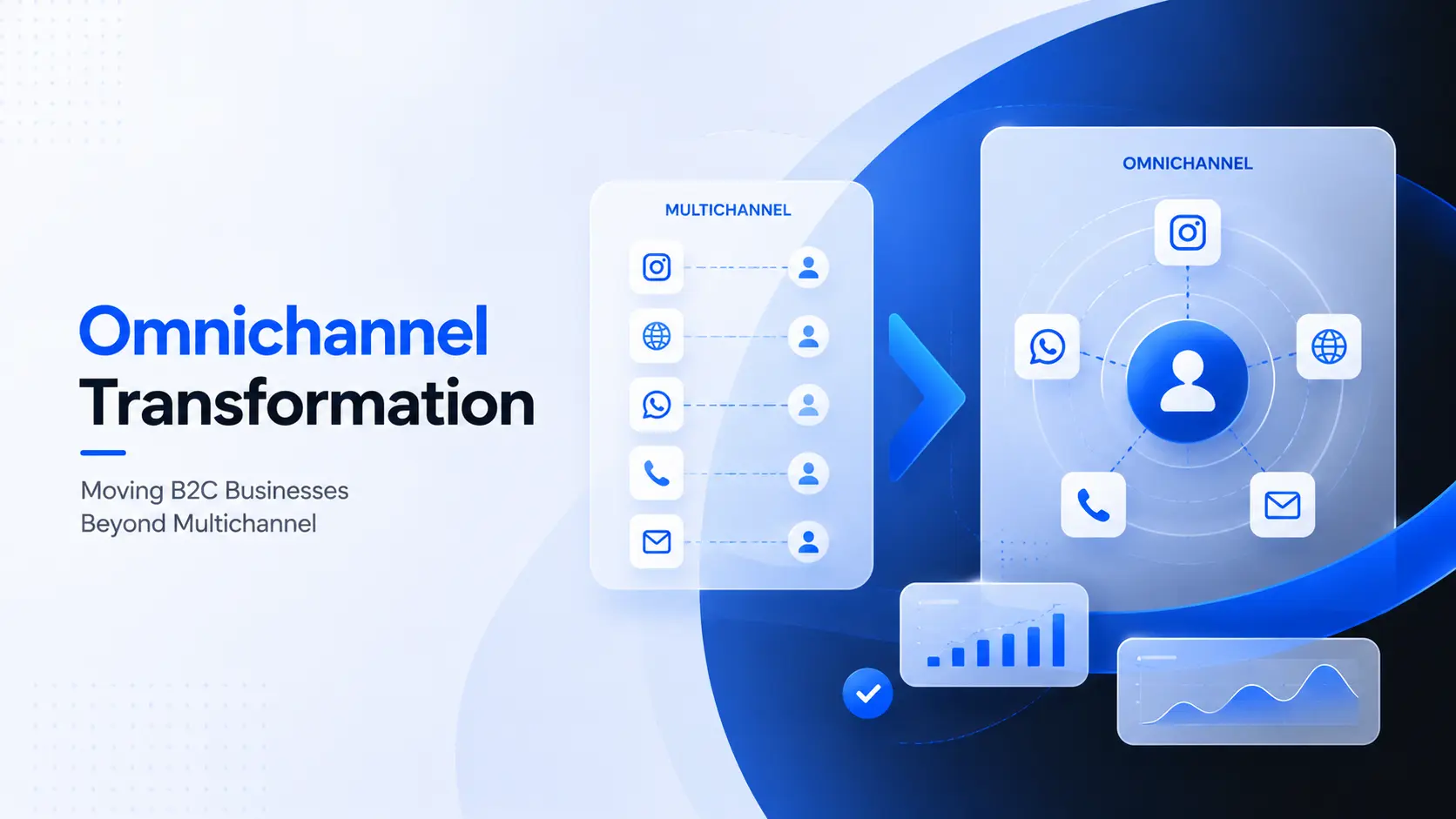
Omnichannel customer service is a support model in which every channel a customer uses, phone, email, live chat, WhatsApp, social media, and SMS, connected to a single, shared data layer. A customer can start a conversation on one channel and continue it on another without needing to re-explain their issue. Agents (human or AI) always have full context of prior interactions.
This sounds straightforward, but it's meaningfully different from what most businesses actually run, which is multichannel support, a model where multiple channels exist, but don't talk to each other.
The distinction has measurable consequences. Omnichannel support lifts CSAT scores to 67%, compared to just 28% for disconnected multichannel setups. Companies with strong omnichannel strategies retain an average of 89% of customers, versus just 33% for those with weak or no cross-channel integration.
The gap isn't closing, but widening. And AI is accelerating it.
See how Convin unifies customer support across every channel.
Multichannel vs. Omnichannel Customer Service: What's the Actual Difference?
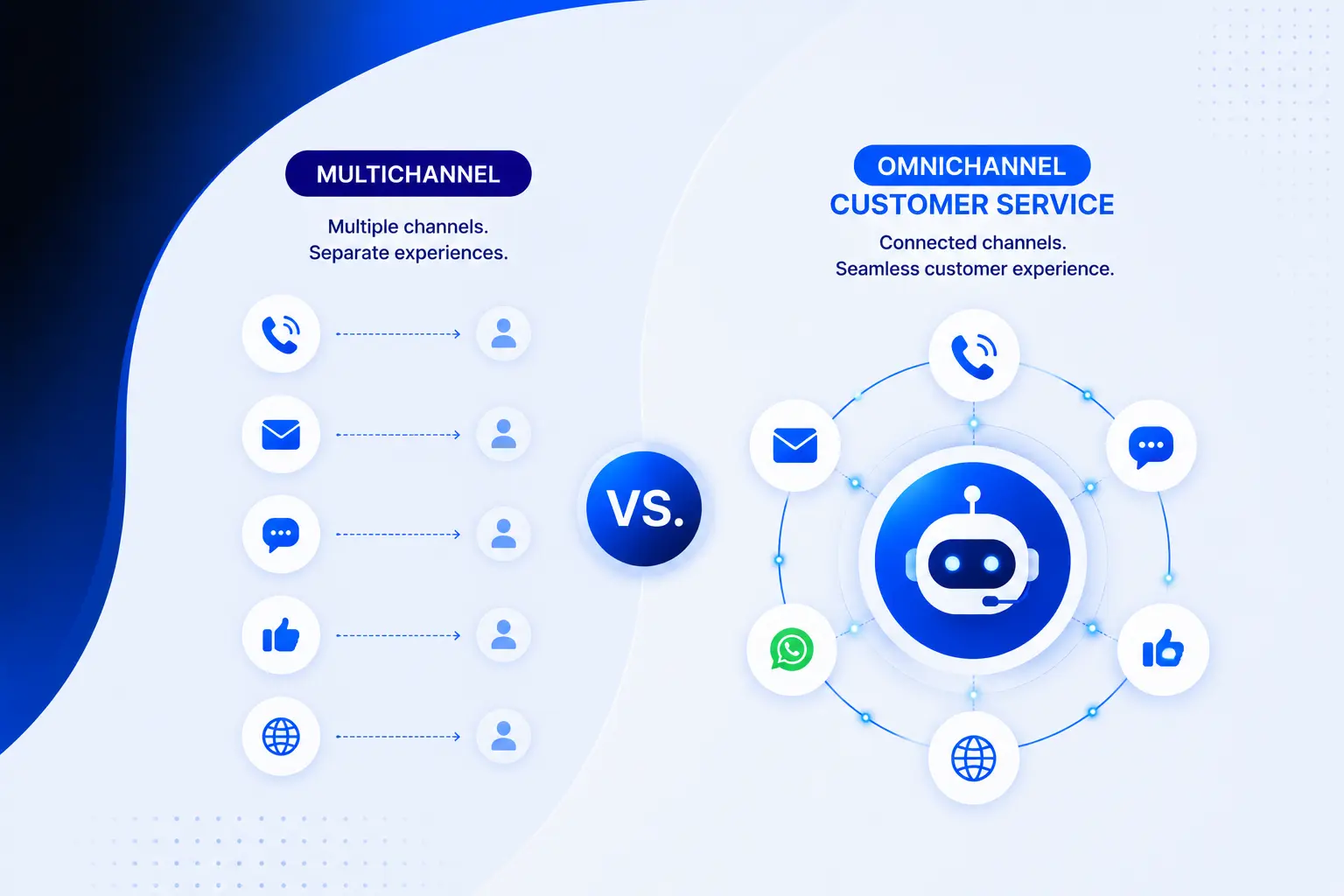
Understanding this distinction is foundational before any AI deployment decision can be made well.
The core failure of multichannel support is not that it offers multiple channels, it's that each channel behaves like a separate business. A customer who calls after chatting with a bot isn't treated as the same person with an ongoing issue. They're treated as a new ticket.
Omnichannel fixes this at the data layer, not the interface layer. It's less about adding channels and more about connecting what already exists.
Unify every customer conversation with Convin’s omnichannel AI.
What AI-Driven Omnichannel Support Looks Like
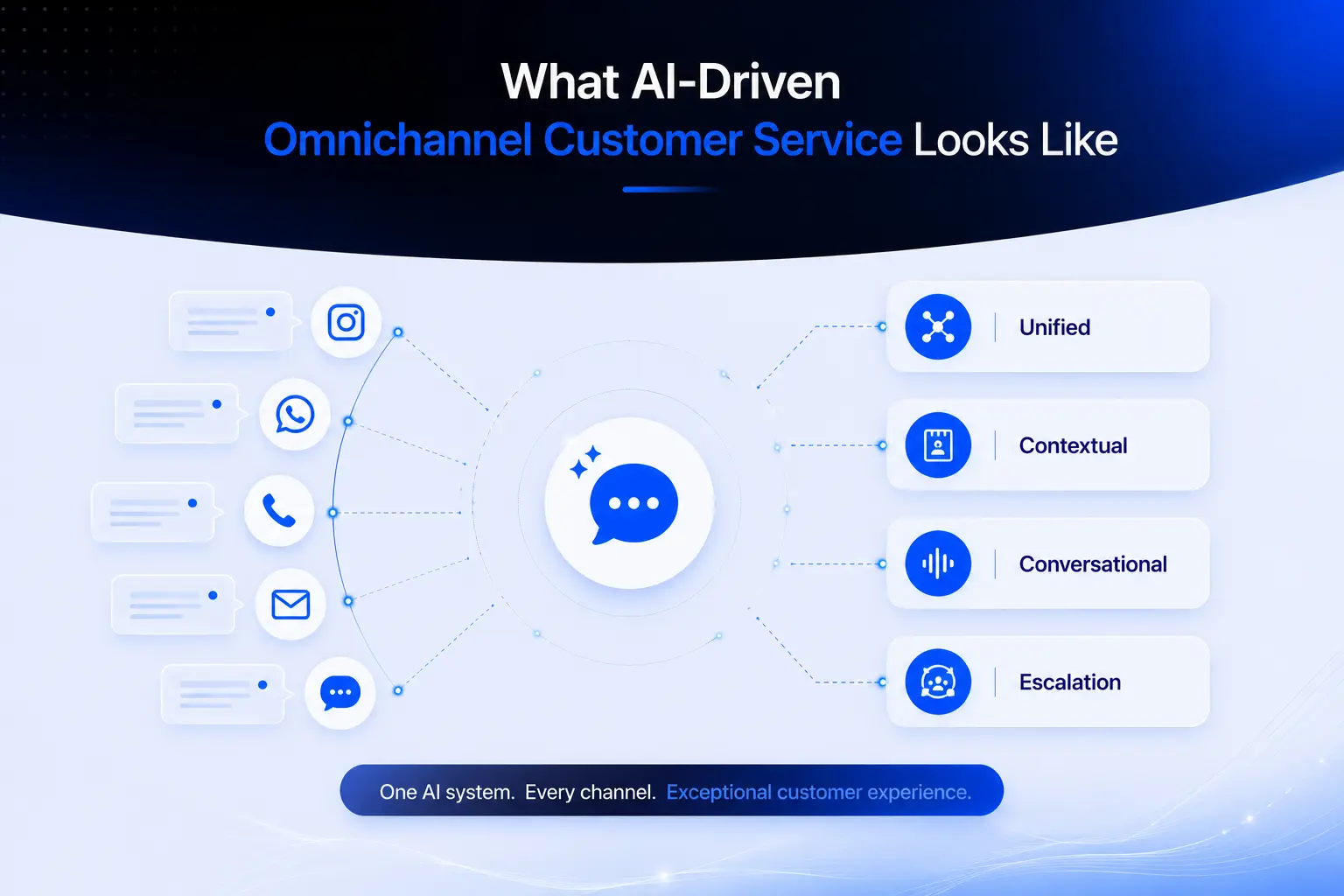
Many platforms claim omnichannel coverage. Fewer deliver it. The difference comes down to four operational capabilities.
- One AI Agent Across Every Customer Channel
In a genuine omnichannel AI platform, the agent's logic, its knowledge base, workflows, policies, and behavioral rules live once and run everywhere. If a customer requests a refund through WhatsApp and later calls support, the AI already understands the policy, previous conversation, and current ticket status without restarting the interaction. This consistency becomes even more powerful when combined with AI and data analytics, allowing the system to evaluate customer behavior, identify patterns across touchpoints, and deliver more informed responses in real time. Platforms that duplicate logic per channel create drift: customers get different answers depending on how they reach you.
- Persistent Cross-Channel Memory
When a customer starts on chat and follows up by email the next day, the AI should retain full context: who the customer is, what they asked, what was resolved, and what remains open. This requires a shared identity layer and structured memory architecture, not just transcript logging.
- Native Voice AI
Voice is the channel most AI platforms get wrong. Chat-first platforms often treat voice as a text-to-speech wrapper over a chat agent that was never designed for spoken interaction. True omnichannel includes voice AI built for natural phone conversations, not bolted on as an afterthought. This becomes especially important for enterprises where voice remains the primary escalation channel for high-value or complex customer issues.
- Seamless Human Escalation
AI handles the majority of conversations. When it can't, the handoff to a human agent must include full conversation context, customer history, and a suggested resolution. Platforms where AI and human agents live in different systems create friction and context loss during escalation.
This blog is just the start.
Unlock the power of Convin’s AI with a live demo.

Common Pitfalls When Adopting Omnichannel AI
Confusing multichannel with omnichannel. Offering five channels is multichannel. Connecting those channels with shared context, unified AI logic, and seamless transitions is omnichannel. Most platforms that claim omnichannel are still multichannel with a shared inbox.
Measuring deflection instead of resolution. A chatbot that stops conversations from reaching a human isn't necessarily solving problems. Track genuine resolution rate, not deflection, to understand real performance.
Ignoring voice. Phone support isn't going away. 70% of customers still prefer phone for complex issues. Platforms without native voice AI leave a critical gap in your omnichannel coverage. Underestimating integration complexity. Connecting a standalone AI agent to a separate helpdesk, CRM, and backend systems takes months of engineering. Factor integration time and maintenance into total cost of ownership.
How Omnichannel AI Keeps Context Consistent Across Channels
Omnichannel AI maintains context by creating a single, centralized conversation layer rather than treating voice, WhatsApp, and chat as separate silos. It links scattered interactions into one continuous profile. This eliminates the need to repeat issues when switching between phone, messaging apps, and web chat.
The AI achieves this seamless experience through three core components:
- Unified Customer Profiles: As data is ingested, AI aggregates previous interactions, preferences, and purchase history into a single, evolving profile. When a user shifts from WhatsApp to a voice call, the AI instantly recognizes the user and the ongoing ticket.
- Centralized Data Layer: Rather than syncing after the fact, the backend relies on an interconnected CRM. The AI processes inputs, such as text messages or transcribed voice calls, and interprets user intent at an abstract level. It uses this understanding to maintain the conversation thread across different platforms.
- AI-Powered Agent Assist: If an issue requires escalation to a human representative, the AI automatically transfers the entire transcript, sentiment analysis, and context to the agent, providing a comprehensive background before the conversation begins.
Why AI Is Reshaping Omnichannel Customer Service
Traditional omnichannel support models are difficult to scale. As businesses add more customer channels, support teams often struggle with fragmented conversations, repeated customer queries, rising operational costs, and inconsistent service experiences.
AI changes this by creating a unified support layer across voice, WhatsApp, chat, email, and other customer touchpoints. Instead of managing disconnected interactions, businesses can use AI agents to maintain conversation continuity, automate repetitive tasks, and deliver faster resolutions across every channel.
With AI-powered omnichannel customer service, businesses can:
- Respond faster across channels
- Maintain consistent customer experiences
- Reduce manual support workload
- Improve resolution efficiency
- Deliver personalized support at scale
- Support customers 24/7 without operational bottlenecks
As customer expectations continue to increase, AI is becoming the foundation for scalable, always-on omnichannel customer support.
How do B2C businesses measure improvement in customer service after deploying omnichannel AI?
B2C businesses measure the success of omnichannel AI by tracking customer experience, operational efficiency, and revenue impact across all communication channels. The goal is to understand whether AI-driven omnichannel customer service improves consistency, speed, personalization, and customer satisfaction.
Key Omnichannel AI Metrics:
- First Response Time (FRT): Measures how quickly customers receive an initial response across WhatsApp, chat, email, voice, or social channels. Omnichannel AI helps reduce delays by automating replies and routing conversations instantly.
- Average Resolution Time (ART): Tracks how long it takes to fully resolve customer issues. AI agents improve resolution speed by maintaining context across channels and reducing repetitive interactions.
- Customer Satisfaction Score (CSAT): Businesses monitor post-interaction ratings to evaluate whether customers feel supported consistently across touchpoints.
- Net Promoter Score (NPS): Measures customer loyalty and willingness to recommend the brand after implementing omnichannel AI support.
- Customer Retention Rate: Businesses compare repeat purchase behavior and churn rates before and after deployment to understand long-term CX improvements.
- Channel Switching Reduction: Omnichannel AI reduces the need for customers to repeat information when moving between channels like WhatsApp, email, and voice support.
- AI Containment Rate: Tracks how many customer queries AI resolves without needing human intervention, helping businesses measure automation efficiency.
- Agent Productivity Metrics: Companies monitor ticket handling capacity, reduced workload, and improved agent efficiency after AI deployment.
- Conversion Rate Improvements: In B2C environments, omnichannel AI also impacts sales by improving lead nurturing, cart recovery, and personalized engagement.
- Customer Effort Score (CES): Measures how easy it is for customers to get support across channels. Lower effort generally indicates better omnichannel experiences.
For example, a retail brand deploying omnichannel AI across WhatsApp, website chat, and email may measure:
- Faster support response times
- Higher repeat purchases
- Reduced cart abandonment
- Improved CSAT scores
- Increased chatbot-driven conversions
Platforms like Convin help businesses centralize these analytics, monitor omnichannel workflows, analyze customer conversations, and optimize AI-driven engagement strategies continuously.
Why Teams Choose Convin for Omnichannel AI Support
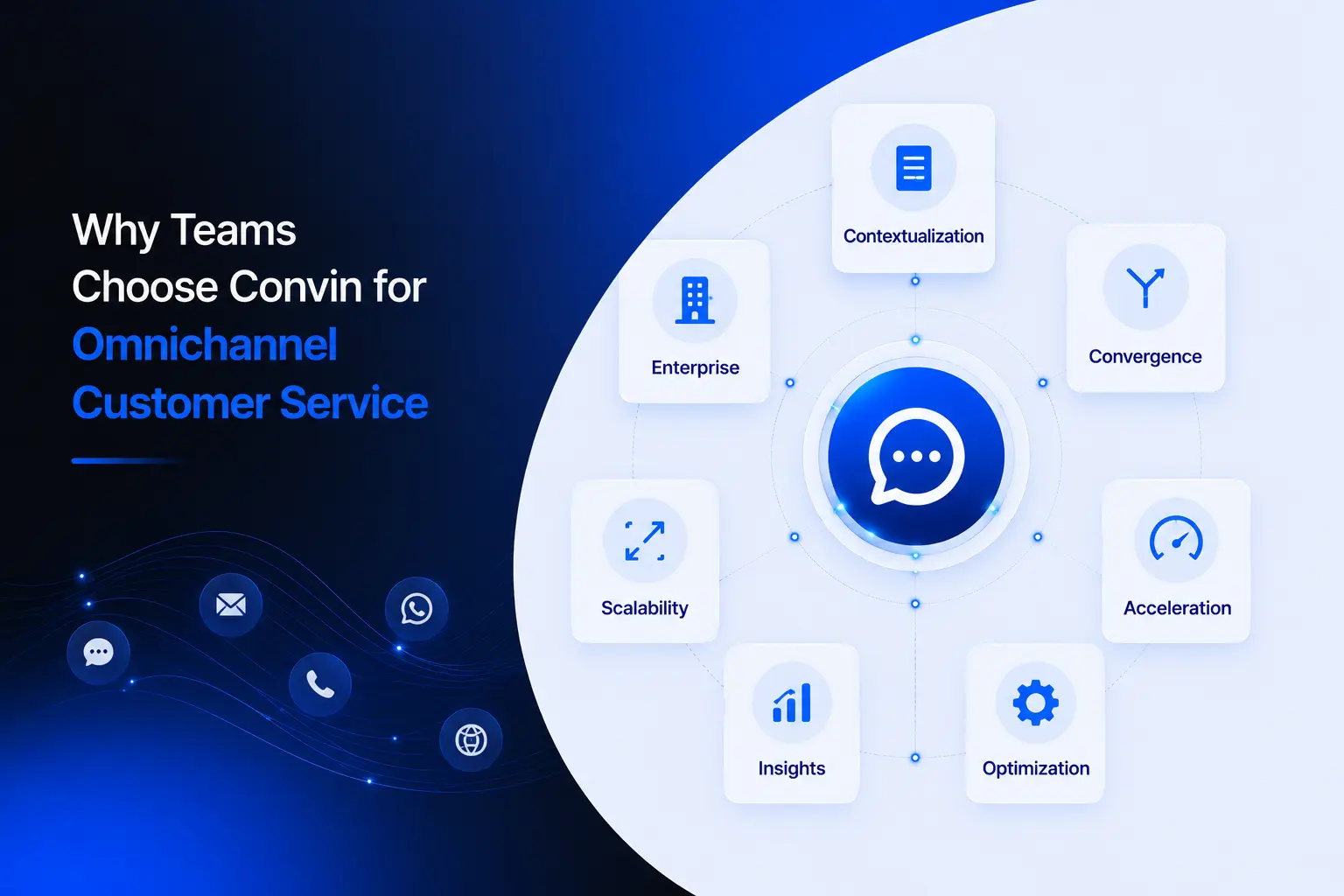
Most businesses already operate across multiple customer channels. The challenge is maintaining continuity across them without increasing operational complexity. That’s why support teams adopt Convin to unify customer conversations, automate workflows, and deliver consistent experiences across voice, WhatsApp, chat, email, and other support channels.
- Shared Customer Context
Convin helps businesses maintain a single conversation history across every touchpoint. Whether a customer starts on WhatsApp, escalates to voice support, or follows up through chat, AI agents and human teams retain full context without requiring customers to repeat information.
- Unified Voice & Chat AI
Unlike fragmented tools that separate voice AI from messaging automation, Convin combines voice AI, chat automation, and omnichannel orchestration into one unified platform. This allows businesses to manage customer journeys consistently across channels.
- Faster AI Resolutions
Support teams use Convin to automate repetitive customer interactions, intelligent routing, follow-ups, and query resolution. AI agents can handle routine conversations instantly while escalating complex issues to human agents with complete conversation summaries.
- Improved Agent Efficiency
By automating workflows and surfacing customer context automatically, Convin reduces manual effort for support teams. Agents spend less time gathering information and more time resolving customer issues efficiently.
- Omnichannel Analytics
Convin provides visibility into customer interactions across every channel. Businesses can monitor response times, resolution quality, customer sentiment, escalation trends, and AI performance to continuously optimize customer experience operations.
- Scalable AI Workflows
From lead qualification and appointment booking to support automation and post-resolution follow-ups, Convin enables businesses to build scalable omnichannel workflows without managing disconnected systems or operational silos.
- Built for Modern CX Teams
As customer expectations continue to rise, businesses need support systems that deliver speed, consistency, and personalization simultaneously. Convin helps CX teams deploy AI-driven omnichannel customer service that improves customer satisfaction while reducing operational overhead.
Talk to our team about your support stack.
What This Means For You
Your customers don't think in channels. They think about problems. They'll use whatever channel is fastest, switch when it isn't working, and remember every time they have to start over.
The businesses earning their loyalty aren't the ones with the most support channels. They're the ones where switching channels doesn't feel like switching companies.
Omnichannel AI makes that possible, not by adding more technology, but by making the technology you already have work as one system. The question isn't whether to invest in it. It's whether your current setup is costing you customers you don't know you're losing.
FAQs
1. How long does it take to implement omnichannel AI customer service?
Implementation timelines depend on the complexity of integrations, existing support infrastructure, and workflow requirements. Businesses with centralized CRM systems can often deploy omnichannel AI faster, while enterprises with fragmented systems may require longer integration and testing phases.
2. Can omnichannel AI support multilingual customer conversations?
Yes. Modern AI-powered customer service platforms can support multilingual interactions across chat, voice, email, and messaging channels. This allows businesses to deliver localized customer experiences without maintaining separate support teams for every language.
3. Does omnichannel AI replace human support agents completely?
No. Omnichannel AI is designed to automate repetitive and high-volume interactions while supporting human agents during complex conversations. Most businesses use AI to improve efficiency, reduce response times, and assist agents rather than fully replacing support teams.
4. What industries benefit most from omnichannel customer service?
Industries with high customer interaction volumes benefit the most, including e-commerce, banking, healthcare, telecom, travel, SaaS, and retail. These businesses often manage customer conversations across multiple channels simultaneously, making continuity and automation critical.
5. How does omnichannel AI improve customer retention?
Omnichannel AI improves retention by reducing customer effort, maintaining conversation continuity, delivering faster support, and personalizing interactions across channels. Consistent customer experiences increase trust, satisfaction, and long-term engagement with the brand.




.avif)