

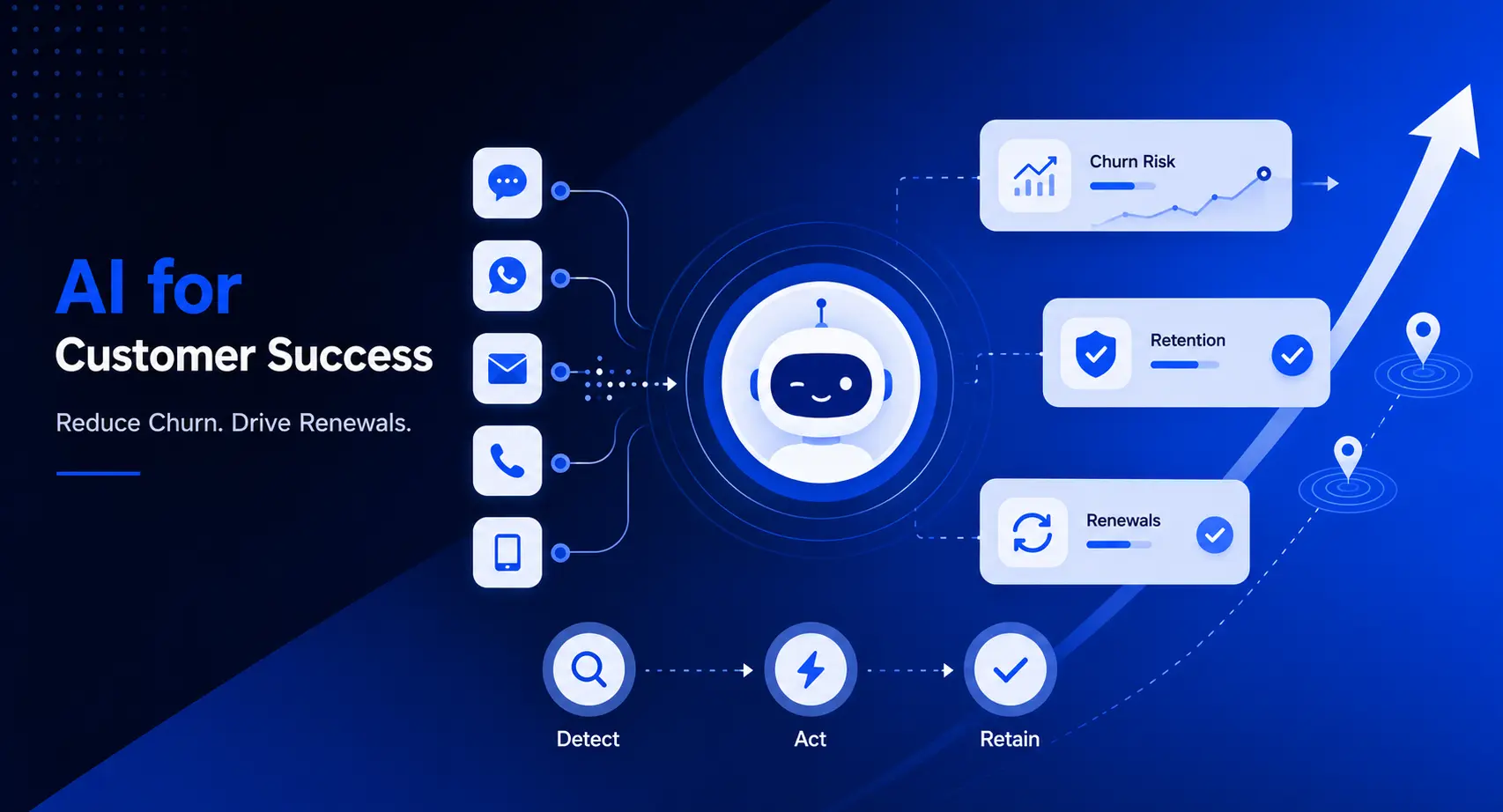
Customer expectations no longer stop after the sale. Today’s customers expect brands to stay responsive, proactive, and personalised across every interaction channel, whether that’s WhatsApp, email, voice, SMS, in-app chat, or social messaging.
But most customer success teams still operate reactively.
They notice churn signals too late. Follow-ups happen inconsistently. Renewal reminders feel generic. Upsell opportunities are missed because customer engagement data is fragmented across systems.
This is where AI for customer success is transforming how B2C businesses retain and grow customers.
Modern omnichannel AI sales agents can monitor customer behaviour continuously, identify churn risks early, trigger proactive outreach automatically, and personalise engagement across channels without requiring manual intervention from customer success teams.
Instead of waiting for customers to complain, cancel, or disengage, businesses can now act before churn happens.
Why Reactive Customer Success Models Fail At Scale
Traditional customer success workflows depend heavily on manual monitoring and delayed intervention. Teams usually react only after a customer raises a complaint, stops purchasing, or ignores renewal reminders.
This creates several operational gaps:
- Customers receive support too late in their lifecycle journey.
- High-risk accounts remain unnoticed until churn becomes inevitable.
- Customer data stays fragmented across disconnected communication channels.
- Renewal and upsell opportunities are missed because outreach is inconsistent.
An intelligent customer success platform powered by AI solves these issues by continuously monitoring engagement signals across channels and initiating proactive conversations automatically.
How Omnichannel AI Changes Customer Engagement
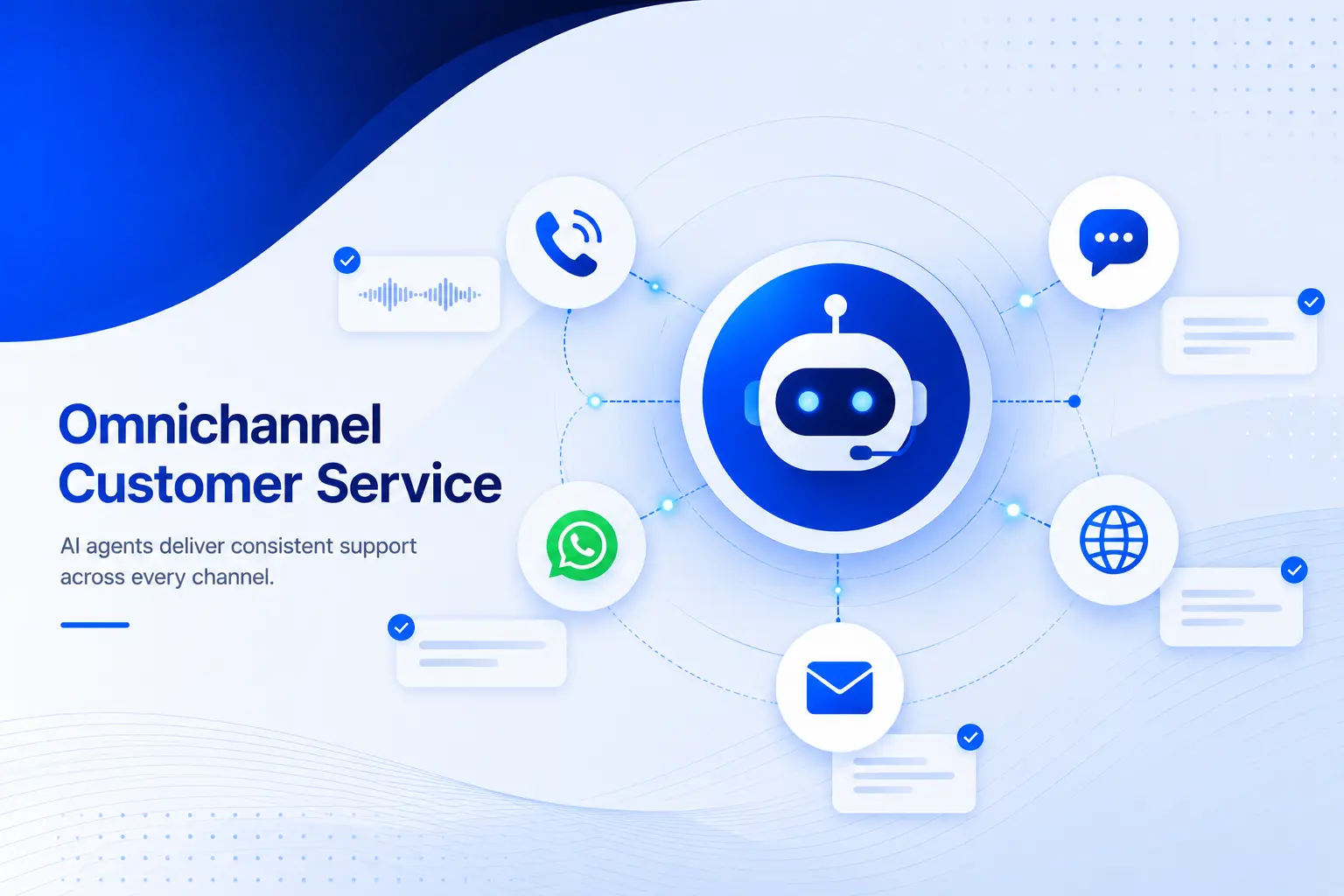
Omnichannel AI centralizes customer interactions into a single intelligence layer. Instead of treating every touchpoint separately, AI systems connect customer behavior across calls, emails, messaging apps, support tickets, and transactions.
This allows businesses to:
- Detect churn indicators earlier.
- Personalize customer engagement at scale.
- Maintain conversation continuity across channels.
- Trigger automated interventions based on customer behavior.
- Improve renewal conversion through proactive assistance.
As customer journeys become increasingly non-linear, businesses that adopt AI for customer retention gain a measurable advantage in both retention and lifetime value.
Turn disconnected interactions into proactive retention with Convin.
How Omnichannel AI Proactively Prevents Churn Before Customers Leave
One of the biggest advantages of AI for customer success is its ability to identify churn risk before customers consciously decide to leave. Instead of relying on lagging indicators like cancellations or inactivity, omnichannel AI continuously analyzes behavioral and engagement signals in real time.
This transforms customer success from reactive support into predictive retention management.
1. AI Identifies behavioral decline patterns early
Customers rarely churn suddenly. In most cases, disengagement happens gradually through small behavioral changes.
Omnichannel AI systems track patterns such as:
- Reduced product usage frequency.
- Lower response rates to communication campaigns.
- Negative sentiment during support interactions.
- Increased complaint frequency.
- Declining purchase intervals.
- Subscription downgrade behavior.
- Missed onboarding milestones.
When multiple signals appear together, the AI flags the customer as high risk and automatically initiates engagement workflows.
2. AI agents trigger intervention at the right moment
Speed matters in customer retention. Delayed outreach often means the customer has already disengaged emotionally from the brand.
AI sales agents can instantly:
- Send personalized reminders.
- Offer onboarding assistance.
- Escalate unresolved support issues.
- Schedule follow-up conversations.
- Share educational resources.
- Recommend account optimization steps.
Because the outreach happens contextually and across preferred customer channels, businesses increase the probability of re-engagement significantly.
3. Omnichannel continuity improves customer trust
Customers expect brands to remember previous interactions regardless of channel. Repeating issues across channels creates frustration and accelerates churn.
Omnichannel AI maintains contextual continuity by:
- Carrying conversation history across channels.
- Understanding previous customer concerns.
- Personalizing responses using historical engagement data.
- Routing conversations intelligently to the right team.
This consistency creates a smoother customer experience and strengthens long-term retention.
Detect churn early and automate retention workflows with Convin.
This blog is just the start.
Unlock the power of Convin’s AI with a live demo.

What Signals Trigger Omnichannel AI Agents During the Customer Lifecycle
Effective AI for customer retention depends on recognizing the right behavioral triggers throughout the customer journey. Modern AI systems continuously monitor customer activity and automatically respond when predefined engagement conditions occur.
This enables businesses to maintain continuous customer engagement without manual monitoring.
- Onboarding friction signals
The first few days after purchase are critical for retention. Customers who struggle during onboarding are significantly more likely to churn later.
AI agents monitor signals such as:
- Incomplete onboarding steps.
- Feature adoption delays.
- Repeated help-center visits.
- Unanswered onboarding emails.
- Failed login attempts.
- Long inactivity after signup.
When friction appears, AI agents proactively guide customers through the next steps before disengagement grows.
- Product engagement decline signals
Ongoing engagement patterns provide strong indicators of future retention outcomes.
AI systems track:
- Reduced app sessions.
- Lower transaction frequency.
- Declining session duration.
- Abandoned workflows.
- Reduced feature utilization.
- Increased support dependency.
Based on these patterns, AI agents can launch educational campaigns, personalized nudges, or support outreach to improve engagement.
- Renewal and contract risk signals
Renewal periods are high-risk moments in the customer lifecycle. Waiting until the final renewal reminder often results in lost revenue.
Omnichannel AI identifies:
- Renewal hesitation behavior.
- Pricing-related objections.
- Reduced engagement before contract expiration.
- Negative sentiment in conversations.
- Competitive intent signals.
AI agents then personalize outreach with:
- Renewal reminders.
- Product value reinforcement.
- Success milestone summaries.
- Exclusive offers.
- Dedicated support escalation.
This proactive engagement increases renewal confidence while reducing last-minute churn.
Automate customer engagement before churn risks escalate with Convin.
How Omnichannel AI Drives Upsells and Cross-Sells After the Initial Sale
Retention alone is no longer enough for sustainable growth. Businesses also need to maximize expansion revenue from existing customers. Omnichannel AI helps identify upsell and cross-sell opportunities based on behavioral intelligence and real-time engagement patterns.
This allows businesses to generate additional revenue without aggressive sales tactics.
- AI identifies expansion opportunities through usage behavior
Customers often reveal buying intent through product interaction patterns long before speaking to sales teams.
AI systems analyze:
- High feature adoption rates.
- Frequent usage spikes.
- Requests for advanced functionality.
- Increased transaction volume.
- Growing team collaboration activity.
- Repeated interest in premium features.
These signals indicate readiness for plan upgrades or complementary offerings.
- Personalized recommendations improve conversion rates
Generic upsell campaigns often fail because they lack contextual relevance.
AI-powered customer success platforms personalize recommendations using:
- Purchase history.
- Customer goals.
- Product usage patterns.
- Previous support conversations.
- Channel preferences.
- Lifecycle stage.
This makes expansion conversations feel consultative rather than promotional.
- Omnichannel outreach improves expansion timing
Customers engage differently across channels. Some respond better through WhatsApp, while others prefer calls, email, or in-app notifications.
Omnichannel AI optimizes:
- Outreach timing.
- Preferred communication channel.
- Message sequencing.
- Follow-up cadence.
- Conversation personalization.
This significantly improves upsell engagement rates while reducing communication fatigue.
Drive expansion revenue with Convin’s AI engagement workflows.
What Metrics Improve When Businesses Add AI for Customer Success
Businesses adopting omnichannel AI typically see measurable improvements across retention, engagement, operational efficiency, and revenue performance.
The impact extends beyond customer support into long-term business growth.
- Customer retention metrics improve
AI-driven customer success workflows help businesses reduce avoidable churn by engaging customers proactively.
Common improvements include:
- Higher customer retention rates.
- Lower churn percentages.
- Improved renewal conversion.
- Increased subscription continuity.
- Better customer health scores.
These improvements directly strengthen recurring revenue predictability.
- Revenue efficiency metrics become stronger
AI automation reduces operational inefficiencies while improving expansion opportunities.
Organizations typically experience:
- Higher customer lifetime value.
- Increased upsell conversion rates.
- Lower support operational costs.
- Faster customer success response times.
- Improved agent productivity.
This makes AI for customer success a revenue-driving investment rather than simply a support enhancement initiative.
Why Omnichannel AI Is Becoming Essential for Customer Success Teams
Customer expectations continue to rise while customer success teams face growing pressure to scale efficiently. Manual engagement models can no longer keep up with fragmented customer journeys and rising retention demands.
Omnichannel AI enables businesses to:
- Predict customer risk proactively.
- Engage customers contextually across channels.
- Automate lifecycle communication.
- Improve renewal outcomes.
- Unlock expansion revenue opportunities.
As competition increases across B2C industries, businesses that invest in AI for customer retention will be better positioned to build stronger customer relationships and sustainable recurring revenue growth.
Convin helps businesses unify conversations, automate proactive engagement, and deliver scalable AI-powered customer success experiences across every customer touchpoint.
What This Means For Your Business
AI for customer success is transforming how businesses retain, engage, and grow customer relationships. Instead of reacting after customers disengage, omnichannel AI enables proactive outreach, personalized engagement, and intelligent lifecycle management across every channel.
By combining automation with real-time behavioral insights, businesses can reduce churn, improve renewals, and increase customer lifetime value at scale.
Convin helps businesses deliver proactive, AI-powered customer success experiences that drive stronger retention and long-term growth.
FAQs
- How is AI for customer success different from traditional CRM automation?
Traditional CRM automation mainly focuses on task management, reminders, and rule-based workflows. AI for customer success goes beyond automation by analyzing customer behavior, identifying churn patterns, predicting engagement risks, and triggering intelligent conversations across multiple channels in real time.
- Can omnichannel AI work for businesses with large customer volumes?
Yes. Omnichannel AI is specifically valuable for businesses handling large customer bases because it automates engagement, prioritizes high-risk accounts, and scales personalized communication without requiring proportional team expansion.
- Does omnichannel AI only support post-sales customer engagement?
No. Omnichannel AI supports the entire customer lifecycle, including onboarding, product adoption, support, renewals, upselling, re-engagement, and long-term retention strategies.
- How does AI improve customer response timing?
AI systems continuously monitor engagement signals and trigger outreach instantly when specific behaviors occur. This removes delays caused by manual monitoring and helps businesses engage customers at the most impactful moment.
- What industries benefit most from AI-powered customer success?
Industries with recurring customer engagement models benefit significantly, including e-commerce, fintech, edtech, healthcare, telecom, SaaS, insurance, travel, and subscription-based businesses.
- Can AI sales agents personalize conversations across channels?
Yes. AI sales agents use customer history, behavior patterns, previous interactions, and channel preferences to personalize conversations across WhatsApp, email, voice calls, SMS, in-app messaging, and social channels.




.avif)