


Businesses lose customers every day simply because they miss calls after business hours.
Imagine a property management company receiving emergency maintenance requests at midnight or a healthcare clinic getting patient calls after closing hours.
Without an after hours answering service, these calls go unanswered, and potential revenue disappears.
Research from Forrester shows that 73% of customers say valuing their time is the most important aspect of a good service experience.
When callers reach voicemail instead of a live agent, many simply move to a competitor.
That’s why companies invest in after hours answering services. But one of the most common questions decision-makers ask is simple.
How much does an answering service cost?
The answer depends on multiple factors such as call volume, service level, and pricing model. This guide breaks down the cost of after-hours answering services, pricing models, hidden fees, and ROI so you can make the right buying decision.
Stop losing customers after business hours. Discover smarter call handling with AI.
How Much Does After Hours Answering Service Pricing Cost?
After hours answering service pricing varies widely based on call volume, service scope, and whether you need full 24/7 coverage or only overnight support.
- Average After Hours Answering Service Cost in 2026
In 2026, the average after hours answering service cost ranges from $50 to $1,500 per month, depending on usage.
Typical price ranges:
- Small business plans: $50 to $300 per month
- Mid-size companies: $300 to $800 per month
- Enterprise call centers: $800 to $1,500+ per month
Most providers price services based on the number of minutes used or the number of calls handled.
Industry estimates show that basic answering services cost around $0.75 to $1.50 per minute, depending on service complexity.
- 24/7 Answering Service Pricing vs After-Hours Only Plans
Another major factor is whether you choose 24/7 answering service pricing or just overnight coverage.
Typical comparison:
After-hours only plan
- Covers evenings and weekends
- Lower monthly cost
- Ideal for small businesses
24/7 answering service plan
- Handles all incoming calls
- Higher monthly fees
- Used by healthcare, SaaS, and enterprise support teams
Businesses with high call volume often prefer full coverage because missed calls during lunch hours or peak periods can still hurt conversions.
- Small Business vs Enterprise Answering Service Monthly Plans
Pricing also changes based on business size. Small businesses typically choose:
- 50 to 200 monthly minutes
- Basic message taking
- Limited integrations
Enterprise answering service monthly plans usually include:
- 1,000+ minutes
- CRM integrations
- live call transfer
- dispatch and escalation
Large organizations may also request industry compliance, such as healthcare or financial support.
Reduce missed calls without extra agents. See how AI call monitoring helps.
Answering Service Pricing Models Explained
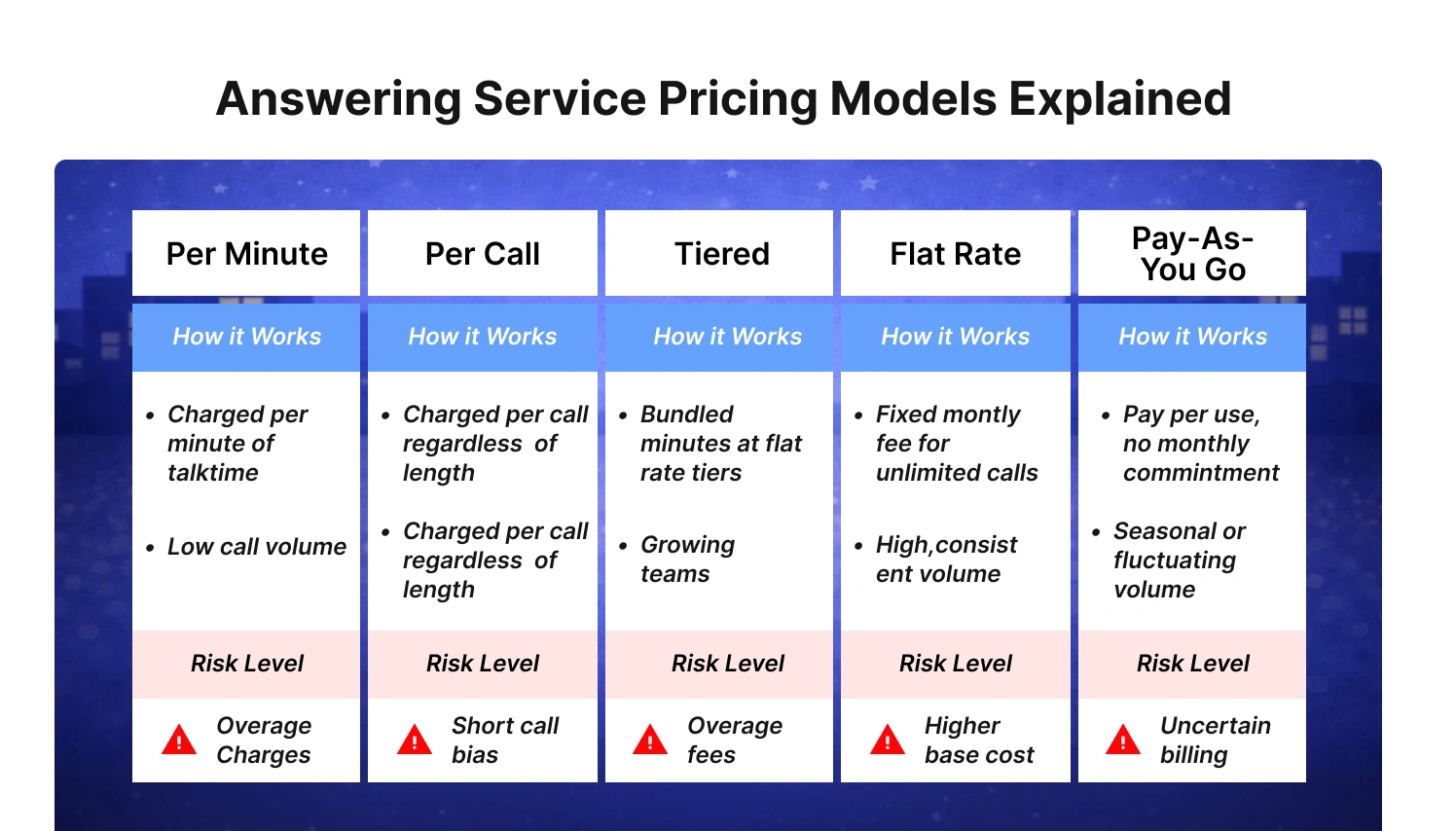
Understanding answering service pricing models is essential before choosing a provider. Each model works differently depending on call volume and service requirements.
Per-Minute Answering Service Pricing
The most common model is per-minute answering service pricing. Businesses pay for the total time agents spend on calls.
Typical rates:
- $0.75 to $1.50 per minute
- Bundled minute packages
- Additional cost for overages
This model works well when calls vary in length.
Per Call Answering Service Rates
Another option is per-call answering service rates. Here, businesses pay a fixed amount per call handled.
Typical rates:
- $0.90 to $3 per call
- Best for short calls
- Easier cost prediction
However, longer calls may incur additional charges.
Flat Rate and Tiered Answering Service Monthly Plans
Many vendors now offer tiered answering service plans monthly.
Example structure:
Starter plan
- 100 minutes
- Basic message taking
Growth plan
- 500 minutes
- Call transfer and dispatch
Enterprise plan
- 1,000+ minutes
- CRM integrations and analytics
Flat pricing helps businesses maintain predictable budgets.
Pay As You Go Live Answering Service Rates
Some providers offer pay-as-you-go rates for live answering services.
This model includes:
- No long-term contracts
- Billing based on actual usage
- Flexible scaling
It works best for seasonal businesses such as travel companies or event organizers.
See how conversation intelligence helps manage call volume.
Answering Service Pricing Models Comparison Table
Pro Tip:
While choosing a pricing model, businesses should also evaluate how effectively calls are handled and monitored. Platforms like Convin help contact centers analyze conversations, monitor call quality, and improve agent performance, which directly improves answering service ROI.
This blog is just the start.
Unlock the power of Convin’s AI with a live demo.

What’s Included in After Hours Answering Service Pricing?
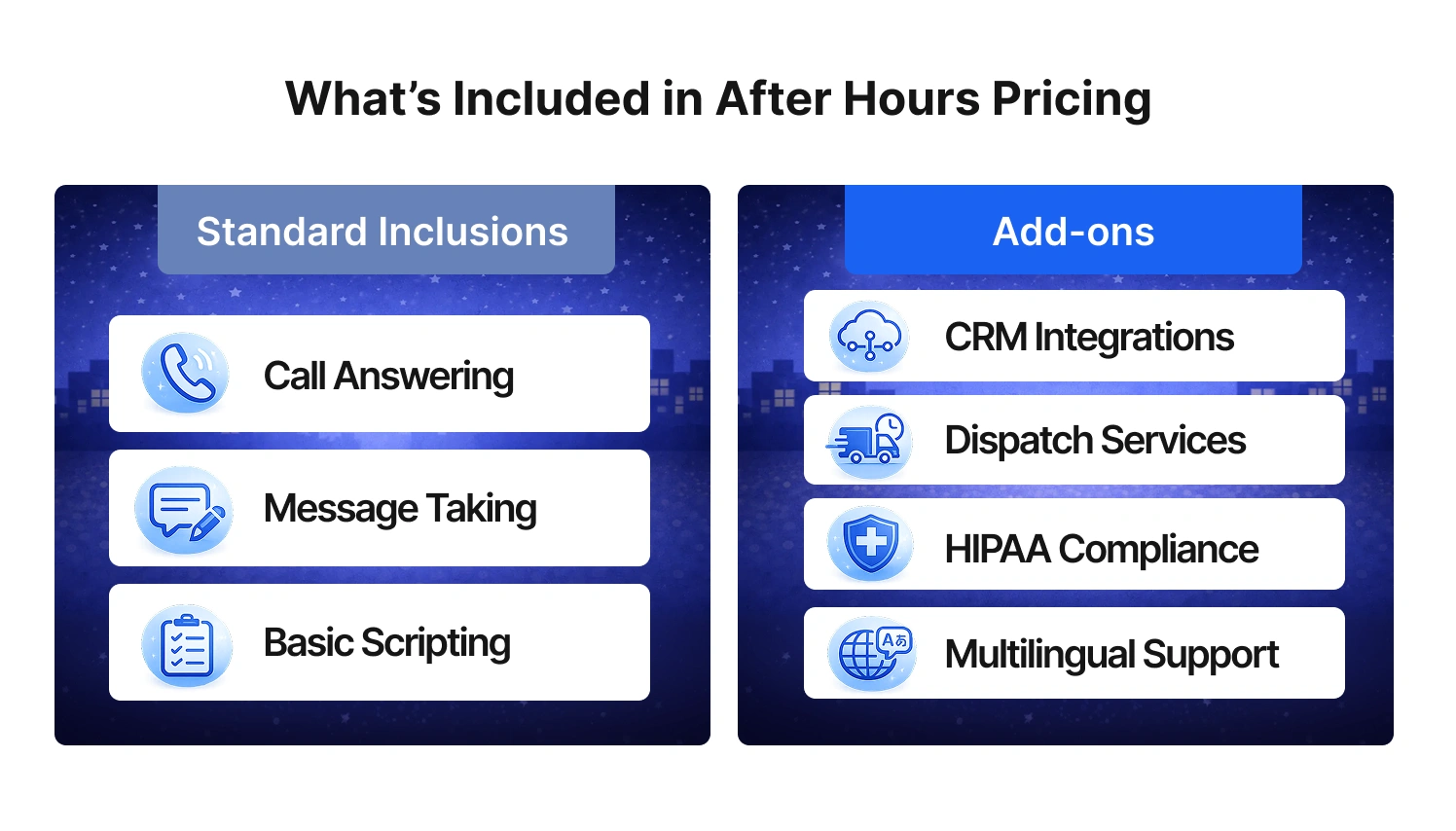
Not all providers include the same services in their pricing plans. Understanding what’s included prevents unexpected costs later.
- Call Handling and Message Taking
Basic answering services typically include:
- Live call answering
- Caller identification
- Message taking
- Email or SMS notifications
These features form the foundation of most answering service plans.
- Call Forwarding, Dispatch, and Escalation Costs
Advanced services may include:
- Call forwarding to on-call staff
- Emergency dispatch
- escalation workflows
These features often add additional fees because they require more complex handling.
- CRM Integration and Virtual Receptionist Pricing Add-ons
Modern businesses often require CRM integration.
This allows agents to:
- log calls automatically
- update customer records
- create support tickets
Virtual receptionist pricing may also include:
- appointment scheduling
- lead qualification
- order processing
These integrations increase operational efficiency but can increase costs.
- HIPAA Compliant and Industry-Specific Pricing Factors
Some industries require strict compliance standards.
Examples include:
- healthcare
- finance
- legal services
HIPAA-compliant answering services typically cost more due to additional security requirements and agent training.
See how AI-powered call analytics improves compliance and service quality.
Hidden Fees in Answering Service Pricing: What Vendors Don’t Tell You
Many businesses focus only on base pricing, overlooking additional costs. These answering service hidden fees can significantly increase monthly expenses.
- Setup Fees and Onboarding Charges
Some vendors charge onboarding fees ranging from $50 to $300. These cover system setup, script creation, and training.
- Overage Minute Fees and Extra Call Charges
If your call volume exceeds your plan limits, you may pay overage fees. Typical overage rates:
- $1 to $2 per extra minute
- $2 to $5 per extra call
High call spikes can quickly increase costs.
- Holiday Weekend and After Midnight Rate Differences
Some providers charge premium prices on weekends, public holidays, and late at night. These surcharges may increase rates by 10% to 30%.
- Contract Terms and Cancellation Fees
Long-term contracts sometimes include:
- minimum commitments
- cancellation penalties
- auto-renewal clauses
Always review contract terms carefully before signing.
Read our guide on call center quality monitoring to prevent service failures.
After Hours Answering Service ROI
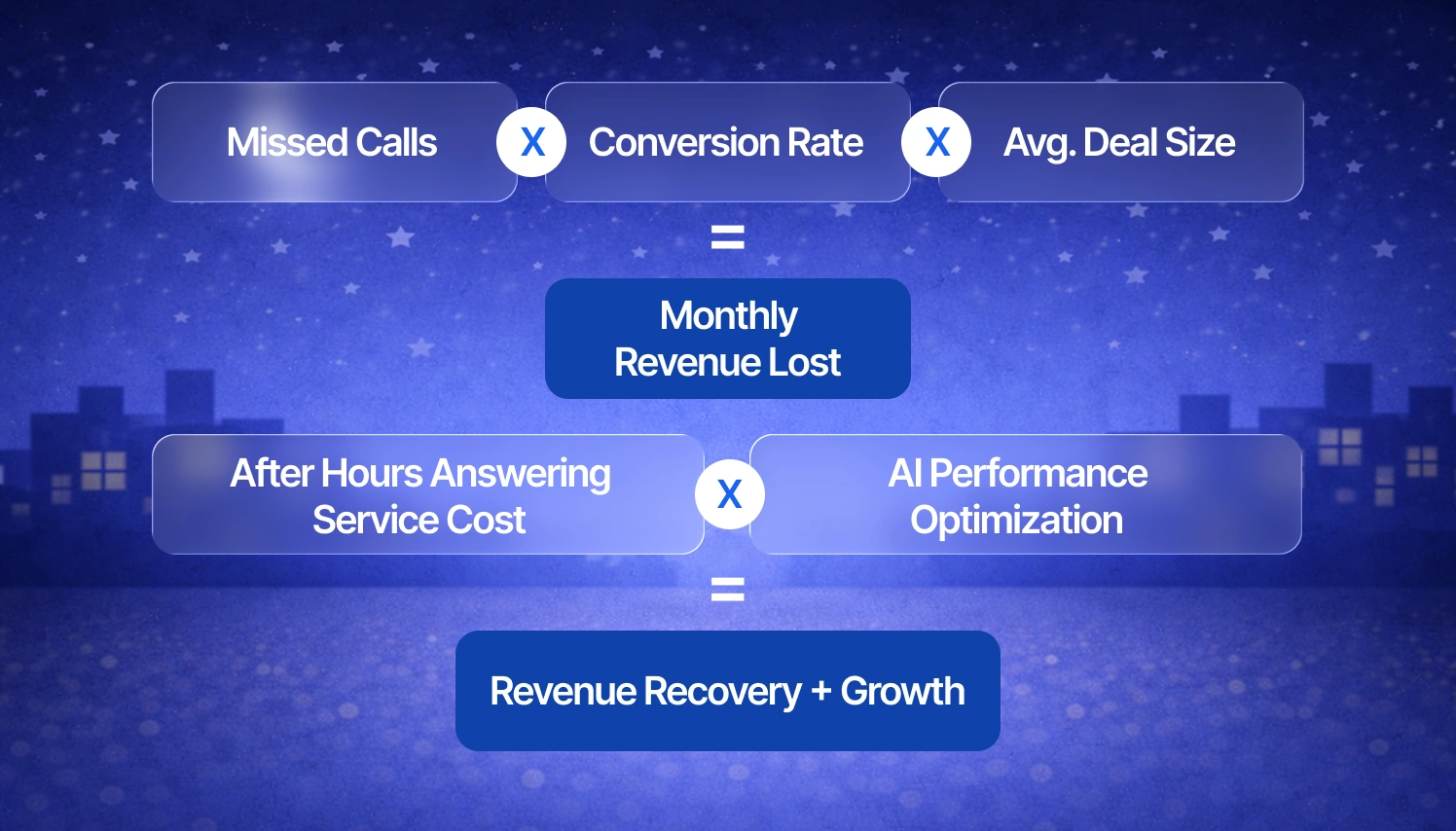
Despite the costs, many businesses see strong returns from answering services.
- Cost of Missed Calls After Business Hours
Studies from Harvard Business Review show that companies responding to leads within one hour are seven times more likely to qualify them. Missed calls often translate into lost revenue.
Examples include:
- missed service bookings
- abandoned sales inquiries
- delayed emergency responses
- Revenue Recovery With 24/7 Live Answering Service
A live answering service helps recover these lost opportunities by:
- capturing leads immediately
- scheduling appointments
- escalating urgent requests
This increases conversion rates and customer satisfaction.
- Answering Service ROI vs Hiring In-House Staff
Hiring overnight staff is significantly more expensive.
Typical costs include:
- salaries
- benefits
- training
- management overhead
Answering services offer a lower-cost alternative while still maintaining coverage.
- Measuring Performance Beyond Pricing
The real value of answering services comes from performance metrics such as:
- call resolution rates
- response time
- customer satisfaction
Businesses should evaluate service quality along with pricing.
- Optimizing After Hours Answering Service ROI With AI
AI-powered tools now help organizations maximize the ROI of answering services.
- Automated QA for 100% Call Monitoring: Traditional quality audits review only a small sample of calls. AI systems can automatically monitor 100 percent of conversations.
- Conversation Intelligence for Revenue Protection: Conversation intelligence platforms record, transcribe, and analyze calls to identify lost revenue opportunities and compliance risks.
- Real-Time Agent Assist for Better After-Hours Handling: AI tools can also provide real-time prompts and suggestions to agents during calls, improving customer interactions and speeding up resolution.
Platforms like Convin help contact centers boost performance through automated coaching, AI insights, and real-time call guidance.
Discover how AI call monitoring helps optimize answering service ROI.
After Hours Answering Service Pricing Comparison
How to Choose the Right After Hours Answering Service Plan
Selecting the right plan requires careful analysis of business needs.
- Questions to Ask About Answering Service Pricing Models
Before choosing a vendor, ask:
- What pricing model do you use
- Are there hidden fees
- What integrations are included
- How are overage minutes billed
- How to Calculate Your Required Monthly Minutes
To estimate usage:
- Track current call volume
- Measure average call duration
- multiply calls by minutes
This helps determine the correct answering service monthly plan.
- Red Flags in Live Answering Service Contracts
Watch out for:
- long-term lock-in contracts
- unclear pricing terms
- hidden cancellation fees
- limited reporting
- Aligning Pricing With Customer Experience Goals
Ultimately, the right answering service should balance:
- cost efficiency
- customer experience
- operational scalability
Businesses that prioritize customer experience often see higher retention and revenue growth.
Learn how AI powered contact center analytics improves service quality.
Turning Answered Calls Into Revenue
After hours answering services help businesses capture opportunities that would otherwise be lost. But pricing alone should never be the only deciding factor.
The real value comes from how well calls are handled, monitored, and optimized.
AI driven platforms like Convin enable organizations to analyze every customer interaction, coach agents automatically, and improve call outcomes in real time.
If your business relies on phone conversations to drive revenue, combining answering services with AI call intelligence can dramatically improve results.
Book a demo with Convin today to see how AI powered conversation intelligence can help you maximize answering service ROI and deliver better customer experiences.
Frequently Asked Questions
1. How much does an answering service cost for low call volume businesses?
For businesses with fewer than 50 calls per month, after-hours answering service costs can start as low as $30 to $100 per month, depending on the pay-as-you-go or small monthly answering service plan. Pricing usually depends on a per-minute answering service model or per-call billing.
2. What factors influence 24/7 answering service pricing the most?
The biggest factors affecting 24/7 answering service pricing include call volume, average call duration, required integrations, and industry compliance requirements. Businesses that need CRM integrations, dispatch services, or HIPAA compliance usually pay higher rates for live answering services.
3. Are answering service pricing models customizable?
Many providers allow businesses to customize answering service pricing models by combining minute bundles, per-call billing, and flat-rate answering service monthly plans. This flexibility helps businesses optimize costs based on seasonal demand or fluctuating call volumes.
4. How can businesses reduce answering service hidden fees?
To avoid answering service hidden fees, businesses should carefully review contract terms, overage charges, onboarding costs, and holiday rate adjustments. Requesting a detailed virtual receptionist pricing comparison from vendors can help identify transparent providers.
5. How long does it take to see answering service ROI?
Most companies start seeing answering service ROI within a few months once missed calls decrease and lead capture improves. Businesses that combine answering services with call analytics platforms like Convin can improve conversion rates and customer experience faster.

%20BLOG10%20examples%20of%20artificial%20intelligence%20in%202024.webp)



.avif)